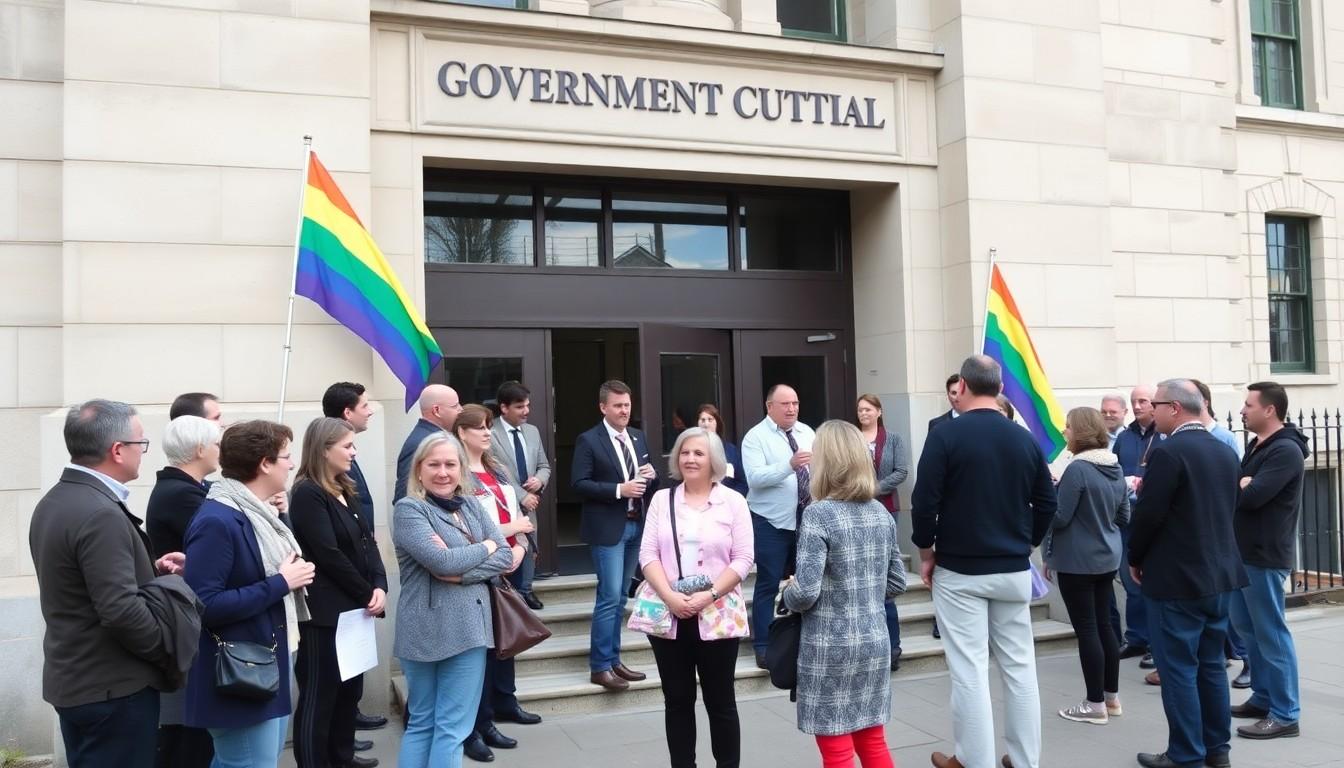
Tasmanian parents of trans and gender-diverse children are urging MPs to support a proposed conversion practices ban, arguing that harmful attempts to change identity or orientation still threaten families and young people across the state. The campaign matters as Tasmania prepares to debate legislation that could shape protections for years to come.
Essential Takeaways
- Parents are speaking out: A joint letter signed by 28 Tasmanian parents backs the proposed ban.
- The reported harms are serious: Research cited in the campaign links conversion practices with higher risks of trauma and suicide attempts.
- Gender identity is part of the debate: Supporters say trans and gender-diverse young people must be protected alongside LGBTIQA+ people.
- Opponents raise clinical concerns: Critics argue the bill could restrict doctors from discussing the full range of care options.
- The wording matters: Supporters fear amendments could remove gender identity from the bill and leave some children unprotected.
Parents put a human face on Tasmania's debate
The strongest message from the campaign is also the simplest: families don't want their children told they're broken. In a joint letter, 28 parents across Tasmania described conversion practices as an ongoing threat, pointing to the fear, pressure and isolation that can surround them.
The letter focuses particularly on trans and gender-diverse young people, who supporters say are often missing from public discussions about conversion practices. According to ABC News, the proposed legislation is part of a wider national conversation about how states should respond to practices presented as counselling or support but intended to change a person's sexual orientation or gender identity.
For parents, this isn't an abstract argument about policy language. It's about whether a young person can seek help without being pushed towards shame or a promise that their identity can somehow be corrected.
What would the proposed bill do?
The Conversion Practices Prohibition Bill 2026 is a Greens-backed proposal before Tasmania's Parliament. Its stated purpose is to prohibit practices aimed at changing or suppressing a person's sexual orientation or gender identity, rather than banning ordinary, respectful healthcare.
The Tasmanian Parliament's bill information sets out the formal legislative process, while campaigners say the proposal is designed to remain consistent with accepted medical guidance as that guidance evolves. That distinction sits at the heart of the dispute.
Supporters argue the legislation should target coercion, manipulation and identity-based harm. Opponents, meanwhile, have questioned whether doctors would still be free to discuss different clinical pathways with young people experiencing gender distress. The disagreement is technical on paper, but deeply personal in practice.
Why gender identity has become the flashpoint
Much of the public debate around conversion practices has historically centred on attempts to change same-sex attraction. The Tasmanian campaign says that focus is now too narrow, because trans and gender-diverse people can also face pressure to deny or alter who they are.
The campaign website argues that the bill should cover both sexual orientation and gender identity. Supporters say removing gender identity would create a major gap, potentially allowing harmful practices to continue under another name.
Opponents have raised concerns about autistic young people, medical treatment and the possibility of regret or detransition. ABC News reported that Liberal MPs were considering a conscience vote, highlighting the political sensitivity of the proposal and the likelihood of strong views on both sides.
The evidence behind the calls for protection
The parents' letter cites local and national research suggesting that around one in 20 young LGBTIQA+ Tasmanians experience conversion practices. It also says affected young people face substantially higher risks of post-traumatic stress and suicide attempts.
Those figures are being used to underline why supporters want the law to act before further harm occurs. Their argument is that a practice doesn't become acceptable simply because it takes place in a religious, counselling or healthcare setting.
At the same time, claims about outcomes and detransition have become part of the political contest. The letter says 99 per cent of trans and gender-diverse people are happy with their decision to affirm their identity and have not detransitioned, while opponents continue to argue that clinicians need room to explore uncertainty. That makes careful definitions and evidence especially important.
What happens next for Tasmanian families?
The bill's debate is likely to turn on amendments. Don Pitcher, who supports parents of trans and gender-diverse children, warned that removing gender identity from the proposed protections could leave families exposed and make Tasmania an outlier in Australia.
The campaign's concern is that a narrower law would send a confusing message: protection for some LGBTIQA+ people, but not others. Its supporters want MPs to preserve a broad definition that covers attempts to change or suppress both orientation and identity.
Whatever the final vote, the discussion has already moved beyond party politics. Parents are asking lawmakers to think about the quiet moments when a child seeks help, and whether that help offers acceptance or another reason to feel ashamed. That's a question no family should have to answer alone.
A clear, evidence-based law could give Tasmanian families more confidence when seeking support.
Source Reference Map
Story idea inspired by: [1]
Sources by paragraph:
- Paragraph 1: [2], [4]
- Paragraph 2: [2], [6]
- Paragraph 3: [4], [7]
- Paragraph 4: [3], [6]
- Paragraph 5: [3], [4]
- Paragraph 6: [2], [5]
- Paragraph 7: [4], [6]
- Paragraph 8: [7], [6]
- Paragraph 9: [2], [5]
- Paragraph 10: [4], [7]
- Paragraph 11: [3], [6]
- Paragraph 12: [2], [4]
- Paragraph 13: [3], [7]
- Paragraph 14: [4], [5]
- Paragraph 15: [2], [6]
- Paragraph 16: [3], [4]
- Paragraph 17: [5], [7]
- Paragraph 18: [2], [6]
- Paragraph 19: [3], [4]
- Paragraph 20: [5], [7]
- Paragraph 21: [2], [4]
- Paragraph 22: [3], [6]
- Paragraph 23: [4], [7]
- Paragraph 24: [2], [5]