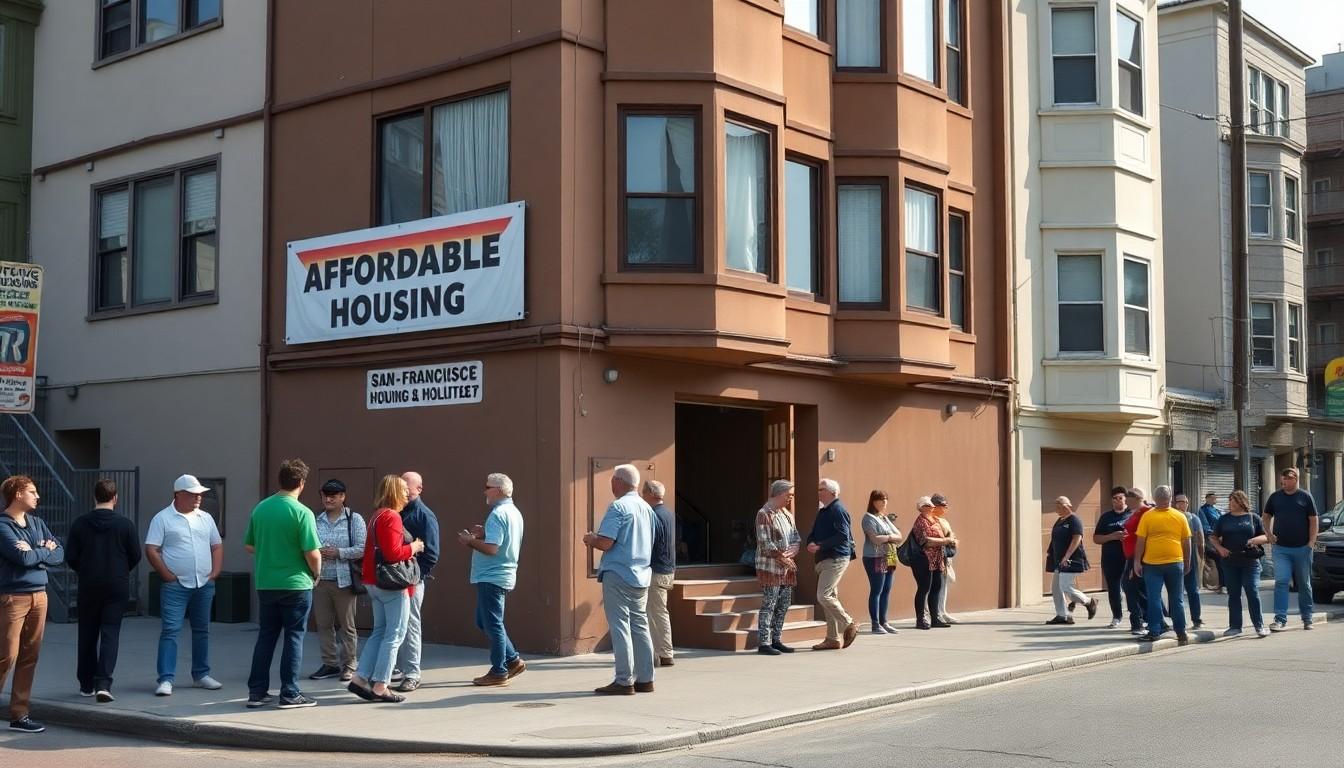
San Francisco’s queer history was built by people seeking safety, work and community, but rising rents now threaten that legacy. From Gold Rush arrivals to the Compton’s Cafeteria riot, the city’s story shows why affordable housing matters to LGBTQ+ residents today.
A refuge built by people who needed somewhere to belong
San Francisco’s reputation as a queer sanctuary didn’t appear overnight. It grew through successive waves of people arriving in search of safety, connection and the freedom to live openly, often after rejection elsewhere. The city’s welcoming image was shaped not only by famous activists, but by workers, migrants and residents who made daily life possible.
That history has a distinctly human texture: boarding houses, busy streets, shared rooms and hard-won friendships. According to the California Migration Museum, queer migration to the Bay Area helped create the networks that eventually powered wider liberation movements. For many newcomers, finding people like themselves was as important as finding a job.
The overlooked roots of LGBTQ+ San Francisco
The city’s queer communities have deep roots, stretching from the Gold Rush era through the arrival of gay servicemembers after the Second World War. Later, Tenderloin hotels became vital homes for trans women and other gender-nonconforming residents who had few safe alternatives.
These were never easy environments. Residents faced poverty, harassment and police pressure, but they also developed places of mutual support. The GLBT Historical Society’s accounts of queer life in San Francisco underline how ordinary gathering points could become essential community infrastructure.
Compton’s Cafeteria showed the cost of being ignored
One of the clearest examples came at Gene Compton’s Cafeteria in the Tenderloin. In August 1966, trans women, drag queens and other queer people resisted police harassment at the late-night café, an event widely recognised as a landmark in trans history.
The confrontation mattered because it challenged the idea that queer liberation began only with better-known later protests. KQED and the Los Angeles Public Library both describe the riot as a moment when people who were routinely pushed aside asserted their right to occupy public space. The mood was angry, noisy and dangerous, but it was also a declaration: these residents belonged here.
Rising rents put that legacy under pressure
Today, the central challenge is less about whether queer people can find one another and more about whether they can afford to remain in the city. Housing costs have climbed, while lower-income LGBTQ+ residents often face discrimination, insecure work and limited access to suitable homes.
That pressure changes the culture in quiet ways. A bar closes, a residential hotel is redeveloped, or a long-term resident moves away, and a whole set of informal connections can weaken. The result isn’t simply fewer homes; it’s less room for the friendships, activism and creative energy that make a neighbourhood feel alive.
Why Harvey Milk’s housing politics still resonate
Harvey Milk understood that visibility meant little without a practical way for people to stay rooted. His opposition to property speculation remains relevant because housing is closely tied to political power: residents who are displaced lose not only a home, but often their local voice and support network.
The Harvey Milk LGBTQ Democratic Club has backed San Francisco proposals aimed at expanding affordable and social housing, reflecting a broader argument that queer history should be protected through policy, not just commemorated with plaques. As the city debates its future, the question is straightforward: who gets to inherit San Francisco’s queer identity, and who gets priced out of it?
Affordable housing won’t solve every problem, but it can give communities the stability to organise, care for one another and keep their stories local. That feels like a fitting continuation of the city’s most important tradition.
Housing is queer history in practice, not just a slogan.
Source Reference Map
Story idea inspired by: [1]
Sources by paragraph: