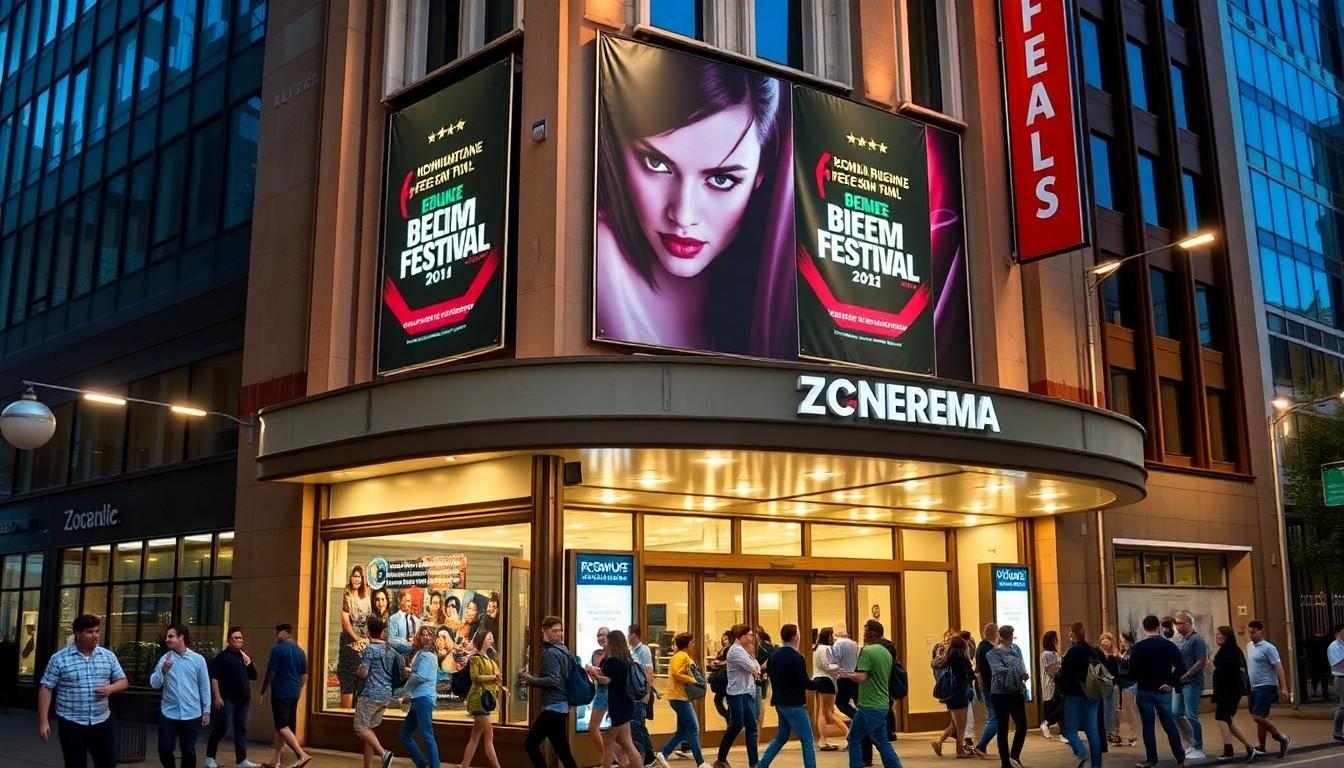
Festivalgoers are discovering a darker, stranger side of the Chicago International Film Festival, where queer desire, folk horror and trans identity collide. From a haunted mansion in 1990s New York to fogbound romance in the Faroe Islands, this year's After Dark selections show why the best genre cinema can unsettle as much as it connects.
Essential Takeaways
- Corpus: A stylish queer horror story turns sexual uncertainty into sinister body horror.
- No Rest for the Wicked: A forbidden romance brings vampire folklore to an isolated Faroese village.
- A fragmentary passage: Louise Weard's intimate video drama examines transition, resentment and online radicalisation.
- The shared thread: Each film uses fear to explore longing, identity and the dangers of being misunderstood.
- Festival context: Chicago's After Dark strand sits alongside a wider programme spanning international cinema, premieres and industry events.
Three films, three kinds of queer unease
The most memorable films in this year's After Dark programme don't rely on cheap shocks. They make desire itself feel unstable: a glance lasts too long, a promise carries a hidden cost, or a supposedly supportive relationship begins to buckle under pressure.
That makes the selection feel unusually cohesive, even when the films couldn't look more different. Chicago Screens' festival listings place the programme within a broader celebration of contemporary cinema, while coverage from Hollywood Chicago points to After Dark's taste for bold genre fare. Here, horror becomes less a mask than a pressure test for queer life. (Chicago Screens, Hollywood Chicago)
Corpus makes attraction feel dangerous
Corrin Evans' Corpus begins in a pulsing 1990s New York club scene, all flashing cameras, sweat and house music. Photographer Sayo is drawn back towards Vince, an actor whose mixed signals have kept their relationship suspended between hope and frustration.
A weekend at a ramshackle country mansion soon changes the mood. The promise of drugs, sex and artistic freedom gives way to something colder, as the hosts' interest in the young men starts to feel less romantic than predatory. Evans, whose background as an intimacy coordinator informs the film's sharp attention to consent, turns hesitation into the central source of dread.
The contrast is deliciously unsettling. Neon nightlife gives way to bonfires, fallen leaves and pagan singing, while the film's slow-motion club imagery makes bodies appear both intimate and strangely impersonal. It's the sort of horror where your instincts start shouting before the characters catch up. (Hollywood Chicago, Chicago International Film Festival)
A vampire romance rises from the fog
Kasper Kalle's No Rest for the Wicked takes a quieter route. Set on the Faroe Islands in the 1860s, it follows Baldur, a young fisherman trapped by family duty and the narrow expectations of village life.
His world shifts when Danish whaler Helge arrives after a shipwreck. Their attraction offers Baldur a possible escape, but the romance is shadowed by isolation, religion and the fear of being seen. When grief leads to a blood-marked plea for Helge's return, the film moves gently into supernatural territory.
The result is more mournful than monstrous. The Faroese landscape supplies the film's most striking special effect, with fog, hard coastlines and pale light making the island feel beautiful but inescapable. The story also finds its real menace in the villagers' judgement, suggesting that social intolerance can be more frightening than any revenant. (Chicago International Film Festival, Hollywood Chicago)
The scariest film may be the most realistic
Louise Weard's Castration Movie Chapter iii.ii Junior Ghosts - Premorphic Drift; a fragmentary passage is not conventionally a horror film, but its emotional impact is arguably the most bruising of the three.
Izzy works from home on a suicide hotline, absorbing other people's grief while struggling with her own stagnant life. Then her boyfriend announces that she is a trans woman and wants to be called Tiffany. Izzy's supposed openness begins to fracture as transition moves from an abstract political idea into the centre of her relationship.
Weard's shot-on-video style keeps the camera close and the discomfort lingering. Long takes refuse to provide an easy escape, while the story examines the online ecosystems that can turn fear into certainty. The film is uncompromising towards Izzy's prejudices, but it also understands the panic and confusion behind them, without pretending that understanding is the same as excusing harm.
That balance gives the film its force. Tiffany's vulnerability is never treated as a plot device, and the surrounding arguments about identity, intimacy and entitlement remain painfully recognisable. Weard's work suggests that social transition can be frightening not because trans people are mysterious, but because change exposes what relationships were built to withstand. (Chicago International Film Festival, Hollywood Chicago)
Why these films belong together
On the surface, these are wildly different films: one is a glossy club nightmare, another a period vampire tale, and the third a raw domestic drama. Yet all three are interested in what happens when private longing collides with public rules.
That focus fits the festival's wider identity. The Chicago International Film Festival continues to balance established cinematic traditions with new voices and adventurous programming, including submission opportunities and industry-facing events. Its First Look strand and professional programme underline the same appetite for discovery that powers After Dark. (Chicago Film Festival, Film Festivals Pro)
For viewers choosing what to watch first, Corpus is the most immediate pick for stylish queer horror, while No Rest for the Wicked suits anyone after a slow-burn gothic romance. A fragmentary passage demands the most patience, but it may stay with you longest. Sometimes the film that leaves you quietly furious on the journey home is the one doing the most interesting work.
What to expect from the After Dark experience
A strong midnight programme should feel like a detour from the festival's daytime conversation, and these films deliver that change of temperature. Expect fog, bonfires, ugly arguments, charged silences and the occasional image that refuses to leave your head.
They also reward viewers who enjoy genre with a little more on its mind. If you're looking for the best queer horror films from the Chicago International Film Festival, start with the film whose mood matches your tolerance for discomfort. Just don't expect an easy, reassuring night out. That's rather the point.
The wider 2026 festival programme offers plenty of opportunities to mix discoveries with more conventional titles, from public screenings to industry events. After Dark simply makes the invitation more dangerous, and considerably more fun. (Chicago Screens, Film Festivals Pro)
Queer genre cinema is at its best when the monsters are emotional, social and supernatural all at once.
Source Reference Map
Story idea inspired by: [1]
Sources by paragraph:
- Paragraph 1: [2], [3]
- Paragraph 2: [3], [4]
- Paragraph 3: [2], [3]
- Paragraph 4: [1], [3]
- Paragraph 5: [1], [3]
- Paragraph 6: [1], [3]
- Paragraph 7: [1], [3]
- Paragraph 8: [1], [3]
- Paragraph 9: [1], [3]
- Paragraph 10: [4], [6]
- Paragraph 11: [1], [4]
- Paragraph 12: [2], [4]
- Paragraph 13: [1], [3]
- Paragraph 14: [4], [6]
- Paragraph 15: [1], [3]