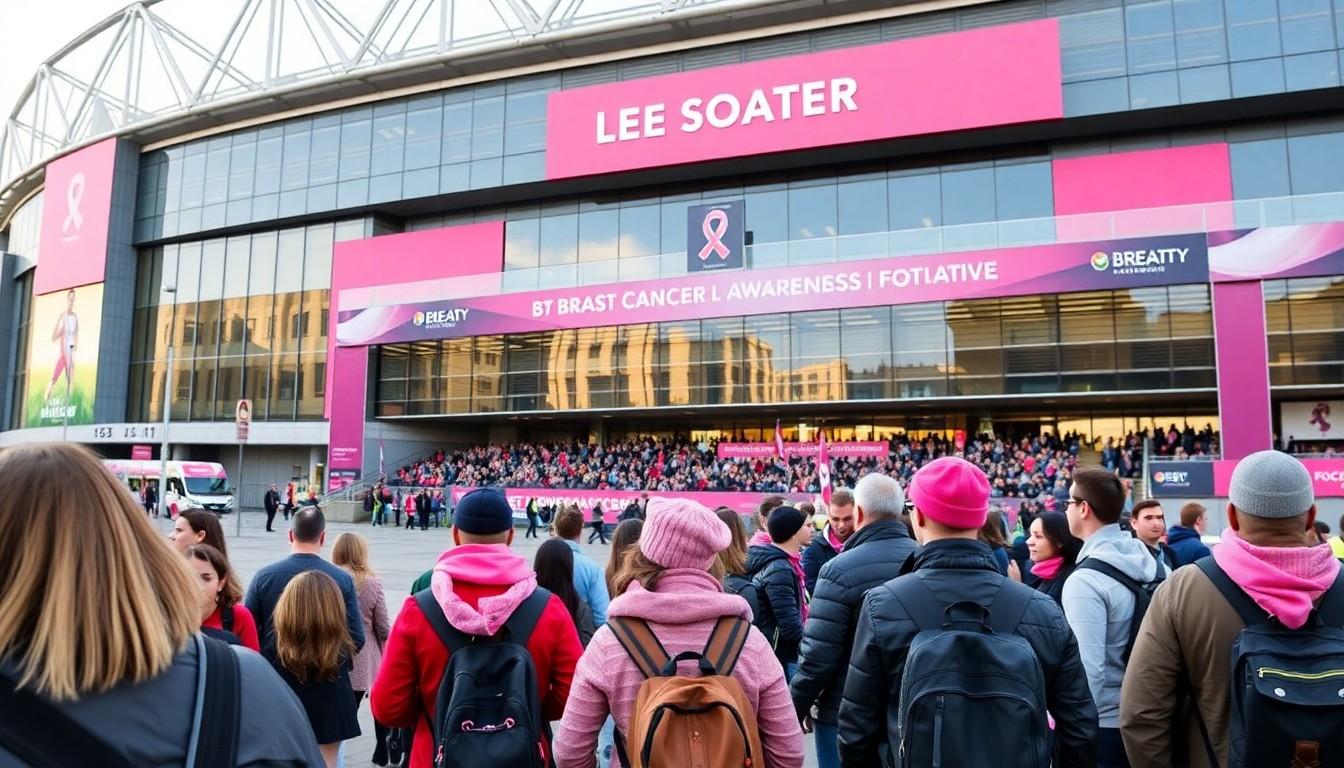
Fans are seeing pink return to NFL stadiums during October's Crucial Catch campaign, where the colour carries a serious message about cancer awareness and screening. But for some supporters, including LGBTQ sports fans, pink also represents self-expression, confidence and the joy of being impossible to miss.
Essential Takeaways
- Pink has a purpose: The NFL has used Crucial Catch to promote cancer awareness, prevention and early screening.
- The colour has changed: Pink once looked startling against football's traditional tough-guy image, but it's now familiar on the field.
- Players and fans connect differently: Athletes wear campaign gear for charity and awareness, while supporters may attach their own personal meaning to it.
- Style can feel powerful: Pink boots, gloves, hair or nails can turn a sporting moment into a statement of confidence.
- The message matters most: The best campaign clothing starts conversations and encourages people to take screening seriously.
Pink still cuts through football's macho image
There’s something wonderfully jarring about pink against a football kit. Amid dark helmets, metallic facemasks and the heavy thud of shoulder pads, a flash of bright colour feels almost mischievous. It catches the eye before the brain has time to remember why it’s there.
The NFL’s Crucial Catch campaign has made that contrast part of its visual language. According to the NFL, the initiative supports breast cancer awareness and encourages people to take prevention and screening seriously. Pink isn’t simply decorative here; it’s meant to interrupt the spectacle and make room for a health message.
That still carries a certain force in a sport long associated with aggression and conventional masculinity. When a player steps onto the field in pink footwear or gloves, the image says that toughness and care aren’t opposites. In fact, putting the message inside such a hard-edged environment arguably makes it harder to ignore.
How Crucial Catch turned kit into a conversation
The league’s breast cancer awareness work grew into a broader campaign built around education, screening and fundraising. Earlier NFL initiatives used pink equipment and stadium features to keep the subject visible, while later efforts placed more emphasis on encouraging fans to understand their own health risks.
That shift matters. A limited-edition shirt may catch the shopper’s attention, but a reminder to arrange a screening can have a much more lasting effect. The NFL’s campaign material has consistently presented awareness as something that belongs both on the pitch and in everyday life.
It’s also why the colour has remained useful. Pink is recognisable from the stands, on television and across social media, giving a serious message an immediate visual signature. Even viewers who don’t follow the campaign closely can usually tell when the league is making a point.
Why fans bring their own meaning to pink
For supporters, though, pink rarely stops at the official explanation. A fan may see it as a tribute to a relative, a reminder of a personal health experience or simply a colour that makes the weekend feel more expressive. That emotional layering is part of what gives the campaign its staying power.
For LGBTQ fans in particular, pink can carry an additional charge. It has long been used as a colour of visibility, pride and self-invention, so seeing it on professional athletes can create an unexpected bridge between identity and sport. The players may be promoting cancer awareness, but the image can still resonate with spectators who understand pink as a declaration of self.
That’s the interesting tension. The same pair of pink boots can be a fundraising symbol to one person, a family tribute to another and a joyful style choice to someone else. None of those readings cancels out the others.
Pink NFL gear is more than a novelty
The league’s relationship with pink hasn’t always been perfectly smooth. NBC Sports has reported on periods when pink equipment became less prominent, as the NFL adjusted how cancer-awareness merchandise and uniform elements were handled. That made the colour’s appearance feel less automatic, and perhaps more noticeable when it returned.
There’s a practical lesson for shoppers, too. If you’re buying pink NFL clothing or accessories, look beyond the colour and check where the money goes, whether the item is officially licensed and whether the campaign information is clear. A good piece of fan gear should feel sturdy, comfortable and easy to wear, but the cause behind it shouldn’t be an afterthought.
And while a pink cap won’t replace medical advice or screening, it can open a useful conversation. Sometimes the softest-looking item in the stadium is the one that prompts somebody to make an important appointment.
The next phase should keep the message visible
NFL players have increasingly used personal style to show more personality, although the league’s uniform rules still shape what can appear on the field. NBC Sports has also highlighted player frustration with restrictions, including calls for athletes to have more freedom and fun with their presentation.
That debate gives pink an extra edge. It isn’t only about whether a player can wear a certain shade; it’s about how much individuality sport is willing to accommodate. When campaigns, personal expression and team identity overlap, the result can feel more human than a standard corporate slogan.
Pink won’t make football gentler, and it isn’t supposed to. Its value lies in creating a visible pause inside the noise, reminding fans that courage can mean taking a hit, speaking openly or simply looking after your health.
Wear the colour for the cause, the style or the personal meaning, but let the message stay loud.
Source Reference Map
Story idea inspired by: [1]
Sources by paragraph: