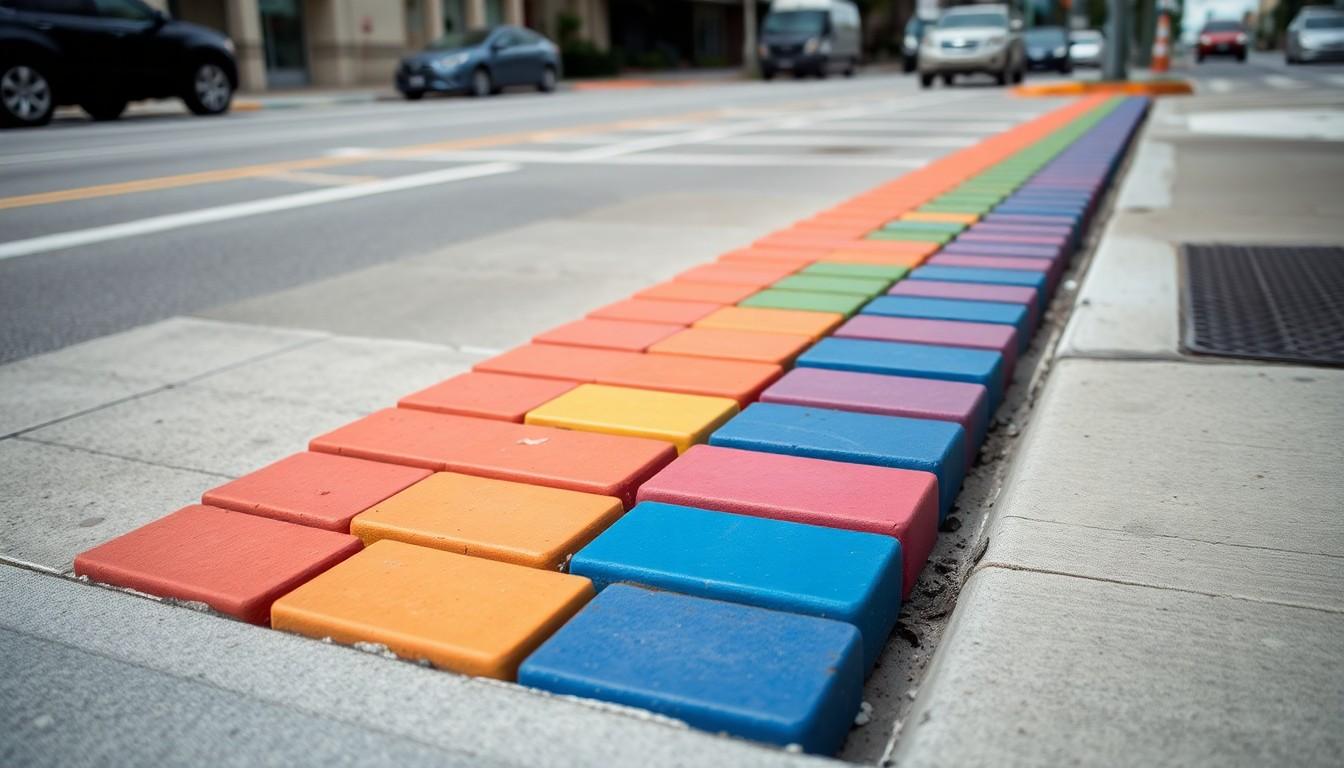
Shoppers are buying pieces of a demolished Miami Beach rainbow crosswalk after drag performer Miss Bouvèé turned the rubble into a fundraiser. The project has raised more than $25,000 for LGBTQ+ Pride celebrations in smaller South Florida cities, giving a little piece of public history a surprisingly hopeful second life.
Essential Takeaways
- A symbolic sale: Miss Bouvèé is selling bricks recovered from a Miami Beach rainbow crosswalk.
- Money for Pride: The fundraiser has passed $25,000 and supports celebrations in smaller South Florida communities.
- A political backdrop: The crosswalk was removed amid Florida’s wider crackdown on LGBTQ+-affirming public displays.
- More than memorabilia: Buyers are taking home a physical reminder of resistance, solidarity and local queer history.
When demolition becomes a fundraiser
A pile of paving bricks might not sound like obvious keepsake material. But these aren't ordinary building scraps. They once formed part of a rainbow crosswalk in Miami Beach, and their removal has given them a new meaning as small, tactile pieces of LGBTQ+ history.
Drag performer Miss Bouvèé has been selling the bricks to raise funds for Pride events in smaller South Florida cities. According to Them, the campaign has brought in more than $25,000, turning an act of removal into support for communities that don't always have the same visibility or resources as major urban centres.
There's something quietly powerful about the format. A buyer receives a rough, physical fragment, while local Pride organisers receive practical help. The brick may sit on a shelf, but the money can help put people in the street.
Why the Miami Beach crossing mattered
Rainbow crossings are often dismissed as decoration, yet their real purpose is public recognition. They make LGBTQ+ visibility part of the everyday landscape, alongside traffic lights, shopfronts and bus stops. Removing one can therefore feel less like routine maintenance and more like erasing a statement.
CBS News Miami reported on the fundraiser and the crosswalk's destruction, while LGBTQ Nation placed the episode within Governor Ron DeSantis's broader opposition to LGBTQ+-affirming displays on public roads. That context explains why the bricks have attracted such strong interest: they represent both a local landmark and a national political argument.
For supporters, buying one is a direct way to say that visibility doesn't vanish simply because paint or paving is taken away. The rubble is still there, and so is the response.
A small object with a very large story
The appeal isn't really about owning a brick. It's about owning a conversation starter that comes with a clear backstory. Unlike anonymous merchandise, each piece points to a particular place, a particular dispute and a fundraiser with a defined purpose.
Urania Institute described the initiative as a way of connecting material history with Pride fundraising. That combination gives the sale a warmth that traditional political merchandise can lack. A slogan can fade into the background; a chipped piece of pavement tends to prompt questions.
It also helps explain why the project has travelled beyond Miami Beach. People who can't attend every rally or Pride march can still contribute in a tangible way. The keepsake is modest, but the gesture feels personal.
Why smaller Pride events need the spotlight
The funds are being directed towards Pride celebrations in smaller South Florida cities, rather than being absorbed by a single high-profile event. That's an important distinction. Local festivals and community gatherings can be vital meeting points, especially where LGBTQ+ residents have fewer public venues or less institutional support.
Wise Voter reported on the auction and its purpose, highlighting how the crosswalk bricks are being used to support Pride activity beyond Miami Beach. The approach spreads attention as well as money, reminding people that queer life isn't concentrated in one famous postcode.
For donors, that makes the purchase feel more useful than a purely symbolic protest. It supports the people organising events, welcoming newcomers and keeping local Pride visible year after year.
Turning anger into something constructive
The story has an emotional charge, but it isn't simply about outrage. Miss Bouvèé's campaign turns frustration into a practical result, which is often where activism becomes most effective. Instead of leaving the demolished crossing as a painful image, the fundraiser gives the public somewhere to put its energy.
The response also suggests that attempts to suppress LGBTQ+ visibility can produce an unexpected counter-effect. The crosswalk may have disappeared from the road, but its pieces are now circulating further and carrying a story the original installation could never tell in quite the same way.
A brick won't rebuild a crossing on its own. Still, it can help pay for a Pride celebration, preserve a memory and remind someone that public visibility is worth defending.
Small fragments can carry a surprisingly big message.
Source Reference Map
Story idea inspired by: [1]
Sources by paragraph: