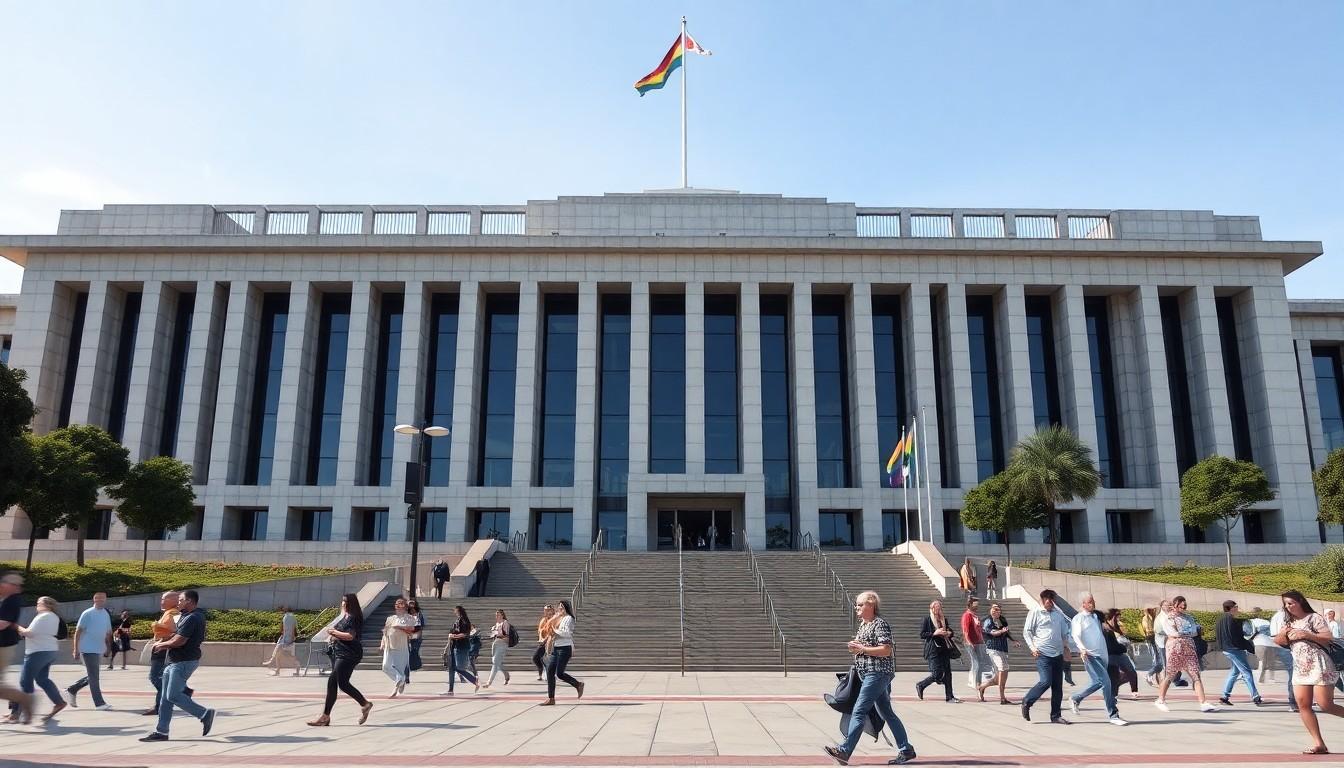
Supporters are celebrating Lula’s return to Brazil’s presidency, while Erika Hilton’s prominent role has made the result especially meaningful for LGBTQ+ voters. The campaign victory arrives as South America wrestles with a stronger conservative current, making Brazil’s direction important well beyond Brasília.
Essential Takeaways
- A progressive win: Lula defeated far-right challenger Flávio Bolsonaro after a closely fought campaign.
- A visible LGBTQ+ voice: Erika Hilton, one of Brazil’s first trans members of Congress, campaigned prominently for Lula.
- Rights at stake: Brazil has legalised same-sex marriage, same-sex adoption and gender-marker changes without surgery.
- A regional signal: Advocates view the result as a defence of democratic and LGBTQ+ protections in Latin America.
Lula’s win carries weight beyond the ballot box
The result is more than a presidential comeback. It offers a moment of relief for LGBTQ+ advocates who had watched Brazil’s political debate become harsher, louder and increasingly shaped by culture-war tactics.
According to The Daily Beast, Flávio Bolsonaro’s defeat was a major setback for the wider MAGA-aligned right. His campaign had leaned heavily into conservative themes, while supporters of Lula framed the election as a choice between democratic resistance and a more aggressive far-right direction.
That contrast made the result feel unusually personal for many voters. For queer Brazilians, politics here isn't an abstract argument on television; it can affect whether public life feels safe, welcoming and worth participating in.
Erika Hilton becomes a symbol of the campaign
Hilton's presence beside Lula gave the victory a striking visual shorthand. In a selfie video shared after the result, she appeared alongside the president-elect amid a jubilant crowd, celebrating in Portuguese and describing him warmly as her president.
Her political journey has been closely watched. As a Black trans organiser from São Paulo state, Hilton first built a national profile through trans-rights activism before entering elected politics. El País reported that she has become an increasingly influential figure, combining work in public office with a substantial social-media presence.
That combination matters. Hilton isn't simply a representative who speaks inside Congress; she is also a campaigner who can reach younger voters directly, often in a more immediate and human way than a formal party message ever could.
Brazil's LGBTQ+ protections remain a key backdrop
Brazil has established several important legal protections for LGBTQ+ people. Same-sex marriage became legal in 2013, same-sex adoption is permitted, and trans people can change their legal gender marker without undergoing surgery.
Lula has also long positioned himself as an ally. His earlier government created the Brazil Without Homophobia initiative, and his political record has included support for marriage equality and trans rights, according to The Associated Press.
Still, legal progress doesn't erase everyday discrimination or political hostility. Rights can exist on paper while remaining vulnerable in practice, especially when candidates use LGBTQ+ people as campaign targets. That’s why advocates see the election as a test of whether existing protections will be defended rather than quietly weakened.
A close race reflected a wider regional divide
Lula’s victory was far from inevitable. His earlier political career included two terms as president, but the campaign began under pressure after he narrowly lost the first round. Young progressives and left-wing grassroots groups, including the Socialism and Liberty Party, helped build momentum for the final contest.
Meanwhile, Bolsonaro’s political network remained powerful. El País reported that the defeated camp challenged the result and refused to accept Lula’s victory, adding another layer of tension after an already polarised election.
Across South America, voters are weighing frustration over living costs, public safety and political institutions against fears about authoritarianism and attacks on minority rights. Brazil’s result doesn't settle that argument, but it shows that a progressive coalition can still prevail when it mobilises effectively.
What comes next for queer voters?
The immediate challenge is turning a symbolic win into durable policy. That means protecting existing rights, tackling violence and ensuring that trans people have a meaningful place in political decision-making, not just a visible role during election season.
Hilton's rise offers a hopeful example, but it also highlights how much pressure falls on a small number of pioneering politicians. As El País noted in an interview with Hilton, concerns about democratic backsliding remain part of the political conversation, even when institutions appear to hold.
For supporters, the mood is celebratory but watchful. A campaign can deliver a powerful image in a crowded square; governing is where the promises become real.
Brazil’s election has given LGBTQ+ advocates fresh reason to hope, but the next test will be making that hope last.
Source Reference Map
Story idea inspired by: [1]
Sources by paragraph:
- Paragraph 1: [3], [4]
- Paragraph 2: [5], [6]
- Paragraph 3: [2], [4]
- Paragraph 4: [2], [6]
- Paragraph 5: [4], [5]
- Paragraph 6: [3], [5]
- Paragraph 7: [2], [4]
- Paragraph 8: [5], [6]
- Paragraph 9: [2], [4]
- Paragraph 10: [3], [5]
- Paragraph 11: [4], [6]
- Paragraph 12: [2], [6]
- Paragraph 13: [5], [6]
- Paragraph 14: [2], [4]