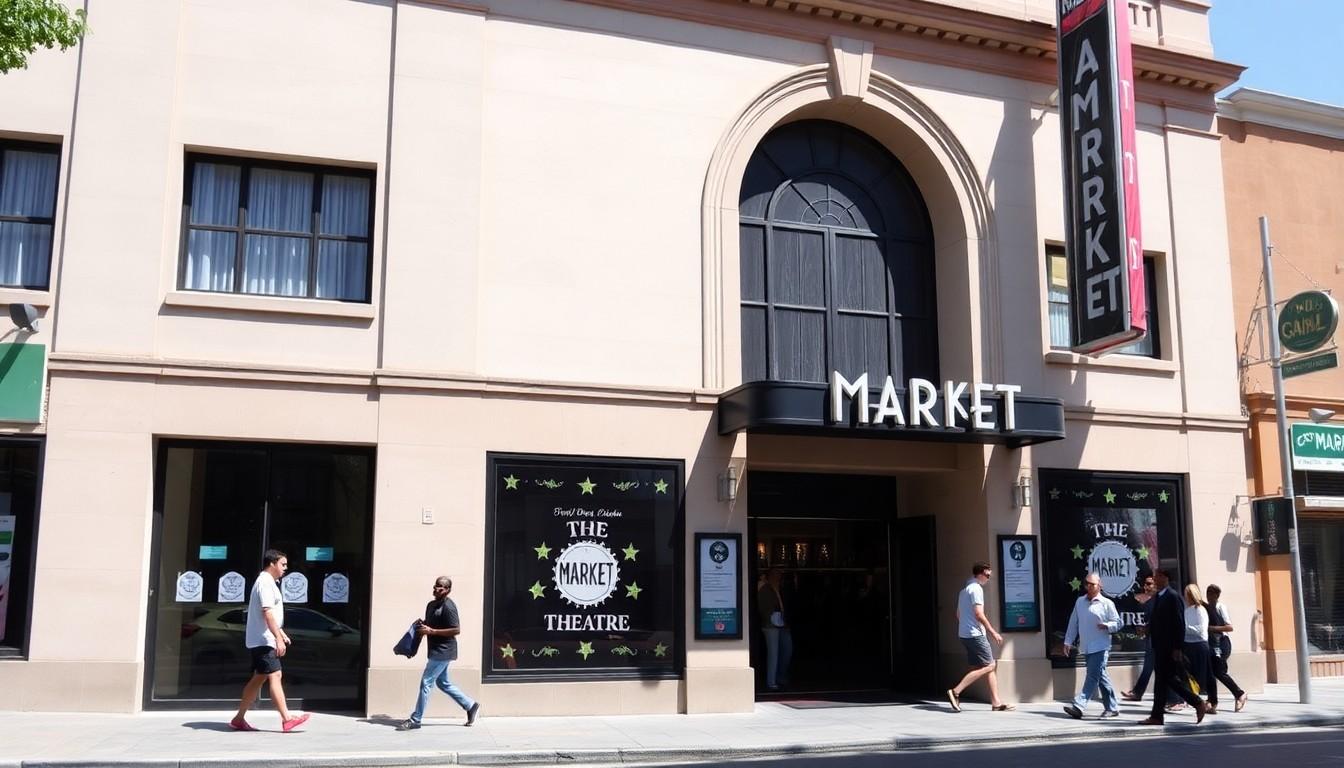
Johannesburg audiences turned out in force for the Market Theatre’s first Queer Festival, a five-day programme of theatre, cabaret, dance and music. Held as part of the venue’s 50th anniversary, the event brought LGBTQIA+ stories into the spotlight while reflecting on hard-won freedoms and the discrimination that still shapes many lives.
Essential Takeaways
- A landmark programme: The festival ran for five days at The Market Theatre in Johannesburg.
- Many queer perspectives: Productions explored sexuality, gender identity, faith, apartheid-era prejudice and trans experience.
- A powerful opening night: Pieter-Dirk Uys’s Evita Bezuidenhout returned in a sold-out performance.
- History met the present: Several works reminded audiences that homosexuality was once criminalised under apartheid.
- More is planned: The theatre said it intends to bring the festival back next year.
Johannesburg’s queer stage arrives with real momentum
The strongest impression from Johannesburg’s first Queer Festival was scale. Audiences arrived in numbers for a programme that treated queer performance not as a single annual statement, but as a broad, lively conversation spanning comedy, music, movement and drama.
The Market Theatre Foundation presented the festival during the theatre’s 50th anniversary year. Its artistic director, Greg Homann, said the aim was to make room for a wider range of LGBTQIA+ stories rather than suggesting one production could speak for an entire community.
That approach mirrors the spirit of queer arts festivals elsewhere, where audiences increasingly expect work to reflect varied identities, histories and artistic styles. Coverage of the Market Theatre programme described it as an invitation to “radical joy”, a useful phrase for an event balancing celebration with difficult memory.
A familiar icon opened the festival
The opening performance brought back one of South Africa’s best-known satirical characters. Pieter-Dirk Uys’s Evita Bezuidenhout appeared in Evita @ 91, a sold-out, one-off show that echoed her earlier appearance at the Market Theatre in 1981.
There was something satisfyingly circular about that return. The character’s sharp political humour connected the festival’s present-day celebration with decades of performance that challenged authority, hypocrisy and social convention.
The Market Theatre’s own festival material placed that sense of history alongside a more contemporary programme. So the evening wasn’t simply nostalgia in a glamorous costume; it helped underline how much the cultural conversation has changed, and how much still needs saying.
Shockwave puts apartheid-era prejudice under the spotlight
Chantal Stanfield’s Shockwave looked back to the 1980s, following Larry, a young man trying to understand his sexuality in a society shaped by fear, religious pressure and state repression.
The play’s subject remains especially jarring because it recalls a time when homosexuality was criminalised under apartheid. For younger audience members, that history may feel distant, but the production made the point that legal freedom is relatively recent and never exists separately from social attitudes.
Stanfield also examined the uneasy relationship between faith and sexuality. Her observation that the two often existed side by side only when certain subjects remained unspoken gives the play its emotional sting. It’s a quiet reminder that silence can look like tolerance from a distance, while feeling far more restrictive to the person living inside it.
Trans and township stories broaden the conversation
The festival also made space for stories that are still too often pushed to the edges of mainstream theatre. Vuyelwa Maluleke’s The Blue Album explored queer life and so-called corrective rape in townships, bringing the violence of prejudice into direct conversation with resilience and survival.
The Breasts of Tiresias, co-written by Angelo de Klerk and former Market Theatre artistic director Malcolm Purkey, focused on the lived experience of a trans man. Its inclusion mattered not only because trans stories remain underrepresented, but because representation feels different when it comes from the stage rather than a headline or campaign slogan.
Comparable queer festivals internationally have made similar room for trans-led and gender-expansive work. The wider trend is encouraging, although audiences and artists alike still need programming that treats these stories as part of the cultural mainstream, not occasional special-interest additions.
Why festivals like this matter beyond Pride
Homann said the festival was a chance to recognise freedoms won over several decades while acknowledging that discrimination based on sexuality and gender identity remains a challenge. That balance is important. Celebration without context can feel glossy, while history without joy can become exhausting.
The festival’s strongest contribution may have been its variety. A cabaret audience, a theatre regular and someone arriving for a story about trans identity might all have encountered different work, but they were sharing the same cultural space.
The response also suggested that demand is there, even with limited resources. The Market Theatre plans to stage the festival again next year, and that follow-up could help turn a promising first edition into a durable Johannesburg fixture. For many people, seeing a fuller version of queer life on stage is more than an evening out; it’s a chance to feel recognised in a room that has made space for them.
It’s a small but significant step towards making queer stories part of the cultural centre, not the margins.
Source Reference Map
Story idea inspired by: [1]
Sources by paragraph: