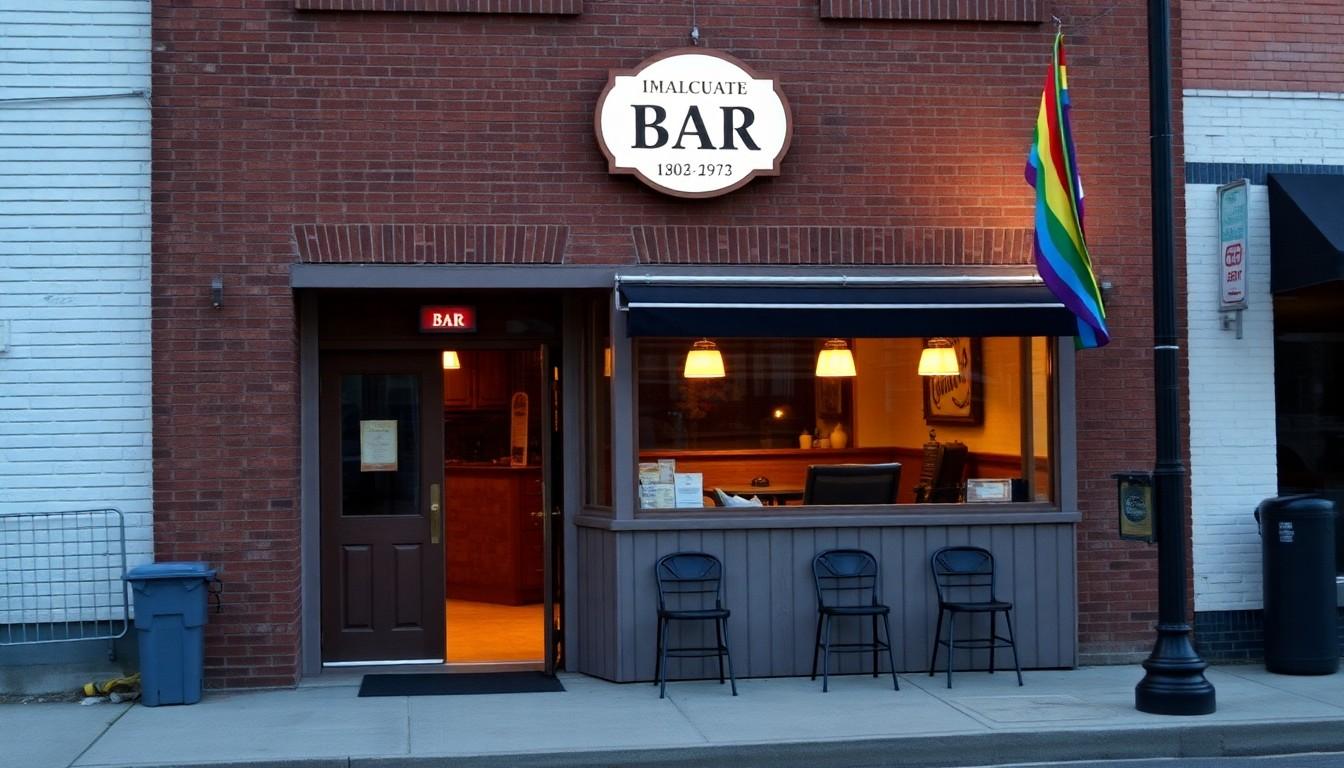
A mask-policy dispute at Massachusetts’ Last Ditch bar has become a national talking point, but the bigger story is financial survival. With only around 36 sapphic bars now operating across the US, the venue’s struggle shows why queer spaces need practical support, thoughtful debate and paying customers, not just viral outrage.
Essential Takeaways
- Last Ditch opened in April 2025: The Western Massachusetts venue is still a young business finding its feet.
- A mask-policy change sparked backlash: The bar removed its mask requirement for one weekly night to attract more custom.
- Closure is a real concern: Founder Jackie Matellian reportedly works four jobs while carrying a $50,000 business loan.
- Sapphic bars remain scarce: Around 36 operate in the US today, compared with roughly 200 in 1980.
- The wider lesson is uncomfortable: Community accountability matters, but so does keeping welcoming queer venues financially alive.
The online argument is bigger than one night
Last Ditch’s decision to relax its mask rule for one evening might sound like a small operational change. Instead, it became a flashpoint, spreading from local reporting into national coverage and queer media discussion.
According to Pride Source, the disagreement has attracted attention from publications including the New York Post and LGBTQ Nation. That kind of exposure can bring visibility, but it can also flatten a complicated local problem into a quick culture-war punchline.
For customers who rely on queer venues, the stakes feel more immediate. A bar isn’t only a place to buy a drink. It can be where someone comes out, meets a partner, finds friends or simply enjoys an evening without explaining who they are.
Last Ditch’s financial strain is the real warning
Behind the argument sits a far less entertaining reality. Pride Source reports that Matellian is juggling four jobs, managing the bar’s $50,000 business loan and struggling with mounting bills.
That pressure is familiar to independent hospitality businesses, where rent, staffing, insurance, energy costs and unpredictable trading can quickly overwhelm a new venue. For a queer bar, the challenge is often sharper because owners are expected to provide a social safety net as well as a commercially viable business.
The bar’s supporters may disagree over masks, accessibility or health precautions, but the immediate question is whether Last Ditch can keep trading. A venue can’t serve its community if it can’t pay its bills.
There are fewer of these spaces than many people realise
The US has about 36 sapphic bars, according to figures highlighted by the Lesbian Bar Project and reported by Pride Source. That’s an improvement on the estimated 16 venues operating around 2020, but it’s still a dramatic fall from the roughly 200 reported in 1980.
Other reporting on lesbian bars, including coverage by Axios, underlines how valuable individual venues can become to their local communities. Each one has its own character, regulars and history, so losing a bar isn’t quite like losing another generic nightlife business.
The atmosphere can be hard to replace: the familiar nod at the door, the low hum of conversation, the sudden relief of feeling understood. Those details may look ordinary from the outside, but they’re often the reason people return.
How can queer bars balance safety and survival?
There’s no universal answer to the mask dispute because customers have different health needs and different levels of risk. Immunocompromised people, those living with long Covid and anyone anxious about infection may need stronger protections, while owners still have to attract enough customers to cover the basics.
That tension deserves more than online pile-ons. The Atlantic’s discussion of the controversy points to the difficult balance between public-health expectations and the realities of running a small hospitality business. Neither side benefits when a nuanced question is reduced to a loyalty test.
For customers, practical support can be more useful than indignation. Check the venue’s current policy before visiting, choose events that match your comfort level, spend directly with the business and offer specific, respectful feedback. If a venue feels unsafe or inaccessible, raising the issue clearly gives owners something they can actually address.
Keeping the doors open requires more than goodwill
The Last Ditch story also exposes the impossible expectations often placed on queer women who run community venues. Owners are expected to be welcoming, politically informed, accessible, financially sustainable and perfectly responsive to every part of a diverse community, often with limited staff and very little margin for error.
That doesn’t mean criticism should disappear. Lesbian and queer bars must listen when people raise concerns about racism, transphobia, harassment, disability access or health protections. But accountability works best when it aims to improve a space rather than destroy it.
The hopeful part is that customers have real power here. A busy midweek visit, a membership, a small fundraiser or a thoughtful conversation can matter more than another angry post. As Pride Source’s reporting makes clear, these venues are rare, fragile and deeply loved. Their future depends on turning that affection into action.
It’s worth arguing for better queer spaces, but it’s just as important to help keep them open.
Source Reference Map
Story idea inspired by: [1]
Sources by paragraph:
- Paragraph 1: [2], [3]
- Paragraph 2: [4], [5]
- Paragraph 3: [2], [5]
- Paragraph 4: [2], [3]
- Paragraph 5: [2], [4]
- Paragraph 6: [2], [5]
- Paragraph 7: [6], [7]
- Paragraph 8: [2], [5]
- Paragraph 9: [3], [4]
- Paragraph 10: [2], [5]
- Paragraph 11: [2], [3]
- Paragraph 12: [2], [4]
- Paragraph 13: [2], [5]
- Paragraph 14: [2], [3]