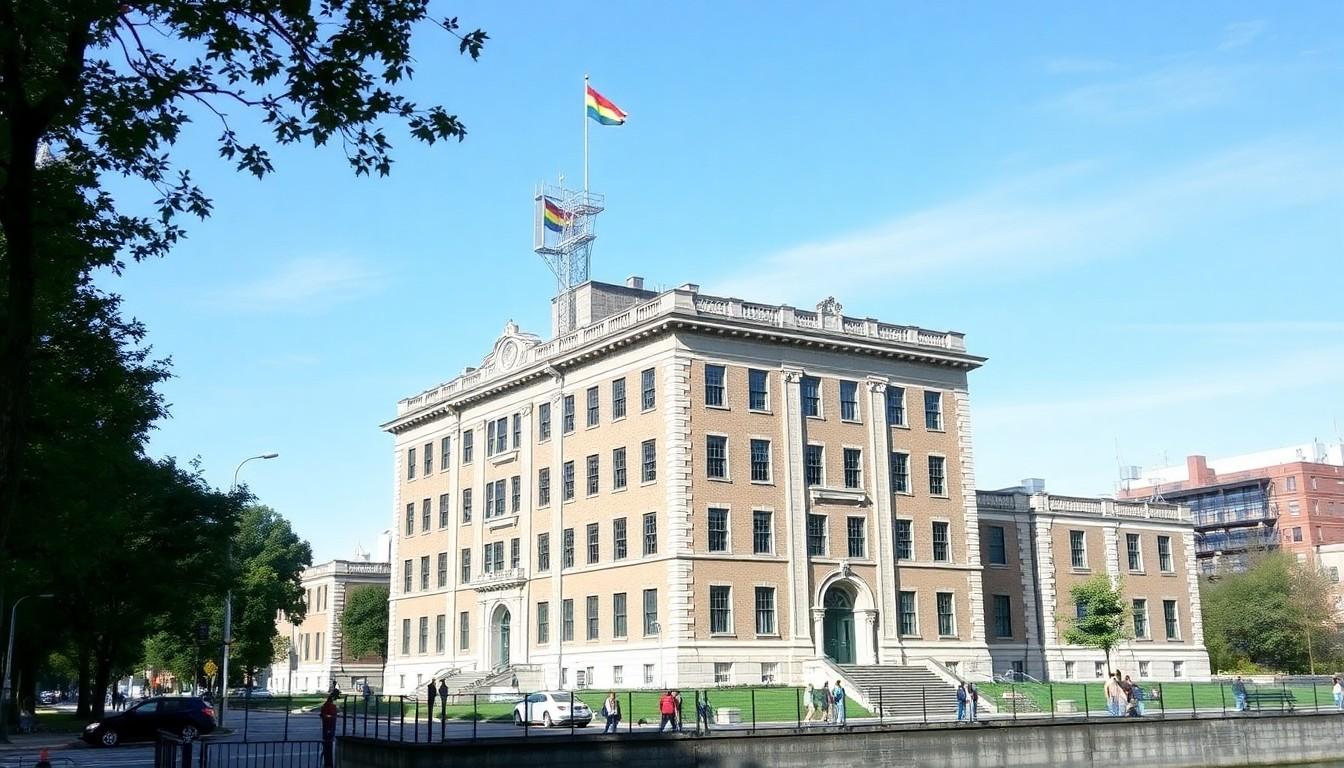
Listeners are being taken back to New York’s Welfare Island, now Roosevelt Island, in a new podcast series about gay and gender-nonconforming prisoners from the 1920s and 1930s. The Queens of Welfare Island pairs archival research with the forthcoming Off-Broadway musical The Gorgeous Nothings, bringing forgotten queer lives, fierce friendships and the notorious Fag Follies into sharper focus.
Essential Takeaways
- A new eight-part series: The Queens of Welfare Island explores LGBTQ+ life inside a New York men’s penitentiary.
- A rare historical record: Host Eric Marcus draws on archival material and surviving accounts from the 1920s and 1930s.
- A theatrical connection: The podcast is linked to The Gorgeous Nothings, which is due at PAC NYC in 2027.
- A story of resilience: Prisoners created friendship, identity and performance culture in deeply restrictive surroundings.
- A milestone season: Making Gay History is marking its tenth anniversary with its sixteenth podcast season.
A forgotten queer story returns to the East River
The strongest detail in The Queens of Welfare Island is also the bleakest: gay prisoners were held in a separate area known as the Fag Ward inside a notoriously grim men’s penitentiary. Against that harsh backdrop, the series finds flashes of wit, glamour and solidarity.
Making Gay History host Eric Marcus sets out to recover the people behind the labels used by the institution and the press. According to the podcast’s first episode, the surviving record is fragmentary, but even those glimpses reveal inmates who were resourceful, expressive and determined to build a life together. [2]
That contrast gives the project its pulse. This isn't simply a story about an old prison; it's about what people created when almost everything around them was designed to strip away dignity.
Inside the “Fag Follies” and a community of performers
The series centres on the annual Christmas show known as the Fag Follies, a performance that offered incarcerated men a rare chance to play with gender, humour and public identity. In an otherwise controlled environment, the event became a moment of visibility and shared pleasure.
Those performances also complicate the familiar picture of queer history as a straight line from repression to liberation. The prisoners had little power, but they still found ways to make culture, form friendships and claim a stage. The podcast uses these details to show how performance could become both escape and survival tactic. [2]
There’s something especially moving about that theatrical instinct. Even in a place remembered for corruption and squalor, people still reached for costumes, jokes and applause.
Why the podcast and musical belong together
The partnership with The Gorgeous Nothings gives the history a second form. The podcast can linger over documents and voices from the archive, while the musical offers a more immediate, embodied way to consider queer lives that official history largely ignored.
BroadwayWorld reported that the new Off-Broadway production is scheduled to premiere at PAC NYC in 2027. Its collaboration with Making Gay History means audiences can encounter the subject through both historical storytelling and live theatre, rather than treating the past as a dusty footnote. [3]
That feels like a smart pairing. Archival stories need care, but they also need energy, and theatre is particularly good at making distant lives feel startlingly close.
What the first episode reveals
The opening instalment, Island of Misfits, establishes Welfare Island as a place where New York confined people it considered undesirable. It introduces the penitentiary’s reputation and begins tracing the limited, vivid evidence left behind by its queer inmates.
For new listeners, the episode works as a scene-setter rather than a complete history lesson. It establishes the island, the prison and the people at the centre of the series, leaving later episodes to explore the stories in greater depth. The official Making Gay History archive places the project within the podcast’s wider mission of preserving LGBTQ+ history. [6]
That approach should appeal to listeners who enjoy narrative history but don't want a lecture. The details are unsettling, yet the human texture keeps the story from becoming merely grim.
A timely addition to LGBTQ+ history
The launch arrives during a milestone year for Making Gay History, which is celebrating a decade of the podcast and its sixteenth season. The long-running series has built its reputation around preserving first-person testimony and bringing overlooked LGBTQ+ stories to a broad audience. [6]
The Queens of Welfare Island extends that work into an earlier, more elusive period. Historical material from the 1920s and 1930s can be difficult to find, particularly when institutions recorded queer lives through hostile or dismissive language. That makes the surviving fragments all the more valuable.
The coming musical may introduce the story to theatre audiences, while the podcast gives listeners time to sit with the evidence. Together, they suggest that queer history isn't just something to remember; it's something to keep discovering.
Explore the series for a vivid reminder that community can flourish in the least expected places.
Source Reference Map
Story idea inspired by: [1]
Sources by paragraph:
- Paragraph 1: [2], [3]
- Paragraph 2: [2], [6]
- Paragraph 3: [2], [3]
- Paragraph 4: [6], [7]
- Paragraph 5: [3], [5]
- Paragraph 6: [2], [6]
- Paragraph 7: [6], [7]
- Paragraph 8: [6], [3]
- Paragraph 9: [2], [6]
- Paragraph 10: [3], [5]
- Paragraph 11: [6], [7]
- Paragraph 12: [2], [6]
- Paragraph 13: [6], [3]
- Paragraph 14: [2], [3]