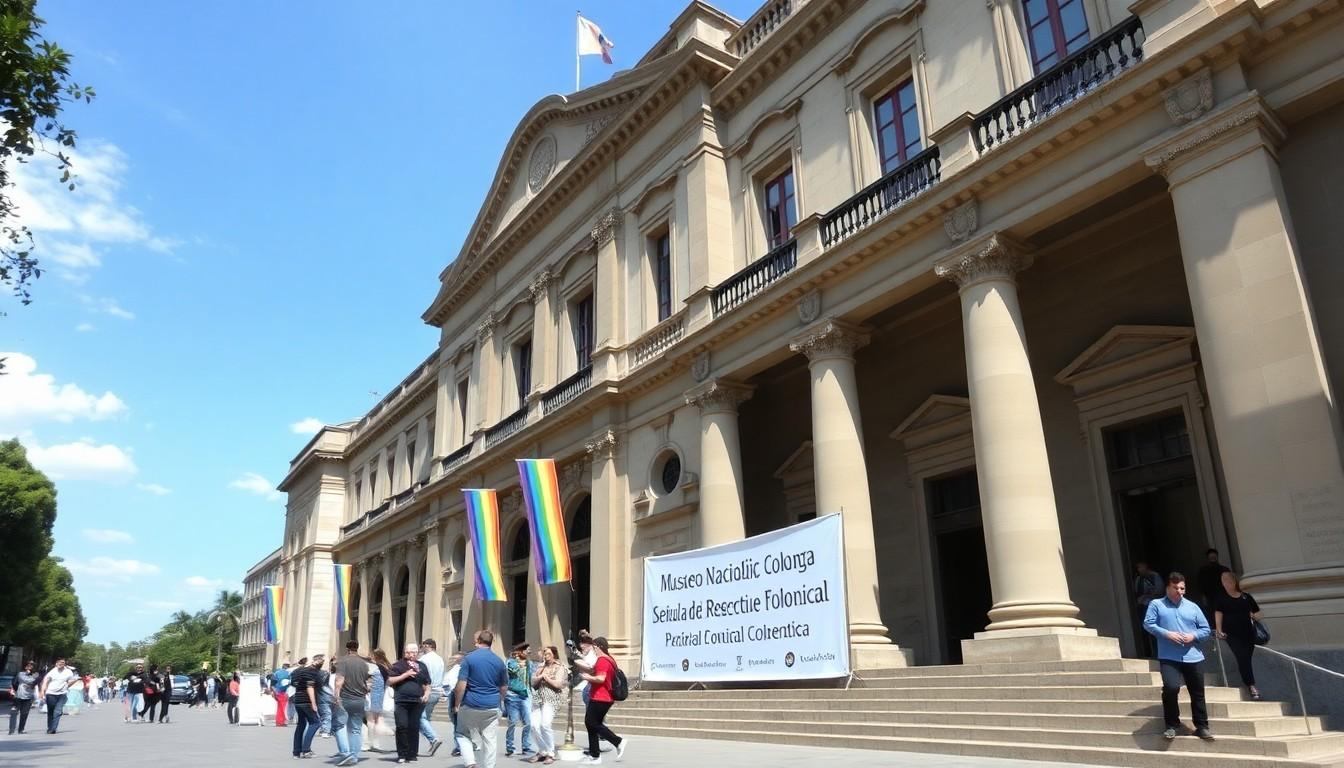
Protesters have turned the steps of Colombia’s National Museum into an open-air classroom, using colourful signs, hand-made banners and public questions to explain sexual and reproductive rights. The action matters because it links today’s debates over abortion, trans recognition and gender-based violence with the historical struggles represented, or removed, from the museum’s collection.
Essential Takeaways
- An open-air lesson: Seven social organisations discussed sexuality, abortion, gender identity and reproductive autonomy outside the museum.
- A wider dispute: The classes formed part of protests over 63 objects removed from a museum display.
- Knowledge remains uneven: Survey data shows that access to sexual-health information varies sharply by gender, region, education and income.
- Rights meet real barriers: Delays, poor information and disrespectful healthcare can still obstruct lawful abortion access.
- Visibility shapes records: Activists say incomplete official data makes violence against trans people harder to measure.
The museum steps became a classroom
The strongest image from the demonstration wasn't a polished exhibition label but a megaphone, a bright poster and people stopping to ask questions. Outside the National Museum, campaigners explained the difference between gender identity, sexual orientation and gender expression, turning a familiar civic space into something more immediate and participatory.
According to El Espectador, seven organisations took part in the session, which lasted more than four hours. Their programme covered comprehensive sex education, abortion, obstetric violence and trans rights, with green scarves and a signed trans flag adding a vivid visual language to the protest.
The gathering followed earlier public classes on the museum steps about historical memory and the role of cultural institutions. The message was clear: museums don't simply store objects. They help decide whose lives, struggles and contributions become part of the national story.
Why the removed objects became a flashpoint
The dispute began after 63 pieces were taken down from display, including material connected with feminist organising, lesbian and trans movements, peacebuilding and political memory. The decision prompted demonstrations and renewed scrutiny of how museums handle contested histories.
The National Museum has also framed reproductive justice as part of a broader public conversation about rights, citizenship and social memory, according to its official material. That context helps explain why campaigners chose the building itself rather than staging a conventional indoor conference.
El Universal reported that the government would review pieces across its museums after the protests, while Infobae reported that Colombia's justice system ordered the preservation of the removed works. The legal and political debate is still developing, but the practical question is already resonating: who gets to determine which histories are safe, suitable or important enough to display?
Education is useful only when people can use it
Sexual-health education is often reduced to contraception and infection prevention, but campaigners argue that the subject must go further. It should also cover consent, routes for reporting violence, bodily autonomy, gender diversity and the right to receive respectful healthcare.
Survey figures cited by El Espectador found that 80.2 per cent of women and 72.9 per cent of men aged 13 to 49 had received some information about sexuality. Yet access falls among people living in poorer or more remote settings and among those with less formal education.
That gap matters. A person may technically have a right to abortion or protection from violence, but still struggle to identify the right service, challenge a refusal or understand what should happen next. In practice, useful education is not just a collection of facts. It's the confidence to recognise a problem and know where to seek help.
Abortion rights still face everyday obstacles
Colombia permits voluntary interruption of pregnancy up to 24 weeks, but legal access doesn't automatically guarantee a smooth experience. Activists described delays, unclear information, pressure from healthcare workers and treatment that can minimise pain or ignore informed consent.
The discussion also connected abortion care with obstetric violence, including procedures carried out without proper agreement and restrictions on having a trusted companion. Those details can sound administrative from a distance, but for patients they affect whether care feels safe, dignified and genuinely voluntary.
The National Museum's reproductive-justice material places these concerns within a longer history of activism, while the protest organisers linked them to earlier feminist demands around contraception, abortion and forced sterilisation. The point is quietly powerful: today's rights didn't appear by accident, and they can still be weakened if institutions stop explaining or defending them.
Trans visibility is also a question of evidence
The removed display included objects tied to trans and LGBTIQ+ histories, from photographs and press cuttings to creative work and community artefacts. For activists, keeping those items visible is about more than representation. It's about acknowledging that trans people have helped shape Colombia's cultural and political life.
The same concern extends to official records. Campaigners told El Espectador that when a trans person's gender identity isn't recorded accurately, it becomes harder to count deaths, identify patterns of violence and design effective public policy.
AP News has reported on the wider political and social tensions surrounding cultural institutions and public rights debates in the region, while the museum's own justice-focused programming reflects the growing expectation that heritage organisations engage with living questions rather than present history as something sealed behind glass.
For visitors, the lesson may be simple but lasting: a museum can preserve objects, but it also preserves the arguments around them. When communities gather outside its doors, they're asking the institution to make room for a fuller version of the country.
It's a small set of steps, but the conversation taking place on them is anything but small.
Source Reference Map
Story idea inspired by: [1]
Sources by paragraph:
- Paragraph 1: [2], [5]
- Paragraph 2: [2], [6]
- Paragraph 3: [5], [7]
- Paragraph 4: [3], [4]
- Paragraph 5: [2], [5]
- Paragraph 6: [6], [7]
- Paragraph 7: [2], [5]
- Paragraph 8: [2], [3]
- Paragraph 9: [2], [4]
- Paragraph 10: [2], [5]
- Paragraph 11: [2], [7]
- Paragraph 12: [5], [6]
- Paragraph 13: [2], [3]
- Paragraph 14: [2], [4]
- Paragraph 15: [2], [5]
- Paragraph 16: [2], [7]
- Paragraph 17: [3], [4]
- Paragraph 18: [5], [7]
- Paragraph 19: [2], [6]