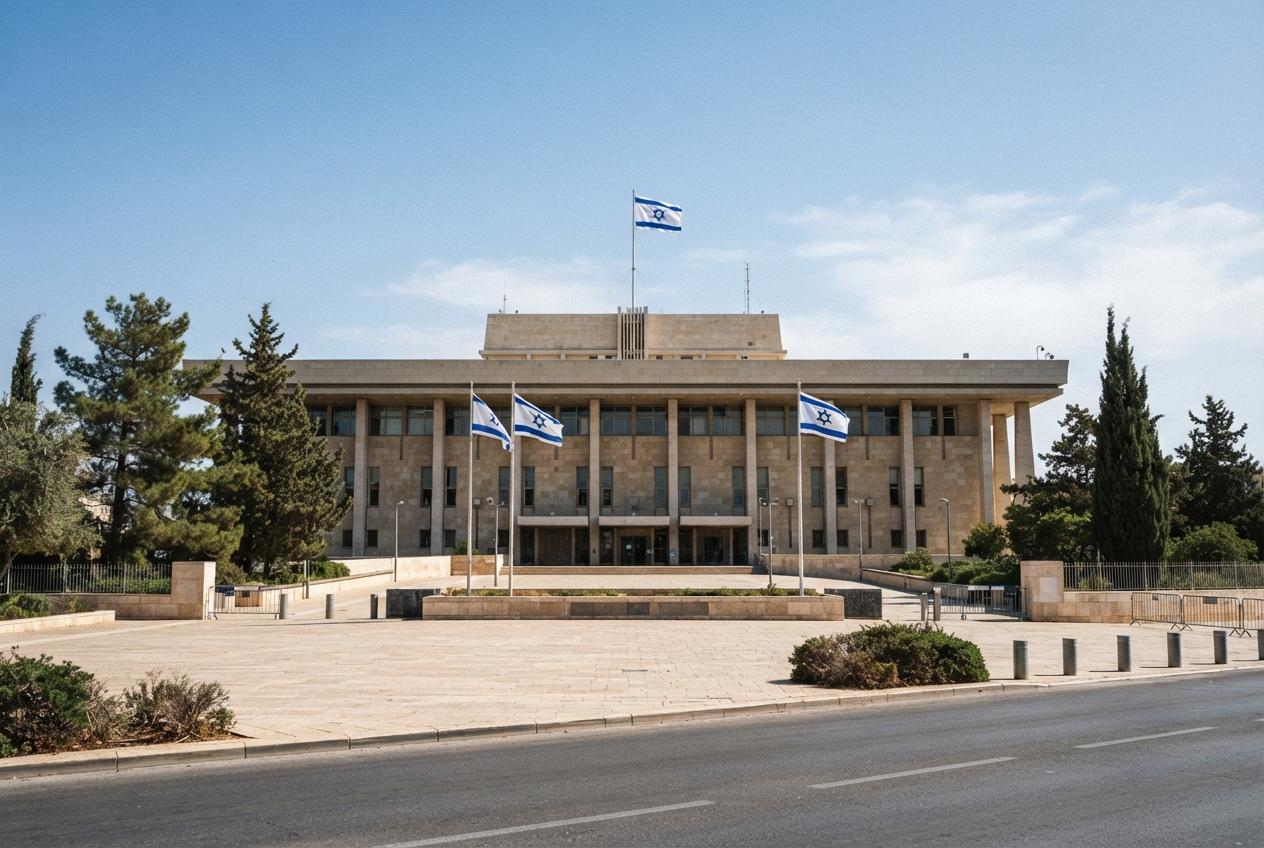
Advocates say Israel’s LGBTQ community has faced mounting pressure through proposed legislation, shrinking public funding and hostile political rhetoric. The report, published ahead of the Knesset election, also records important wins, showing how public opposition and community organisations have blocked some measures while securing limited new protections.
Essential Takeaways
- Proposed restrictions: Several bills could have weakened protections for LGBTQ people, including trans citizens and pupils.
- Funding cuts: Support for LGBTQ programmes and local-authority services fell sharply in recent years.
- Services at risk: Advocates warn that older people, disabled people, Arab citizens and those outside major cities may be hit hardest.
- Some progress remains: Changes extended recognition for same-sex partners in specific family and student-rights laws.
- Election-year warning: The report says rejected bills could return in a future Knesset.
A warning built around four years of policy
The strongest message in the report is that rights can be weakened without one dramatic legal reversal. Instead, the pressure arrives through a collection of bills, budget decisions, administrative changes and public statements. According to the Jerusalem Post, debates around LGBTQ rights have increasingly become tied to wider arguments over religion, education and the role of the state.
That makes the report feel less like a list of isolated incidents and more like a map of political direction. Some proposals never became law, but advocates say that doesn't make them irrelevant. A defeated bill can still provide the blueprint for a future coalition, particularly when parliamentary arithmetic changes.
The picture is mixed rather than uniformly bleak. Public demonstrations and pressure from LGBTQ organisations helped stop several initiatives, while a small number of amendments expanded legal recognition. Still, the overall assessment from campaigners is that protections have become more fragile.
Proposed laws put trans people and pupils in the spotlight
Among the measures highlighted were proposals to define sex in official documents only through biological criteria. Critics say that could have made it harder for transgender people to update their registered details, leaving identity documents out of step with their lived reality.
Education was another flashpoint. One proposal sought to restrict classroom discussion of sexual orientation and gender identity, with tighter conditions for older pupils. A separate initiative concerning religious education raised fears that protections against discrimination could be overridden by claims about parental or religious authority.
These debates matter beyond the wording of a bill. Schools are often where young people first look for reliable information, reassurance and safety. Removing those conversations doesn't remove LGBTQ pupils; it can simply leave them more isolated, and make teachers less confident about offering support. Related reporting by Ynet News has also highlighted how fiercely contested education policy has become.
Public funding cuts could be felt far from Tel Aviv
Money is where political intentions become daily reality. The report says the budget for a government LGBTQ affairs unit dropped from 38 million shekels in its annual plan to roughly 24 million in 2024. A separate programme for local authorities fell from 21 million to 10 million shekels.
That reduction is particularly significant because local services often provide the practical help people actually use, from community events and advice to specialist support. Large municipalities including Haifa and Beersheba reportedly faced cuts of more than 90 per cent for some activities, according to the report's findings.
The impact won't be evenly shared. Someone in a major city may have several organisations within reach, while a person in a peripheral area could depend on one funded service. The same applies to LGBTQ people over 50, disabled people and Arabic-speaking citizens, groups that advocates say were served through programmes whose future became uncertain after cooperation with the national association ended.
Why court-based protections remain vulnerable
A further concern is that many LGBTQ rights in Israel rely not only on straightforward legislation, but also on court decisions, legal advice and administrative practice. That means changes to the balance between ministers, legal advisers and religious courts could have consequences even when LGBTQ people aren't mentioned directly.
The report points to reforms affecting the powers of the government's legal adviser and the authority of rabbinical courts in civil disputes. It also raises questions about separate-gender higher education and the position of transgender and non-binary students and staff.
This is a less visible form of risk than a headline-grabbing bill, but it can be just as important. Legal systems are built from layers, and removing one layer may not be noticed until somebody needs it. The Jerusalem Post has reported on the broader political and legal tensions surrounding these reforms.
Limited gains show that campaigning can work
The report also records several advances. Amendments recognised same-sex partners in laws covering families of fallen Israeli soldiers and families of hostages or missing people. Another change added sexual orientation and gender identity to the grounds protected under student-rights legislation.
Those successes were associated with opposition lawmaker Yorai Lahav-Hartzano, one of the Knesset's openly LGBTQ members. Yet other proposals, including a ban on conversion practices for minors, housing protections, civil marriage and compensation for victims of homophobic hate crimes, did not pass.
The contrast is revealing. Progress has been possible, but it has often depended on individual lawmakers, public campaigning and sustained pressure from community groups. As election day approaches, the report's authors are effectively asking voters to judge not only what became law, but also what was proposed, funded and said along the way.
Political language raises the temperature
The report devotes a separate section to statements by coalition politicians, including comparisons between LGBTQ Israelis and terrorist organisations. It also cites comments from senior figures dismissing the political cost of taking action against the community.
Such language is not just offensive rhetoric. For people already facing discrimination, it can make public institutions feel less welcoming and embolden hostility in everyday life. According to Ynet News, the report describes these remarks as part of a broader atmosphere of intolerance.
Representation remains limited too. The report says only three of the Knesset's 120 members openly identify as LGBTQ, while the government has had no openly LGBTQ ministers. That gap doesn't determine every policy decision, but it does shape whose experience is present when laws and budgets are debated.
The next government may change the direction of travel, but the pressure points won't disappear overnight. For LGBTQ voters and their allies, the practical question is whether promises of equality are matched by funding, services and enforceable protections.
It's a small number of legal wins against a much bigger test of political commitment.
Source Reference Map
Story idea inspired by: [1]
Sources by paragraph:
- Paragraph 1: [2], [3]
- Paragraph 2: [4], [5]
- Paragraph 3: [6], [7]
- Paragraph 4: [2], [3]
- Paragraph 5: [4], [5]
- Paragraph 6: [6], [7]
- Paragraph 7: [2], [3]
- Paragraph 8: [4], [5]
- Paragraph 9: [6], [7]
- Paragraph 10: [2], [3]
- Paragraph 11: [4], [5]
- Paragraph 12: [6], [7]
- Paragraph 13: [2], [3]
- Paragraph 14: [4], [5]
- Paragraph 15: [6], [7]
- Paragraph 16: [2], [3]
- Paragraph 17: [4], [5]
- Paragraph 18: [6], [7]