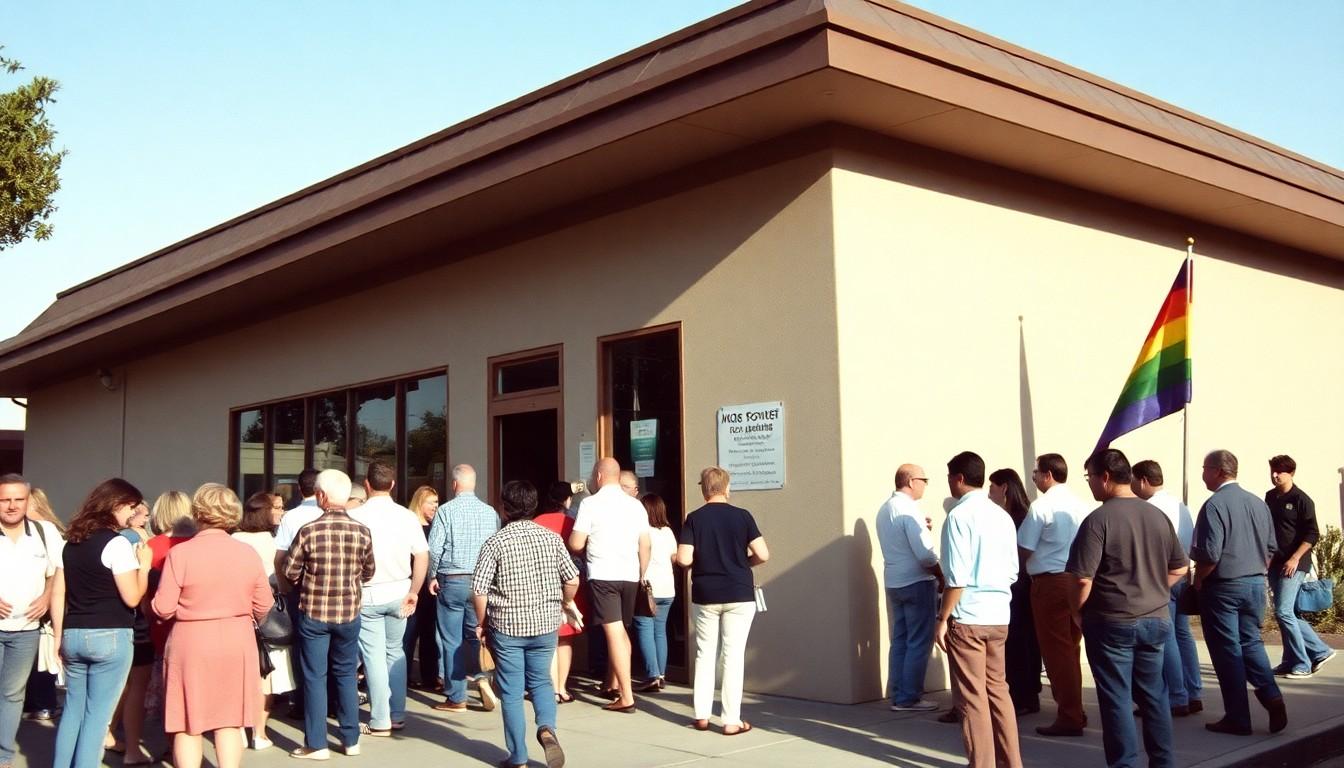
Lesbian activists in San Diego organised blood drives during the 1980s AIDS crisis, challenging stigma, medical prejudice and a discriminatory donation policy. Their story shows how queer communities created practical networks of care when official institutions failed the people who needed help most.
Essential Takeaways
- Founded in crisis: The San Diego Blood Sisters emerged from the city’s queer political community in 1983.
- A powerful first drive: More than 200 people attended the group’s opening event, producing at least 130 donations.
- Community-led care: Members worked with blood banks to help direct collected blood towards gay men.
- Backlash was fierce: Fear and misinformation led opponents, including major medical organisations, to challenge some drives.
- A wider legacy: Lesbian nurses, carers and activists supported people with AIDS across the United States.
A blood drive became an act of resistance
The first San Diego Blood Sisters drive was more than a medical event. It was a public declaration that gay men with AIDS deserved care, dignity and a fighting chance, even as fear filled hospitals and headlines.
The group formed through the Women’s Caucus of the San Diego Democratic Club, a queer organisation established in 1975. By the early 1980s, the AIDS crisis had hit close to home: more than half of the club’s male leaders were diagnosed within a two-year period, according to accounts collected by Them and the Women’s Museum of California.
Their first drive, held in summer 1983, drew over 200 attendees and generated at least 130 donations. The numbers mattered, but so did the sight of lesbians and allies turning up together, sleeves rolled up, in a climate designed to isolate them.
Why blood donation was so political
The US Food and Drug Administration introduced a ban on blood donations from men who have sex with men in 1983, as officials tried to reduce the risk of HIV entering the blood supply. The policy arrived while the epidemic was spreading rapidly and while many patients urgently needed transfusions, creating a painful contradiction.
The San Diego organisers didn't simply ask people to donate. They also worked with local blood banks to ensure their contributions could reach gay men specifically, according to Them. That focus gave the drives a practical purpose, while also confronting the idea that queer communities were something to be feared rather than supported.
Later changes to US donor rules have eased, but not erased, restrictions affecting men who have sex with men. Legal and medical analysis from CM Health Law, Scientific American and Axios shows how the policy shifted over time, with screening rules gradually moving towards individual risk assessment.
Stigma made care harder, not safer
During the epidemic's earliest years, HIV and AIDS were surrounded by panic. Patients could face rejection from doctors, friends and relatives, while media coverage often treated the illness as a moral warning rather than a public-health emergency.
That prejudice had devastating consequences. Some people lost homes and support networks after diagnosis, leaving partners and friends to provide the care that families or institutions refused to offer. Teen Vogue's account of the Blood Sisters places their work within this broader pattern of queer people building their own safety nets.
The fear was also visible in opposition to community blood drives. Critics claimed donations might be contaminated, despite lesbians being considered among the groups least at risk of HIV infection. The Red Cross cancelled a planned drive in Orange County, illustrating how suspicion could override evidence and compassion.
Lesbians became nurses, carers and chosen family
The Blood Sisters' story sits within a much bigger history of lesbian solidarity during the AIDS crisis. Across the country, queer women worked as nurses, social workers, organisers, fundraisers and informal carers for men who were sick, grieving or abandoned.
At San Francisco's Ambassador Hotel, a refuge for gay men during the crisis, manager Tom Calvanese later remembered lesbian HIV nurse Val Robb as one of the people who repeatedly showed up to help. His recollection, reported by the Bay Area Reporter and cited by Them, captures the less glamorous side of activism: returning day after day, when the work was exhausting and the losses kept coming.
That persistence is easy to underestimate now. There were no neat endings, few reliable treatments and little institutional reassurance. Often, solidarity meant making a meal, changing bedding, sitting beside someone in hospital or simply refusing to disappear.
The lesson still feels uncomfortably current
The Blood Sisters were formed because government leaders and medical institutions were slow to respond to a catastrophe affecting a marginalised community. President Ronald Reagan didn't publicly use the word AIDS until 1985, by which point thousands of Americans had died, according to the historical accounts discussed by Them.
Their legacy isn't only about a single organisation or a set of blood drives. It’s about the infrastructure of mutual aid: people sharing time, knowledge and resources when official systems are inadequate or actively hostile.
The later evolution of blood-donation policy also shows why community pressure matters. Reporting from Scientific American and Axios documents the movement away from blanket restrictions, although debates about screening and eligibility continue. For queer communities, the history remains both painful and clarifying: care can be political, especially when institutions make people prove they deserve it.
The San Diego Blood Sisters remind us that compassion isn't passive. Sometimes it looks like a packed donation hall, a clipboard, a long queue and a community deciding that nobody should face a public-health disaster alone.
It's a small chapter in AIDS history, but its message remains enormous: when institutions fail, organised care can keep people alive.
Source Reference Map
Story idea inspired by: [1]
Sources by paragraph:
- Paragraph 1: [2], [4]
- Paragraph 2: [3], [4]
- Paragraph 3: [2], [3]
- Paragraph 4: [5], [6]
- Paragraph 5: [2], [5]
- Paragraph 6: [4], [6]
- Paragraph 7: [2], [4]
- Paragraph 8: [4], [2]
- Paragraph 9: [2], [4]
- Paragraph 10: [2], [3]
- Paragraph 11: [2], [4]
- Paragraph 12: [5], [6]
- Paragraph 13: [6], [7]
- Paragraph 14: [2], [4]
- Paragraph 15: [3], [7]
- Paragraph 16: [2], [4]