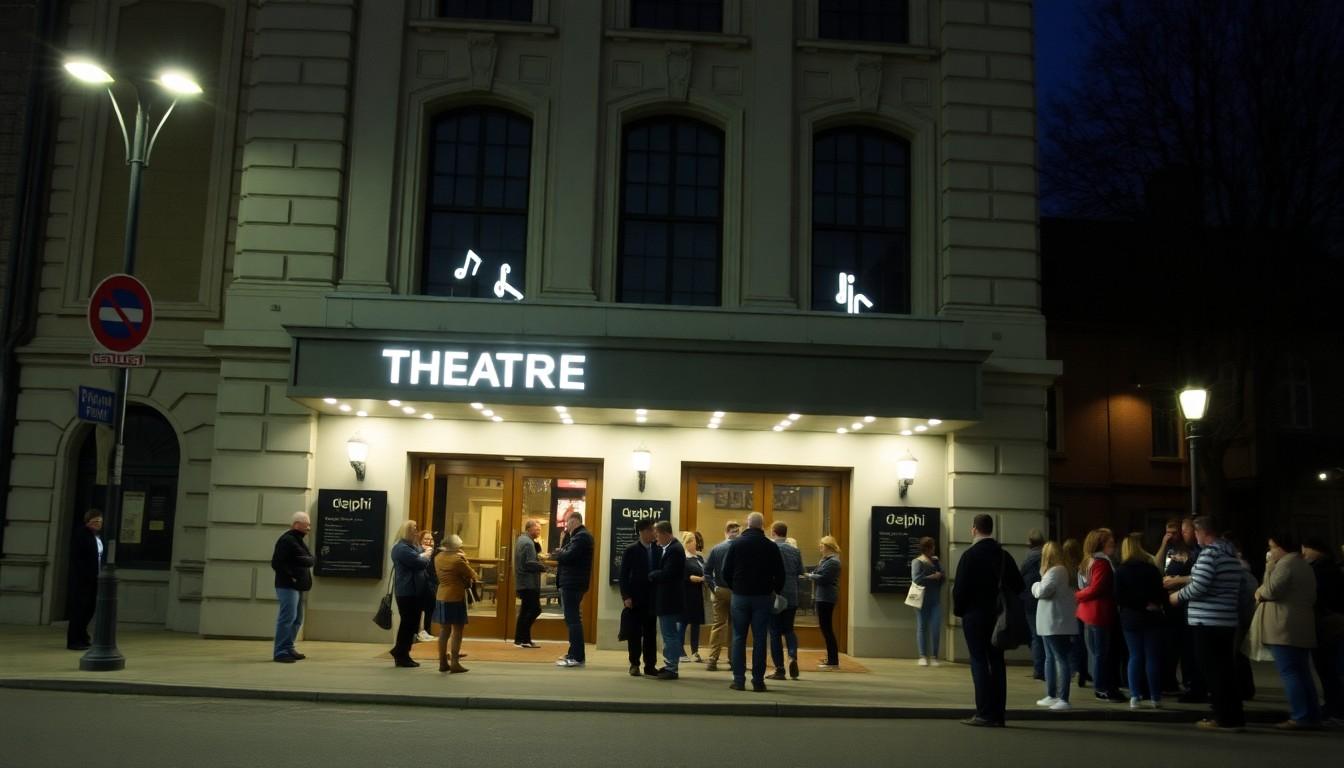
Berlin's Queer Performance Festival returns to Theater im Delphi on 7 November 2026, bringing drag, ballroom, dance, spoken word, music and contemporary circus together under the provocative theme “404 Identity not found”. The two-day event promises a vivid mix of performance, politics and community at a moment when queer visibility is being challenged both online and off.
Essential Takeaways
- Dates: The festival runs from Friday 6 November to Saturday 7 November 2026.
- Location: Events take place at Theater im Delphi and its nearby Delphis Orakel space in Berlin.
- Opening night: A free community gathering features workshops, an open stage and informal meet-ups.
- Main showcase: Saturday's programme includes artists such as Corazón, Lihla, Mandhla, Ṣịkẹmi, Ruiqi Wang and D-Dur Dykes.
- Theme: “404 Identity not found” examines queer identity, AI, algorithmic bias and political backlash.
Berlin's queer performance scene gets a bold return
The Queer Performance Festival is back with a question that feels both theatrical and uncomfortably familiar: what happens when identity is treated like a system error? Its 2026 edition uses the language of the internet to explore how queer people navigate algorithms, surveillance, political pressure and the demand to fit neatly into a category.
According to the festival's listings on visitBerlin and Berlin.de, the main event will be held at Theater im Delphi, a striking former silent-film cinema. That setting feels particularly apt. The venue's grand architectural character offers a physical counterpoint to the festival's digital subject matter, putting real bodies and live voices where an online platform might otherwise reduce people to data points.
A free opening night puts community first
The weekend begins on Friday 6 November with a free Community Get-Together and Open Stage at Delphis Orakel. Rather than asking audiences to sit quietly and wait for the headline acts, QPF opens the doors early for conversation, skill-sharing and spontaneous performance.
The evening will include workshops and an open stage with a pole available for anyone ready to perform. Singers, dancers and other artists can take part, while visitors who'd rather watch can settle in with a drink and absorb the atmosphere. Event information published by the festival and Regioactive confirms that admission is free, with donations welcomed.
That low-pressure format matters. Queer performance isn't only about polished spectacle; it's also about the informal spaces where people meet, experiment and find their confidence. A bar, a stage and a willing audience can sometimes do more for connection than a carefully managed programme.
Saturday's showcase moves between stage and street
The main showcase takes place on Saturday 7 November, bringing together several strands of Berlin's queer performance world. The announced artists include drag performer Corazón, musician Lihla, ballroom artist and singer Mandhla, spoken-word and video artist Ṣịkẹmi, interdisciplinary theatre and music artist Ruiqi Wang, and choir group D-Dur Dykes.
The lineup reflects the festival's deliberately broad outlook. Drag, ballroom, music, spoken word and theatre aren't presented as separate islands, but as connected ways of using the body, voice and image to challenge expectations. The programme information shared by Queerland Media and the festival suggests an evening that will move between digital imagery, physical performance and activism.
That variety is likely to be one of the event's biggest strengths. One moment may be intimate and vocal, the next loud, visual or gloriously unpredictable. For audiences who like their live art tidy and predictable, this probably isn't the night for it, and that's precisely the point.
Why “404 Identity not found” feels timely
The theme borrows a familiar web error message, but its implications reach far beyond technology. In the festival's framing, identity can dissolve and reform in a digital culture shaped by artificial intelligence, algorithmic bias and increasingly restrictive political climates.
Online visibility can be powerful, but it can also be conditional. Platforms decide what gets promoted, buried or removed, while automated systems often struggle with identities and communities that don't fit inherited assumptions. The result is a strange contradiction: queer people may be more visible than ever, yet that visibility can remain fragile and tightly controlled.
QPF's answer is to make the body central again. Live performance can't be reduced quite so easily to a profile, prompt or category. It creates a room full of people, reactions and contradictions, which is a rather more human kind of network.
How to plan your festival visit
If you're attending, Friday is the easiest entry point for newcomers. The free gathering offers a chance to understand the festival's mood, meet members of the community and see the space before the main showcase. Donations are encouraged, but the open format keeps the first step accessible.
For Saturday's Grand Showcase, tickets are available through Reservix, with further information listed by the official festival website, visitBerlin and Berlin.de. Check the latest event details before travelling, as additional artists and programme updates are expected.
The practical advice is simple: arrive with curiosity, allow time for the venue and don't expect every act to work in the same artistic language. QPF is built around multiplicity, so its most rewarding moments may come from the jumps between forms.
A festival that treats visibility as collective work
The Queer Performance Festival is more than a showcase of Berlin talent. Its stated focus on intersectionality, multiply marginalised queer voices and fairer working conditions places the event within a wider conversation about who gets seen, who gets paid and who gets to shape the cultural landscape.
That makes the 2026 edition feel especially relevant. As political rhetoric hardens and digital systems increasingly influence public life, a festival devoted to queer expression becomes both an artistic event and a gathering point. The lights, music and spectacle matter, but so does the simple act of being together in the same room.
Tickets for the Grand Showcase are on sale now, while the festival's website and social channels will carry further announcements. Expect an evening that treats identity not as a box to tick, but as something restless, shared and beautifully unfinished.
It's a timely invitation to step beyond the error message and into the room.
Source Reference Map
Story idea inspired by: [1]
Sources by paragraph:
- Paragraph 1: [2], [3]
- Paragraph 2: [4], [5]
- Paragraph 3: [3], [6]
- Paragraph 4: [7], [3]
- Paragraph 5: [2], [4]
- Paragraph 6: [5], [7]
- Paragraph 7: [3], [7]
- Paragraph 8: [2], [3]
- Paragraph 9: [4], [5]
- Paragraph 10: [3], [7]
- Paragraph 11: [2], [4]
- Paragraph 12: [3], [5]
- Paragraph 13: [7], [3]
- Paragraph 14: [2], [4]