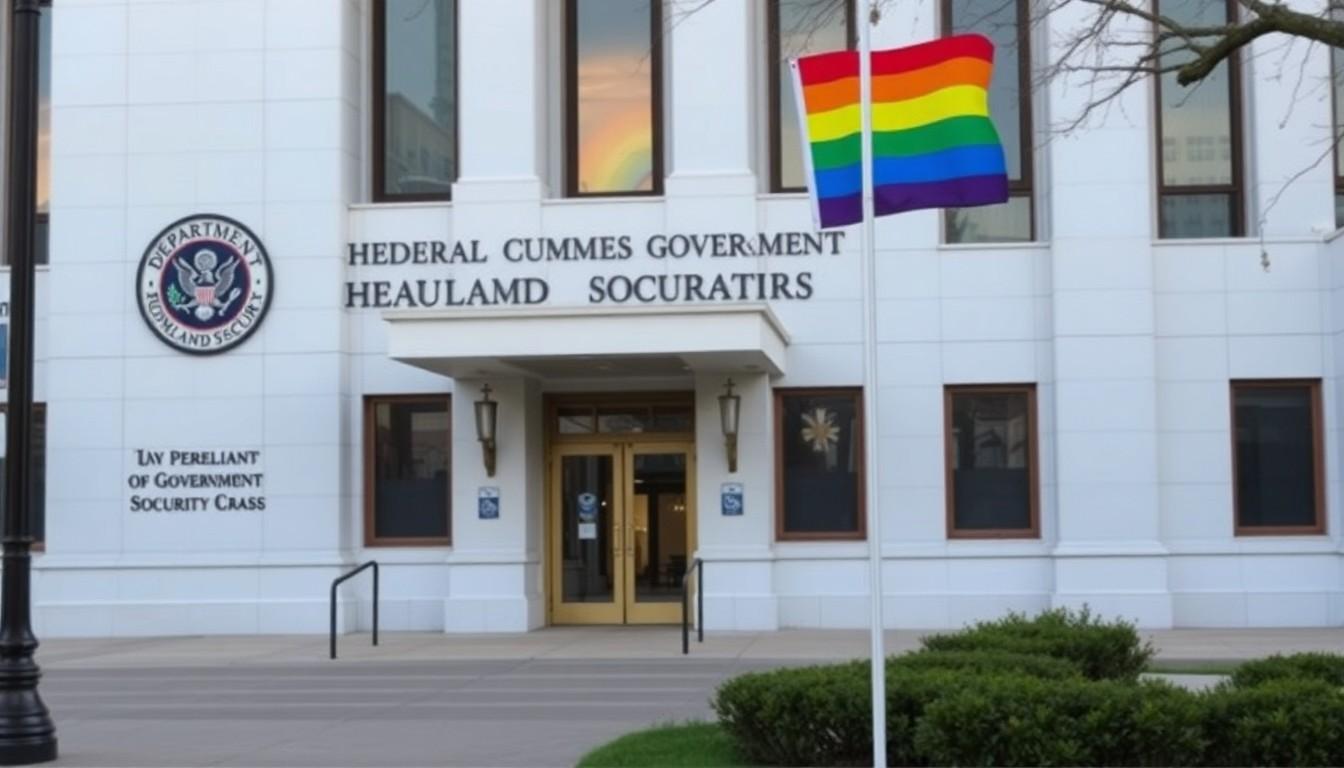
Documents reported by the Daily Caller News Foundation describe a busy June 2023 Pride calendar across the Department of Homeland Security, including workplace forums and training-centre screenings. The records matter because President Donald Trump later ordered federal agencies to end covered diversity, equity, inclusion and accessibility programmes, while questions remain over which activities continued.
Essential Takeaways
- Several agencies were involved: The calendar covered FEMA, FLETC, the Secret Service, USCIS and ICE.
- Events took place during working hours: Listed activities included afternoon forums, virtual sessions and a video discussion.
- The schedule was not proof of completion: The records don't show attendance, costs or whether every event went ahead.
- Federal policy later changed: Trump ordered agencies to end covered DEI programmes, with OPM directing departments to close related offices and cancel training.
- The legal picture shifted: Some parts of the administration's DEI orders were later blocked or limited by court action.
What the DHS calendar reportedly contained
The 20-page June 2023 schedule offers a detailed snapshot of Pride Month planning inside DHS. According to the Daily Caller News Foundation, entries included forums focused on bisexual and pansexual employees, transgender and gender-nonconforming staff, intersex employees and asexual communities.
The calendar also listed a video watch party at the Federal Law Enforcement Training Centers. Its proposed material included an overview of LGBT history and an introductory programme about the queer community. For employees browsing a work diary, it would've looked less like one central event and more like a month-long series spread across the department. The Daily Caller News Foundation reported these details after documents were obtained through a Freedom of Information Act request by the Center to Advance Security in America.
At DHS headquarters in Washington, the schedule included a Pride flag-raising ceremony attended by then-Secretary Alejandro Mayorkas and Deputy Secretary John Tien. Other entries mentioned newsletters, displays, parades and a workplace session about transgender employees.
Why the timing has become politically charged
The controversy isn't simply about whether government employees marked Pride Month. It's about the use of official time, the relationship between staff activities and departmental missions, and the sharp policy reversal that followed.
The Daily Caller News Foundation reported that several events were scheduled during ordinary working hours, although the records don't establish their cost or how many employees attended. James Fitzpatrick of CASA argued that the department had diverted attention from its core responsibilities. That view is disputed by supporters of workplace inclusion, who generally regard employee networks and educational events as part of a modern organisation's internal culture.
The White House later described the administration's DEI rollback as a move towards civil rights and merit-based opportunity, according to its January 2025 fact sheet. The policy language framed the issue as one of equal treatment rather than identity-based programmes, setting up a broader argument about what belongs inside a federal workplace.
Trump-era orders changed the rules
On 20 January 2025, Trump directed federal agencies to terminate covered DEI programmes, according to the White House. OPM followed with instructions to close DEIA offices and halt related training, as reported by OPB and Axios.
That change put older calendars like the DHS document under a new spotlight. A programme that had been routine in 2023 could become politically or administratively unacceptable two years later, depending on how its content, funding and official status were assessed.
The policy also reached beyond DHS. The White House said the administration was removing DEI from the Foreign Service, while the Department of Education announced its own steps to eliminate DEI initiatives. In other words, the DHS schedule was part of a much wider federal contest, not an isolated office dispute.
The legal landscape is more complicated than the headlines
The administration's orders didn't operate in a legal vacuum. Foley & Lardner reported that a federal court enjoined portions of the executive orders, adding uncertainty around how agencies could implement some of the directives.
That matters because ending a named DEI office isn't necessarily the same as banning every discussion of identity, discrimination or workplace conduct. Agencies still have to comply with employment law, equal-opportunity rules and court orders, while deciding which employee activities count as prohibited programming.
For readers trying to separate fact from political framing, the key distinction is simple: the DHS records show what was scheduled in 2023, not a complete audit of spending, attendance or outcomes. They also don't establish whether the department repeated the same events in 2025 or 2026.
What remains unanswered at DHS
The Daily Caller News Foundation said DHS did not answer questions about whether the listed programming had been cancelled, replaced or repeated after Trump's directives. FEMA, OPM and the Secret Service also did not provide comments cited in the report.
That silence leaves several practical gaps. We don't know which events actually happened, whether staff attended voluntarily, whether any sessions were mandatory, or how agencies interpreted the new restrictions in day-to-day operations.
The broader lesson is that an internal calendar can become a political document surprisingly quickly. One administration may see it as a sign of inclusion; another may view it as evidence that an agency has drifted from its mission. For federal workers, the important question now is how those competing priorities are translated into clear, consistent workplace rules.
It's a reminder that government calendars can reveal as much about changing priorities as official speeches.
Source Reference Map
Story idea inspired by: [1]
Sources by paragraph:
- Paragraph 1: [2], [6]
- Paragraph 2: [1], [7]
- Paragraph 3: [1], [2]
- Paragraph 4: [1], [2]
- Paragraph 5: [1], [6]
- Paragraph 6: [1], [2]
- Paragraph 7: [2], [6]
- Paragraph 8: [2], [7]
- Paragraph 9: [3], [5]
- Paragraph 10: [4], [7]
- Paragraph 11: [4], [2]
- Paragraph 12: [1], [4]
- Paragraph 13: [1], [6]
- Paragraph 14: [1], [2]
- Paragraph 15: [1], [4]