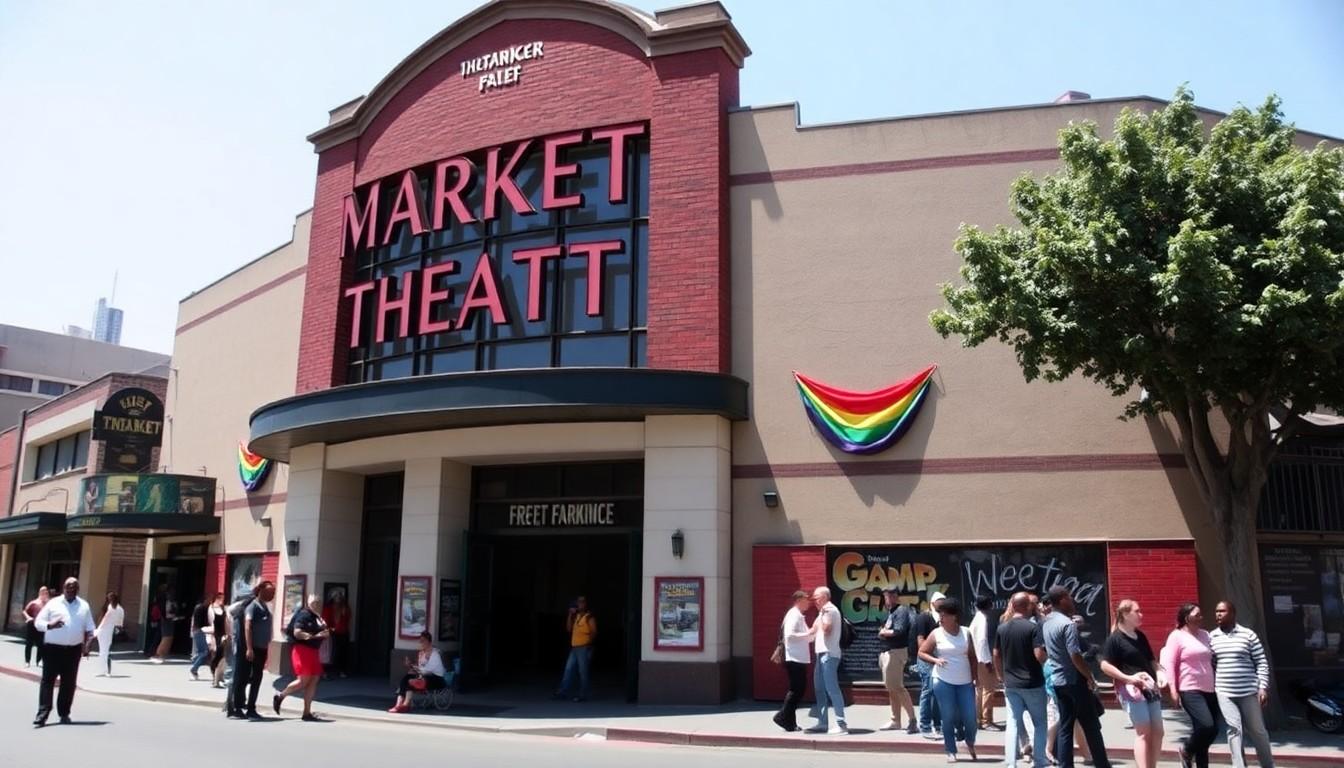
Audiences are discovering a bold new queer theatre festival at Johannesburg's Market Theatre, where plays, cabaret and live music turn difficult histories into urgent, often joyful performance. The standout production, Shockwave, connects apartheid-era fear with the lasting need for visibility, empathy and belonging.
Essential Takeaways
- A new cultural fixture: The inaugural Queer Fest runs across The Market Theatre precinct from 21 to 25 October 2026.
- Shockwave leads the conversation: Chantal Stanfield's play continues until 8 November, placing queer lives inside the turmoil of 1980s Cape Town.
- Joy sits beside protest: The programme combines serious drama with comedy, cabaret, music and physical performance.
- History feels close: Sound effects including police vehicles, barking dogs and explosions make political danger tangible.
- A wider invitation: The festival presents queer stories as part of South Africa's shared cultural landscape, not a niche side note.
Johannesburg's new queer festival arrives with purpose
The Market Theatre's first Queer Fest is more than a celebratory programme. According to Daily Maverick, it coincides with the theatre's 50th anniversary and extends its long-standing interest in original South African stories, while giving LGBTQ+ experiences a dedicated platform.
That combination matters. A festival can offer glitter, music and a good night out, but it can also ask who has been heard, who has been erased and whose story still feels risky to tell. The Market Theatre's programme appears to understand both sides of that bargain, pairing radical joy with the sharper edges of activism.
The festival includes new theatre, live music and performance, creating a broad welcome rather than a single prescribed version of queer culture. Market Theatre material on its new writing and cabaret programmes points to that variety, from theatrical experimentation to deliberately cheeky entertainment.
Why Shockwave makes the past feel uncomfortably present
Chantal Stanfield's Shockwave is set in 1980s Cape Town during the State of Emergency, where apartheid, religious conservatism and anti-gay prejudice press in from every direction. The result isn't a distant history lesson. It's an intimate portrait of people trying to survive while public institutions, families and belief systems tell them they don't belong.
Coverage from The National describes the play as a work about silences, and that idea sits at its centre. Characters are forced to weigh honesty against safety, affection against social punishment, and faith against the rules imposed in its name. It makes for tense viewing, but not a bleak one.
As reported by Daily Maverick, director David Dennis balances the darkness with music, humour and human connection. That tonal contrast is crucial. Laughter doesn't erase the pain, but it gives the characters room to breathe, and it reminds audiences that resilience is rarely solemn from beginning to end.
Sound, movement and memory do the heavy lifting
Shockwave's political backdrop isn't left as scenery. Off-stage police vehicles, barking dogs and exploding canisters turn the auditorium into an unsettled environment, according to reviews from Daily Maverick and Antakalipaa.
Those details create a physical sense of surveillance. A siren or sudden bang can change the temperature of a scene in an instant, making the threat feel close enough to touch. It's an effective reminder that oppression works through atmosphere as much as through official rules.
The play also links apartheid's restrictions with the fear surrounding the HIV and Aids epidemic, when cruel language helped isolate gay communities. The National's account of the production's silences reinforces how much can be communicated through what characters can't safely say aloud.
Faith, hypocrisy and the search for belonging
One of the production's most affecting threads is its treatment of religion. Faith can offer shelter and community, yet it can also become a tool for exclusion when institutional rules are placed above compassion.
That tension gives the drama a recognisable emotional hook. The question isn't simply whether characters believe, but what happens when their understanding of love collides with the demands of a church or family. Daily Maverick's reporting highlights this conflict, while The National's focus on withheld voices suggests how deeply it shapes the characters' choices.
The subject remains relevant well beyond the play's historical setting. For some young queer people, the struggle to reconcile identity, family and belief is still immediate. That's why Shockwave's period detail doesn't make it safely old-fashioned; it gives today's anxieties a clear lineage.
Queer Fest offers more than one way to join in
The festival's wider programme keeps the mood from becoming too heavy. Audiences can find new writing, a cheeky adult cabaret, physical performance and live music, with Market Theatre listings also pointing to work designed for entertainment as much as discussion.
That breadth is one of the event's strengths. Not everyone wants a politically charged drama every night, and not every queer audience member arrives looking for the same story. A cabaret can open the door, a concert can build community, and a difficult play can leave a question humming on the journey home.
The Market Theatre's 50th anniversary gives the festival extra resonance. Its commitment to South African voices makes Queer Fest feel less like a one-off themed event and more like a statement about who gets to shape the country's cultural memory. Newslink's coverage of the festival's radical joy captures that forward-looking spirit.
Theatre turns remembrance into possibility
The best work in Queer Fest doesn't ask audiences to choose between grief and celebration. It places them together, where they usually belong. Shockwave, in particular, shows how a story rooted in fear can still move towards tenderness, humour and hope.
That may be the festival's most valuable contribution. Visibility isn't only about seeing a reflection on stage; it's about recognising another person's life as complicated, funny, frightened and fully human. For a theatre audience, that can be a small evening out with a surprisingly long afterlife.
Queer Fest runs from 21 to 25 October 2026, while Shockwave continues until 8 November. Check the Market Theatre's latest listings for performance times and booking details.
Transformation, not despair, is the feeling this festival leaves behind.
Source Reference Map
Story idea inspired by: [1]
Sources by paragraph:
- Paragraph 1: [2], [3]
- Paragraph 2: [5], [6]
- Paragraph 3: [1], [7]
- Paragraph 4: [1], [5]
- Paragraph 5: [6], [1]
- Paragraph 6: [5], [6]
- Paragraph 7: [1], [5]
- Paragraph 8: [1], [5]
- Paragraph 9: [1], [5]
- Paragraph 10: [2], [4]
- Paragraph 11: [2], [3]
- Paragraph 12: [7], [2]
- Paragraph 13: [1], [7]
- Paragraph 14: [1], [5]
- Paragraph 15: [2], [7]
- Paragraph 16: [1], [7]