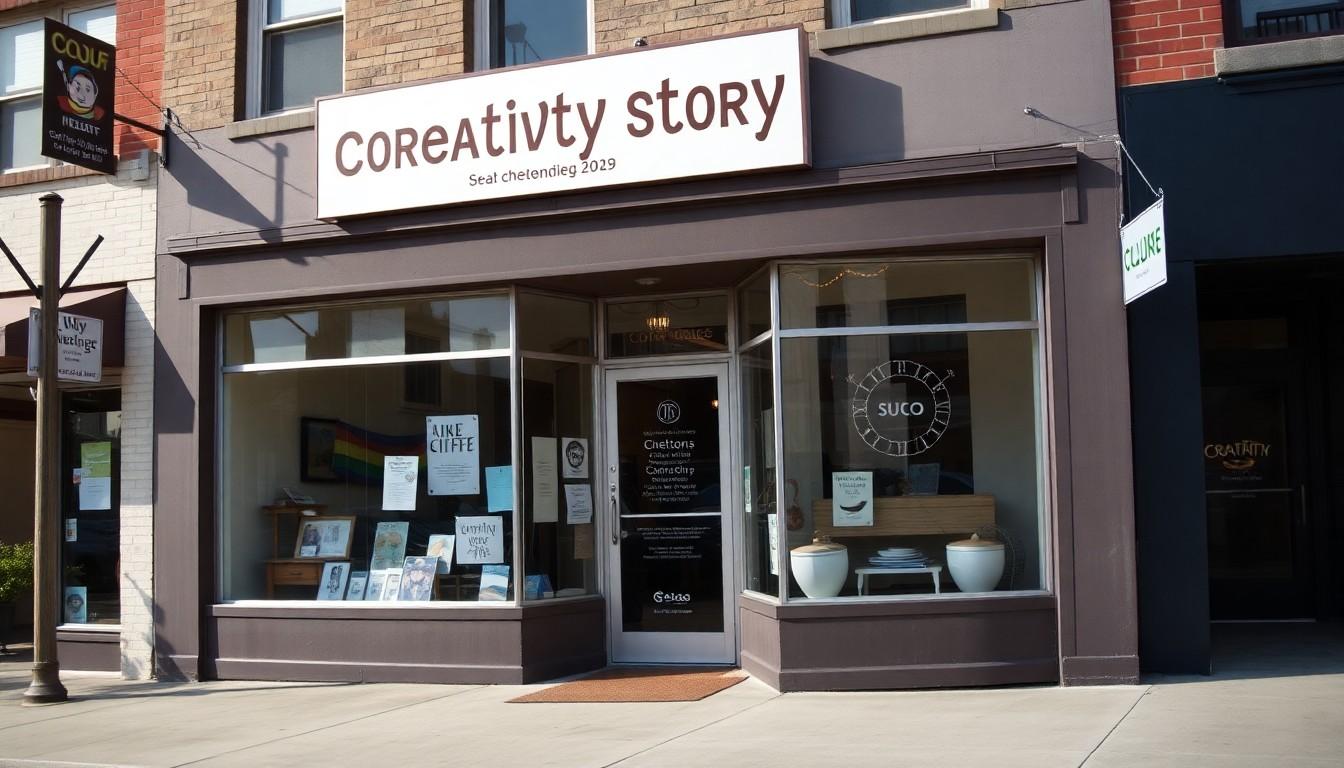
Creative people are looking beyond America’s famous coastal cities to find affordable, welcoming places to work, browse and belong. From Chicago’s landmark feminist bookshop to community-minded cafes and arts hubs across the Great Lakes, these Midwest spaces show how local businesses are making room for queer creatives, women and other independent voices.
Why the Midwest is having a creative moment
The Midwest doesn’t always get the cultural spotlight, but that’s part of its charm. Wide-open landscapes, dramatic seasons and lower living costs have helped smaller cities build creative communities that feel more personal than polished.
For artists and LGBTQIA+ visitors, the real draw is often the sense of connection. These aren’t anonymous venues where you grab a coffee and disappear. They’re places to attend a reading, meet a maker, discover a zine or simply settle into a room where nobody asks you to tone yourself down.
Chicago’s Andersonville neighbourhood, where Women and Children First has long been based, is one example of how independent businesses can anchor a wider community, according to Axios Chicago.
Women and Children First keeps feminist books at the centre
Women and Children First is one of the Midwest’s most established feminist bookstores. Founded in Chicago in 1979 by Ann Christophersen and Linda Bubon, it was created to amplify women’s writing and give readers access to perspectives often overlooked by mainstream publishing.
The shop has since passed to booksellers Lynn Mooney and Sarah Hollenbeck, who continue that mission with a broad programme of events and carefully selected titles. Its shelves include work by women, queer authors and writers from other under-represented communities, making a visit feel like both a bookshop browse and a cultural reset.
Its event programme is just as important. According to the bookstore’s own information, visitors can find author conversations, book groups and children’s programming, while its Women’s Voices Fund supports activities that keep those discussions moving.
A bookshop that turns reading into action
What makes Women and Children First stand out is its practical approach to community work. The shop has supported Chicago Books to Women in Prison, a volunteer organisation that sends free books to incarcerated women and trans people across the country.
That connection gives the business a purpose beyond selling novels. A book becomes a route into healthcare conversations, identity, race, gender and political life, rather than just something attractive on a bedside table.
The shop is also recognised within Chicago’s LGBTQ history. The Chicago LGBT Hall of Fame identifies Women and Children First as an important institution for queer culture and community, while Inclusivity highlights its role as a welcoming, women-centred business.
Independent spaces offer more than a place to shop
Women and Children First is part of a wider Midwest pattern. Across cities such as Appleton, Lansing, Milwaukee and the Twin Cities, independent businesses are combining retail, hospitality, events and activism under one roof.
That might mean a screen-printing studio selling handmade ceramics and local zines, a coffee shop raising money for community causes, or a spacious venue offering workshops, coworking desks and peer support. The details vary, but the formula is familiar: make the room useful, make it welcoming and give people reasons to return.
For visitors, that creates a richer itinerary than a standard gallery crawl. You can pick up a locally made print, listen to a poet, drink a carefully roasted coffee and leave with a better sense of the city than any conventional sightseeing list might provide.
How to find the right creative hub
Start with the calendar, not just the shopfront. Events reveal whether a venue is genuinely active in its community, and they’re often the easiest way to meet people without forcing an introduction.
It’s also worth checking the practical details before you go. Look for accessibility information, quiet working areas, booking requirements and whether events are free or donation-based. If you’re travelling with children, pets or mobility needs, a quick message to the venue can save an awkward journey.
For readers seeking queer-friendly Midwest creative spaces for artists, independent bookshops and cafes can be especially useful starting points. Their websites, social channels and community noticeboards often lead to smaller makers, readings and grassroots groups that don’t appear in mainstream travel guides.
The next chapter belongs to community-led places
The appeal of these venues isn’t only that they’re cheaper than major coastal destinations. It’s that they offer something large commercial districts often struggle to provide: familiarity.
A good community space remembers its regulars, leaves room for new faces and makes culture feel participatory rather than distant. Women and Children First has lasted because its values are visible in the books it stocks, the events it hosts and the organisations it supports.
And that may be the Midwest’s most compelling creative advantage. The next important cultural address might not be on a famous avenue. It could be beside a supermarket, near a lakeshore or down an unassuming neighbourhood street.
Look beyond the usual city breaks and you may find a creative community that feels instantly like home.
Source Reference Map
Story idea inspired by: [1]
Sources by paragraph: