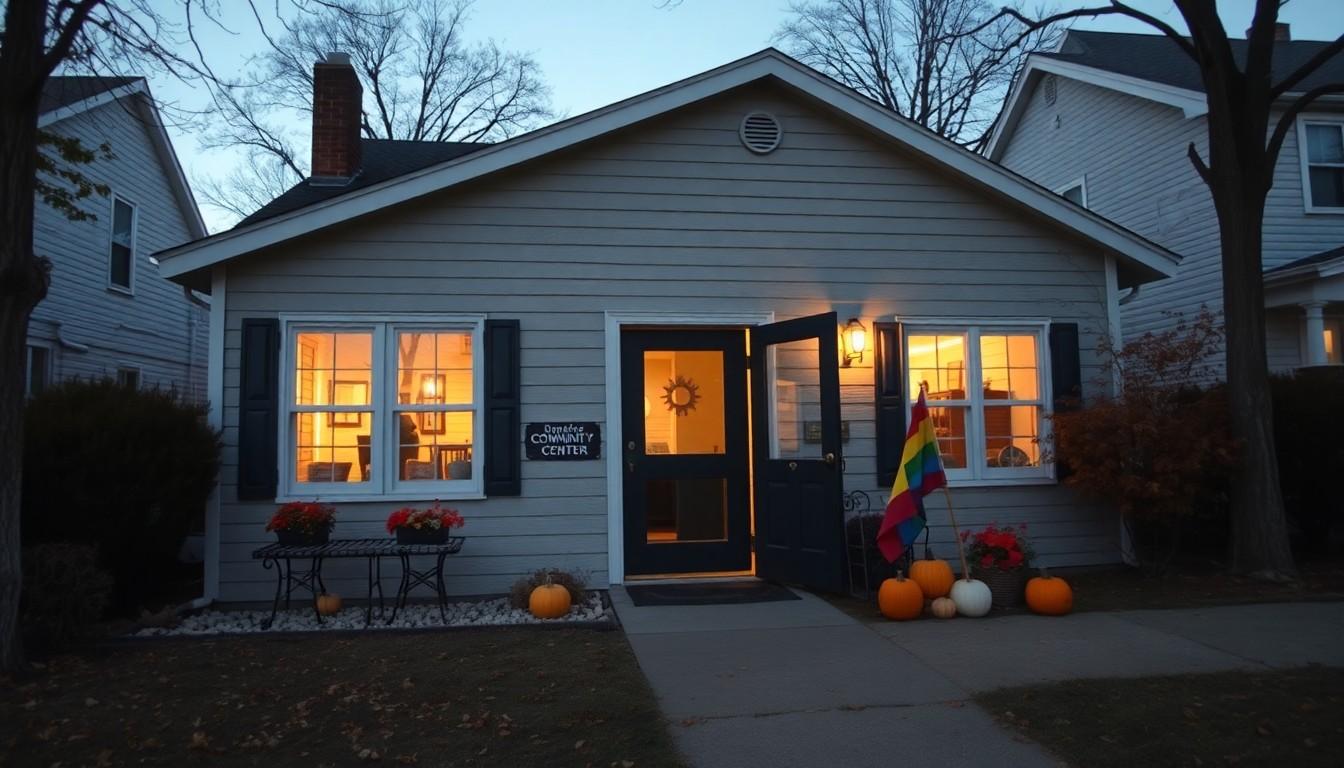
Queer people are increasingly finding meaning in Halloween and Samhain, using ritual, chosen family and ancestral memory to create a spiritual home beyond traditional institutions. From candlelit altars to shared meals, the season offers a gentle way to honour difference, release shame and celebrate the communities that helped people survive and flourish.
Essential Takeaways
- A threshold festival: Samhain centres on seasonal change, transition and the meeting point between worlds.
- A welcoming tradition: Halloween's outsider imagery can resonate with queer people who have felt excluded elsewhere.
- Chosen ancestors matter: Activists, artists, friends and mentors can form a meaningful spiritual lineage.
- Small rituals are enough: A candle, photograph, shared meal or quiet walk can make the celebration personal.
- Ritual isn't therapy: Symbolic practices may support reflection, but they don't replace professional mental-health care.
Halloween offers a sacred place between worlds
The most powerful part of queer spirituality may be its willingness to linger in the in-between. Samhain, the Gaelic festival associated with Halloween, marks the shift from harvest to winter and is traditionally linked with a thinning boundary between the living and the dead.
That symbolism can feel especially resonant for queer people, whose lives may involve navigating identities, families and communities that don't fit neatly into familiar categories. According to Psychology Today, the threshold isn't treated as a problem to solve but as a place where change, mystery and insight can begin.
There's something quietly reassuring about that idea. Instead of asking people to choose one acceptable box, the festival makes room for uncertainty, complexity and becoming. [2], [6]
Why the witch speaks to queer communities
The witch remains one of Halloween's most recognisable figures, but her appeal goes well beyond pointed hats and dramatic eyeliner. She has long represented the outsider, the healer, the woman beyond institutional control and the person unwilling to follow the approved script.
That history helps explain why witchcraft and modern pagan practice have attracted queer and feminist practitioners. The traditions aren't uniform, but many place emphasis on nature, embodiment, pleasure and personal agency rather than shame. Queer witchcraft communities have also developed their own language and practices around liberation, identity and belonging.
As Them and Queer Majority have explored, the witch can be reclaimed as a figure of survival. She isn't simply spooky decoration; she's a reminder that people once treated as dangerous may also be the ones carrying knowledge, care and independence. [4], [7]
Building a queer lineage beyond the family tree
Ancestor work can be complicated when biological families have rejected, erased or misunderstood someone's identity. Halloween and Samhain provide a broader definition of who gets to count as family.
A queer ancestor might be a civil-rights organiser, a writer, an artist, a campaigner or someone whose name never made it into the history books. It might also be a friend who offered a sofa, a mentor who helped someone come out, or a community member whose courage made life a little more possible for those who followed.
That expansive approach is part of Halloween's emotional pull. As LGBTQ+ lifestyle coverage has noted, the celebration can become a kind of communal inheritance: a night to remember the people who made survival, visibility and joy possible. A photograph, book, candle or handwritten name can turn that memory into something tangible. [3], [5]
Simple rituals can make the season personal
You don't need to join a coven or follow a particular religious tradition to mark the season. A small ritual can be as simple as lighting a candle for someone who influenced your life and saying their name aloud.
Some people create a modest altar with photographs, treasured objects or favourite books. Others share a meal with chosen family, trade stories about people who came before them, or take a dusk walk and notice the colder air, bare branches and changing light. Northern Tier Pagans describes Samhain as a time for remembrance, transition and reflection, which leaves plenty of room for individual practice.
If you'd like to let go of an old belief about yourself, writing it down can provide a useful symbolic starting point. Burning paper should always be done safely, in a suitable container and with water nearby. The gesture may feel meaningful, but it isn't a substitute for therapy or other support when shame and distress run deep. [2], [6]
Halloween's outsider energy keeps evolving
The phrase "gay Christmas" captures some of Halloween's appeal, particularly its mix of costume, theatricality, freedom and permission to be seen. But the season offers more than a chance to dress up. For many LGBTQ+ people, it also provides a public culture in which difference is expected rather than explained.
That matters because celebration can be a form of resistance. A party, ritual or chosen-family dinner won't undo discrimination, but it can strengthen connection and give people a language for joy. Psychology Today and Them both point towards Halloween's enduring role as a space where outsiders can take centre stage, even if only for one night.
The future of queer spirituality is unlikely to be defined by one institution or one set of rules. It may look more like a patchwork of memories, seasonal rituals, creative communities and personal meaning. And honestly, that sounds rather fitting for a festival built around doors opening between worlds. [3], [4]
A candle, a story and the right people can turn Halloween into a homecoming.
Source Reference Map
Story idea inspired by: [1]
Sources by paragraph: