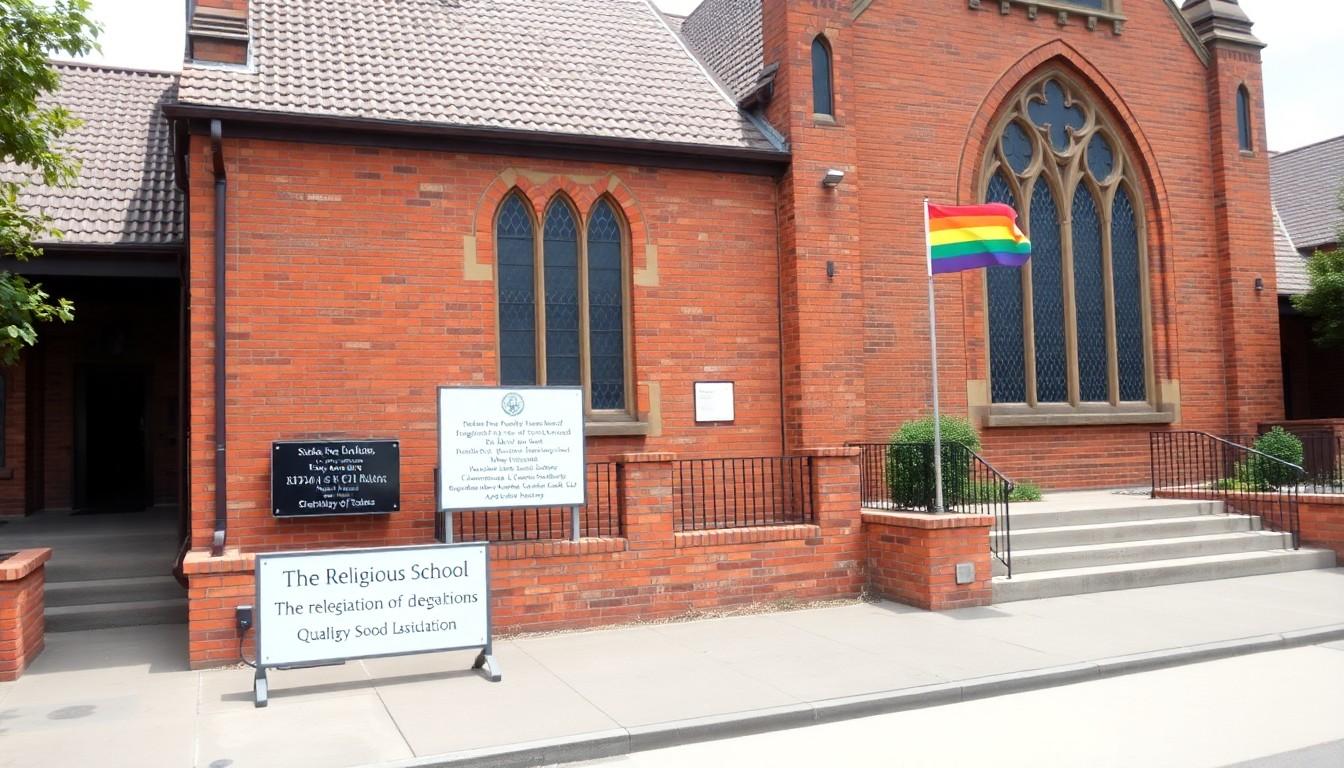
A proposed Australian bill targeting discrimination in religious schools has reignited a fierce debate over LGBTQ+ protections, faith-based education and how far schools should be able to shape their staff and student communities.
Essential Takeaways
- The proposal: Allegra Spender's bill would narrow religious exemptions under Australia's Sex Discrimination Act.
- The central dispute: Supporters prioritise equal treatment, while opponents warn that faith-based schools could lose control over their religious ethos.
- Why it matters: The changes could affect hiring, student policies and the way schools handle gender and sexuality issues.
- The wider debate: Women's groups and LGBTQ+ advocates frame the proposal very differently, reflecting a deeper argument about sex, gender and religious freedom.
A new flashpoint for Australia's faith schools
Australia's debate over LGBTQ+ rights has moved into the school staffroom, where questions about identity, employment and religious teaching rarely arrive quietly. Allegra Spender's proposed Sex Discrimination and Fair Work Amendment, known as the Equality of Treatment in Religious Schools Bill, would change how faith-based schools use exemptions from discrimination law.
At its heart is a difficult balancing act. LGBTQ+ students and employees want protection from unfair treatment, while religious schools argue that their mission depends on being able to employ people who support the institution's beliefs. The Women's Forum Australia has warned that Spender's bill could go further than removing discrimination, potentially affecting how schools teach sex and gender. According to the group's analysis, that could create tensions around girls' sex-based rights and school policies. [2]
That makes this more than a technical legal amendment. For parents, teachers and school governors, it raises a practical question: who gets to define a school's character when equality law and religious doctrine pull in different directions?
What the bill would change
The proposal seeks to repeal broad protections currently available to religious schools under Section 38 of the Sex Discrimination Act. Those exemptions have allowed some institutions to make employment and enrolment decisions based on their religious beliefs, although their use and scope have long attracted criticism.
Supporters of reform say no student or teacher should lose opportunities because they are gay, transgender, pregnant or divorced. Critics respond that a Christian school is not simply a conventional workplace with a chapel attached. They argue that its staff, leadership and policies need to reflect the theology families have chosen.
The likely battleground is therefore not only recruitment. It could also include pastoral care, classroom content, uniforms, sport, records and the handling of gender transition. Women's Forum Australia argues that schools could face pressure to adopt policies that conflict with sex-based distinctions, particularly in settings designed to protect girls. [2]
Why LGBTQ+ advocates back the proposal
Equality Australia presents the issue in straightforward terms: religious freedom should not provide a blanket licence to discriminate against LGBTQ+ people. Its supporters say students and employees deserve consistent protection, regardless of whether the school is government-run, independent or faith-based.
The organisation's public network also illustrates the political profile of the campaign. Equality Australia's patrons include prominent figures from public life, and its website lists Governor-General Sam Mostyn as a patron. The organisation announced her appointment while describing equality and inclusion as central to its work. [4]
For families who have experienced exclusion, that message can carry real emotional weight. A teenager who feels singled out at school may not experience a religious exemption as an abstract constitutional principle, but as a daily reminder that their identity is treated differently. That human reality is a major reason reformers want the law tightened.
Why religious schools see a threat
Faith-based school bodies, meanwhile, argue that the proposal could weaken their ability to preserve a recognisably Christian culture. They may still be allowed to preference believers for some roles, but opponents say narrower exemptions would make it harder to manage the wider environment consistently.
That distinction matters. A school might want a practising Christian for a religious education post, yet also expect its head of department, counsellors and senior teachers to support the school's doctrine. If the law protects only explicitly religious roles, governors could find themselves defending every staffing decision separately.
The concern is not confined to Christian organisations. Religious institutions often rely on patrons, trustees and public representatives to maintain their identity and credibility. Patronage arrangements across Australian civic and charitable bodies, including the Churchill Trust and other national organisations, show how institutions use public figures to signal purpose and standing. [6] The question is whether a school's purpose should receive comparable legal space.
The wider culture war is shaping the argument
This dispute sits inside a much larger argument about sex, gender and the meaning of equality. Supporters of the bill often use equality to mean protection from unequal treatment. Opponents may use the same word to defend sex-based distinctions or the freedom of religious communities to organise around doctrine.
That collision explains why the language has become so charged. One side fears institutional discrimination; the other fears compelled belief. Neither concern disappears simply because Parliament changes the wording of an exemption.
It also helps explain the attention given to public patrons and institutional endorsements. Equality Australia's patron arrangements are part of its public-facing advocacy, while other organisations use patrons to support education, research or community causes. The Australian National Veterans Arts Museum, for example, highlights patronage as part of its organisational identity. [7] These details may seem peripheral, but they show how arguments about law are also arguments about social authority.
What parents and schools should watch next
The practical impact will depend on the final text, parliamentary negotiations and any guidance issued after passage. Parents considering a faith-based school should read its enrolment, behaviour, uniform and gender policies rather than relying on its branding alone. The same advice applies to prospective staff: ask which roles require adherence to doctrine and how the school handles disagreement.
Schools, for their part, will need policies that are clear, consistent and legally defensible. Broad statements about values won't be enough if governors cannot explain how a decision relates to the institution's educational and religious purpose.
The debate is likely to remain intense because both sides are protecting something they see as fundamental. LGBTQ+ advocates want equal treatment in places where young people spend much of their lives. Religious schools want enough independence to remain genuinely religious. Finding a workable boundary will be harder than winning a slogan, but that is precisely where the serious policy work begins.
A fairer school system will need both protection from discrimination and room for genuine religious identity.
Source Reference Map
Story idea inspired by: [1]
Sources by paragraph: