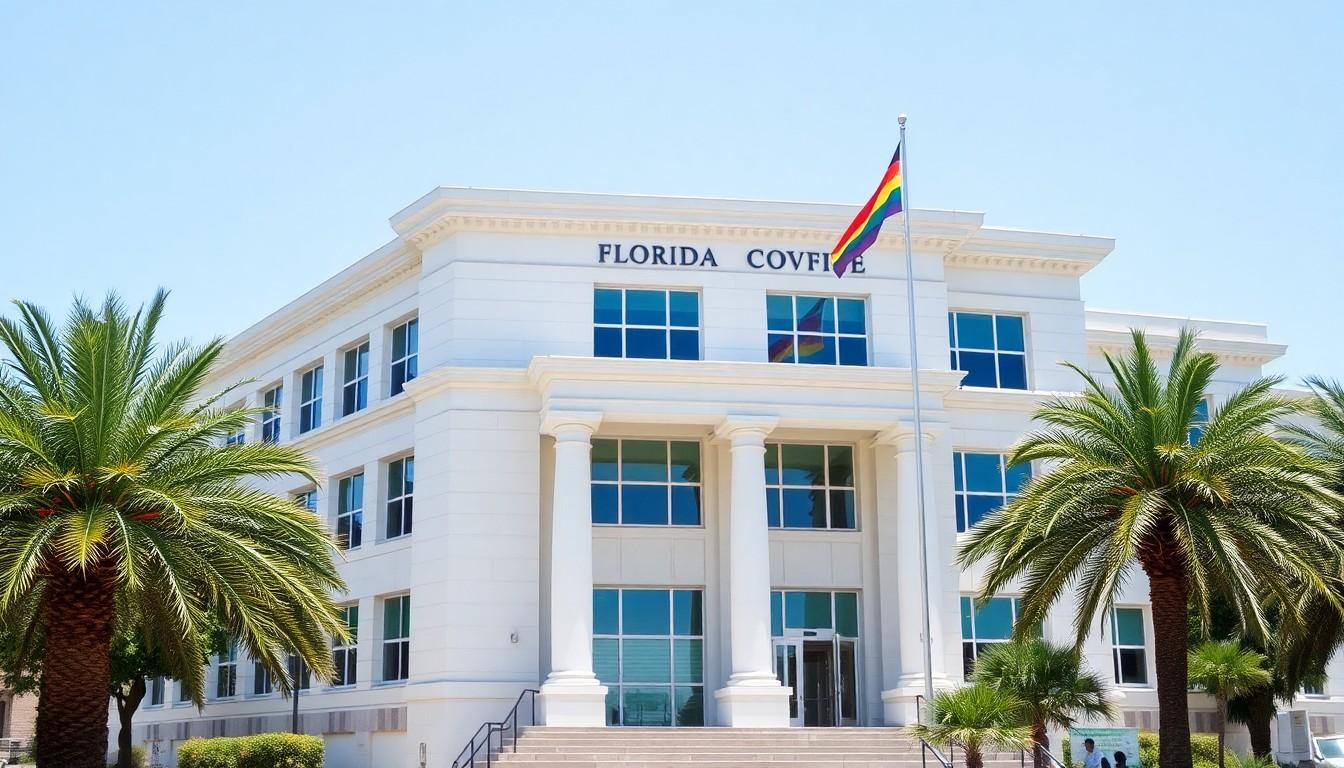
LGBTQ+ candidates in Florida are still attracting support despite the state’s challenging political climate. From legislative hopefuls to experienced activists, campaigners say training, local organising and shifting party dynamics could create fresh opportunities for openly LGBTQ+ candidates this election cycle.
Essential Takeaways
- Florida remains a priority: The LGBTQ+ Victory Fund says it’s continuing to develop candidates in Republican-leaning states.
- New voices are emerging: Felipe Sousa Lazaballet could become Florida’s first openly LGBTQ+, formerly undocumented legislator.
- A competitive race is forming: Todd Delmay is challenging Republican Hillary Cassel in a district Democrats believe they can flip.
- Training matters: The Victory Institute helps prospective candidates understand campaigning, fundraising and public life.
- Success goes beyond election day: Candidate development could build a stronger LGBTQ+ political pipeline over time.
Florida is still seen as fertile ground
Florida’s political landscape can look forbidding for LGBTQ+ candidates, particularly as debates over transgender rights and education remain highly charged. Yet the national LGBTQ+ Victory Fund says it isn’t retreating from the state.
Evan Low, the organisation’s president, told Florida Politics that red states remain part of its strategy. That means backing candidates where the electoral maths is favourable, while also nurturing people who may become competitive contenders later.
The approach is less about chasing one dramatic win and more about building a bench. In practical terms, that means identifying credible candidates, giving them campaign experience and helping them stay in public life.
Shevrin Jones showed what was possible
Miami Gardens Senator Shevrin Jones remains an important example of LGBTQ+ political progress in Florida. The Victory Fund has highlighted his rise through the state Senate, where colleagues selected him to become Senate Minority Leader for the 2028 to 2030 term.
Jones later chose to run for Congress, but lost in the Democratic primary to Miami-Dade County Commissioner Oliver Gilbert. Had he won, he could have become Florida’s first openly gay member of the US House.
That near miss still matters. The Victory Fund’s profile of Jones presents him as a candidate with a substantial political record, while the organisation’s earlier announcement celebrated his victory over two anti-LGBTQ+ opponents. For campaigners, his career shows that representation can advance even when a particular contest doesn’t go the candidate’s way.
A formerly undocumented candidate could make history
Felipe Sousa Lazaballet is among the candidates attracting attention this year. He’s running as a Democrat for Florida House District 42 against Republican Bonnie Jackson, seeking to succeed Democratic Representative Anna Eskamani.
The district gives Democrats a relatively solid base, with roughly 48,000 registered Democrats compared with 40,000 Republicans. That doesn’t make the contest automatic, but it gives Sousa Lazaballet a clearer route than candidates facing a sharply divided electorate.
His potential significance stretches beyond party labels. The Victory Fund has endorsed him, and its campaign announcement identifies him as one of the candidates it wants voters to watch. If elected, he could become Florida’s first openly LGBTQ+, formerly undocumented legislator, adding a distinctive chapter to the state’s representation story.
Can Todd Delmay turn a second chance into a breakthrough?
Todd Delmay’s race has a different flavour. The LGBTQ+ activist, who was among the first gay men to marry a same-sex partner legally in Florida, is challenging Republican Representative Hillary Cassel in House District 101.
Delmay previously lost a Democratic primary to Cassel in 2022. Since then, Cassel has switched parties, creating an opening that Democrats believe could make the seat competitive. The Victory Fund’s candidate profile places Delmay’s activism and political experience at the centre of his campaign.
Fundraising will be a crucial test. Florida Politics reported that Delmay had raised about $400,000, compared with roughly $854,000 for Cassel. That gap is significant, but party-switching can unsettle voters, donors and local organisations, particularly in a district where Democrats see a chance to regain ground.
Training may be the quieter route to change
Campaign funding attracts the headlines, but candidate preparation could prove just as important. The LGBTQ+ Victory Fund’s Victory Institute offers training and leadership development for people considering public office.
The Institute covers the practical realities of running, from building a campaign to understanding the pressures that come with public scrutiny. That support can be especially valuable for first-time candidates, who may have strong community credibility but little experience with fundraising, media work or electoral strategy.
The organisation’s broader work also points to a longer-term shift. Not every trained candidate will win immediately, and not every promising campaign will reach the general election. Still, each campaign can make the next run more familiar, more organised and, perhaps, more competitive.
The next test is turning visibility into votes
The Victory Fund is also looking beyond Florida, with attention on LGBTQ+ candidates in states including New Hampshire, New York, Indiana, California and Arizona. That wider map reflects a familiar electoral reality: national organisations must balance safer seats, battleground districts and difficult states where long-term investment may eventually pay off.
For Florida candidates, meanwhile, local conditions will decide the result. District boundaries, party registration, fundraising and voter turnout will matter as much as national enthusiasm.
Still, there’s something quietly significant about candidates continuing to put themselves forward in a politically tense environment. Every campaign makes representation more visible, and every trained candidate gives the next one a slightly clearer path.
It's a small but meaningful sign that Florida's LGBTQ+ political story is still being written.
Source Reference Map
Story idea inspired by: [1]
Sources by paragraph:
- Paragraph 1: [2], [3]
- Paragraph 2: [4], [5]
- Paragraph 3: [6], [7]
- Paragraph 4: [2], [6]
- Paragraph 5: [3], [7]
- Paragraph 6: [4], [6]
- Paragraph 7: [5], [7]
- Paragraph 8: [2], [3]
- Paragraph 9: [6], [7]
- Paragraph 10: [4], [5]
- Paragraph 11: [2], [6]
- Paragraph 12: [3], [7]
- Paragraph 13: [4], [6]
- Paragraph 14: [5], [7]
- Paragraph 15: [6], [7]
- Paragraph 16: [2], [3]
- Paragraph 17: [4], [5]
- Paragraph 18: [6], [7]
- Paragraph 19: [2], [4]
- Paragraph 20: [3], [5]