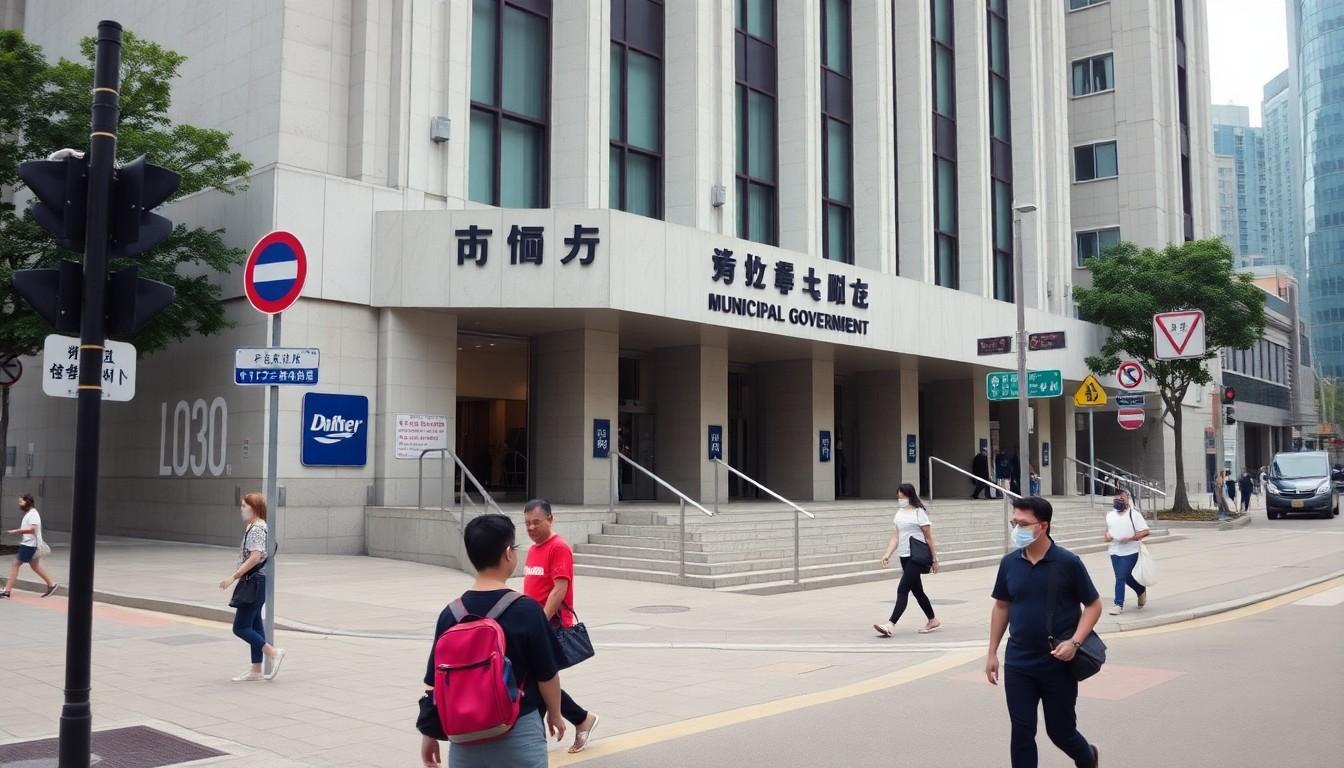
Shoppers and campaigners are watching Hong Kong’s LGBTQ public life shrink, as cancelled events, venue disputes and digital pressure make visibility harder to sustain. The latest Pride market cancellation matters beyond one indoor gathering: it offers a glimpse of how administrative controls, surveillance concerns and platform censorship can affect Chinese LGBTQ communities from Bangkok to Paris and beyond.
Essential Takeaways
- A cancelled market: Hong Kong Pride lost its planned indoor venue after organisers were told it had been double-booked.
- A wider pattern: Pink Dot HK and earlier Pride events have also struggled to secure public spaces.
- Legal, but less visible: Same-sex relationships remain legal in Hong Kong, yet community organising has become increasingly difficult.
- Pressure crosses borders: Chinese citizens and overseas groups can face scrutiny, censorship or intimidation linked to activity abroad.
- Platforms matter: Chinese social media rules can affect LGBTQ cultural events even when they take place outside mainland China.
A venue dispute with much bigger consequences
A rainbow market might sound modest compared with a march through packed city streets. Yet when Hong Kong Pride was forced to cancel its event after being told the venue had been double-booked, the significance went far beyond a scheduling headache.
Organisers had reportedly secured the location, paid a deposit and publicised the market before the arrangement collapsed. The South China Morning Post reported that the cancellation followed an alleged booking overlap, while ABC Color described it as another sign of growing pressure on LGBTQ activism in Hong Kong.
That pattern is what makes the episode so striking. There was no new law banning same-sex relationships or explicitly outlawing Pride. Instead, public life is being narrowed through permissions, licensing, venue access and institutional caution. It is quieter than a formal prohibition, but the effect can still be deeply chilling.
Hong Kong's LGBTQ space is getting harder to hold
Hong Kong once had one of East Asia's most visible LGBTQ communities. The city decriminalised consensual same-sex conduct between adult men in 1991, and later court rulings expanded protections in areas including immigration and public housing.
Public attitudes also shifted. Survey findings cited in the lead report showed substantial support for same-sex marriage and anti-discrimination legislation. But social acceptance doesn't automatically guarantee civic space, particularly when organisers need landlords, venue operators and public bodies to say yes.
Pink Dot HK, one of the city's best-known LGBTQ gatherings, has faced repeated setbacks. The Associated Press has reported on the broader pressures facing civil society in Hong Kong, while recent coverage of the Pride cancellation suggests that even a community market can become difficult to stage.
The result is a strange contradiction. LGBTQ people may be more accepted in everyday life than they were a generation ago, but the organisations that bring them together are becoming less visible. A community can remain present while losing its microphone, meeting room and street corner.
The pressure doesn't stop at Hong Kong's borders
The most unsettling development is how far this logic can travel. LGBTQ Chinese nationals who attend lawful events overseas may still worry about attention from authorities after returning home, according to reporting cited in the lead story.
That concern fits a wider pattern of transnational repression. Axios has reported on efforts by Chinese authorities to intimidate or monitor people abroad, including pressure directed at critics and diaspora communities. For LGBTQ groups, the risks are particularly complicated because their networks often span borders, languages, universities, charities and cultural organisations.
Digital platforms add another layer. A group can hold an event in Paris, Bangkok or North America, yet still depend on Chinese-language platforms to promote it. If those platforms remove accounts or restrict posts, the event may be physically overseas but informationally exposed to controls originating in China.
Le Monde has reported on pressure surrounding screenings of films featuring same-sex relationships in France. That matters because cultural programming is often treated as harmless community activity, but films, talks and festivals can become politically sensitive when they challenge official ideas about gender, family and social order.
Why LGBTQ organisations are treated as a political risk
The concern isn't only about sexuality. Community centres, university societies, health groups and Pride events create relationships outside direct state supervision. They help people organise, share information and build trust, which makes them part of a wider challenge to tightly managed public life.
That helps explain why LGBTQ groups can attract scrutiny even when they aren't campaigning directly against the government. Their work may focus on mental health, family acceptance, legal advice or simply giving people somewhere to meet. But independent organisation itself can be viewed with suspicion, particularly when foreign partners or overseas funding are involved.
China's official emphasis on family, reproduction and social stability adds another pressure point. LGBTQ identities don't fit neatly into a model that presents heterosexual marriage and biological parenthood as civic duties. The state's demographic concerns may be understandable, but turning private lives into measures of national responsibility is a heavy burden to place on individuals.
For readers trying to understand the story, this is the useful distinction: the issue isn't only whether people can legally identify as LGBTQ. It's whether they can gather openly, publish, fund organisations, screen films, celebrate publicly and maintain relationships without fear. Rights on paper can coexist with a much narrower lived reality.
What happens when public space disappears?
The immediate impact is practical. Organisers lose deposits, audiences lose events and volunteers become harder to recruit. Over time, however, repeated cancellations can make public participation feel risky or pointless. People may still connect privately, but the confidence and solidarity created by visible events begin to fade.
That is why the Hong Kong Pride cancellation matters beyond one market. It shows how a community can be squeezed without a sweeping new ban. A venue operator withdraws, a licence remains unresolved, an account disappears or an overseas participant attracts official attention. Each incident may look isolated, yet together they form a recognisable system of pressure.
There is also a human cost that statistics rarely capture. A first Pride event, a friendly film screening or a community stall can be the moment someone realises they're not alone. Remove enough of those small encounters and public life becomes colder, quieter and much harder to rebuild.
Hong Kong's experience offers a warning for LGBTQ communities elsewhere: legal recognition is valuable, but it needs functioning institutions and safe public spaces behind it. Without them, visibility can vanish by degrees.
It's a small venue dispute on paper, but a much larger test of who gets to belong in public.
Source Reference Map
Story idea inspired by: [1]
Sources by paragraph: