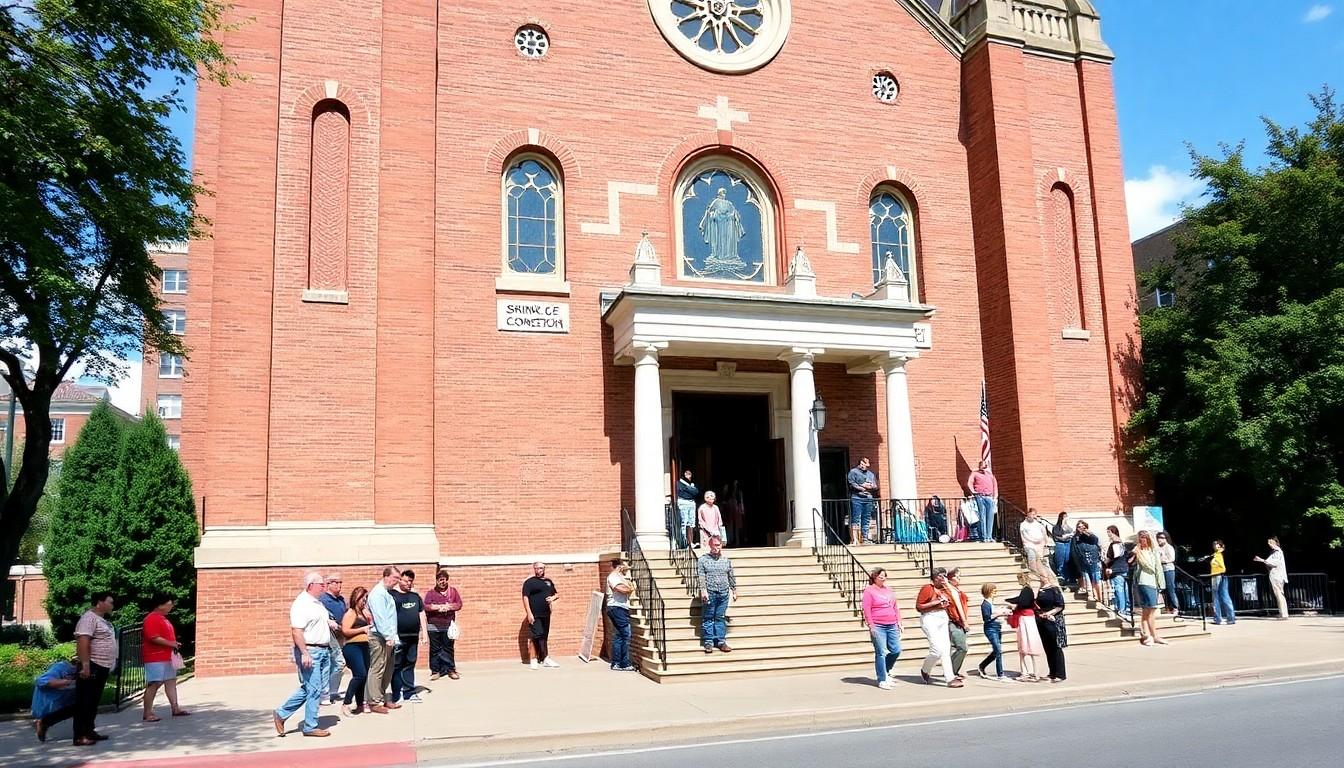
Around 300 people gathered in Atlanta for a Mass of Belonging that celebrated LGBTQ Catholics, their families and their place in parish life. Held after Atlanta Pride, the event offered prayer, music and a powerful message for people seeking a faith community where they can feel seen, supported and at home.
Essential Takeaways
- A regional first: Outreach held its first Southeast event at Atlanta's Shrine of the Immaculate Conception.
- A sizeable gathering: About 300 people attended the Eucharistic celebration after Atlanta Pride.
- A wider welcome: The service involved LGBTQ composers, allies and LGBTQ participants in lay liturgical roles.
- A message of hope: Organisers emphasised belonging, unity and God's love for LGBTQ people and their families.
- Local demand is clear: Attendees travelled from across Georgia and the wider Southeast, where similar ministries remain uncommon.
Atlanta's Mass of Belonging made a clear statement
The strongest impression from Atlanta's Mass of Belonging was its atmosphere. Music filled the Shrine of the Immaculate Conception, people greeted one another at the doors and the service gave LGBTQ Catholics a visible place in the centre of parish life.
Outreach organised the gathering with Fortunate and Faithful Families and the Archdiocese of Atlanta's Restorative Justice Ministries. It was designed not simply as a one-off service, but as a chance to continue conversations about LGBTQ Catholic life, ministry and community after the wider Outreach 2026 conference. The event listing from the Archdiocese of Atlanta placed the Mass among its regional calendar of Catholic gatherings.
That distinction matters. Being invited into a church is one thing; seeing your experiences, gifts and relationships acknowledged there feels considerably more substantial.
Why the Atlanta event resonated beyond Georgia
The congregation included people from across Georgia and other parts of the Southeast. Some attendees described travelling long distances because they had little access to explicitly welcoming Catholic events close to home, according to Outreach's account of the gathering.
Fortunate and Faithful Families has helped build networks for Catholic families seeking support and connection around LGBTQ inclusion. Its work sits alongside Outreach's broader focus on LGBTQ Catholics and discipleship, a conversation also visible in coverage of the Outreach 2026 conference by Catholic Times.
For people in areas without a local equivalent, the Mass offered more than a pleasant afternoon. It showed what a parish could look like when welcome is expressed through the whole service, not just a noticeboard or a carefully chosen phrase.
Music and ministry turned welcome into something visible
The service's details carried much of its meaning. Music was composed by LGBTQ writers and allies, while LGBTQ people took part in lay roles including lectoring and altar serving. Those choices gave the congregation a practical reminder that LGBTQ Catholics have long contributed to the church's worship and daily life.
The message also came through in the preaching and welcome. A word from Archbishop Gregory Hartmayer was shared by Drew Denton, director of the Archdiocese's Restorative Justice Ministries, while Shrine pastor Father Joseph Morris reflected on unity and the belief that every person bears God's image.
That combination of words and action is important. A warm homily can move people, but a service that also makes space for people to lead, read, sing and serve tends to land more deeply.
What families and parishes can take from it
For families considering a similar Catholic event, the practical ingredients are fairly clear: work with a local parish, involve established LGBTQ Catholic groups and make participation visible throughout the liturgy. Outreach's planned Atlanta partnership was announced ahead of the October gathering, showing how advance collaboration can turn a regional idea into a well-supported event.
Parishes can also look beyond the service itself. A welcoming Mass is more likely to have a lasting effect when it leads to conversation afterwards, regular support for families and opportunities for LGBTQ Catholics to contribute to parish life. Outreach's earlier conference coverage pointed to the value of community and ministry rather than treating welcome as a single statement.
And for attendees, the basics still count. Check whether the parish has accessible transport, a reception or social time after Mass, clear information for newcomers and people who can answer questions without making anyone explain themselves repeatedly. Small details often decide whether a first visit feels hopeful or exhausting.
A hopeful sign for LGBTQ Catholic ministry
The event's emotional high point came during the closing hymn, when the congregation sang about hearing a call and carrying people in their hearts. One attendee was seen wiping away tears while continuing to sing, a small moment that captured the service's wider mood.
The gathering also reflected a growing appetite for local, faith-based support. Outreach has continued to connect LGBTQ Catholics through regional events and national conversations, while organisations such as Fortunate and Faithful Families offer a family-centred route into that community.
Atlanta's Mass won't resolve every disagreement within the church, and it doesn't pretend to. But it offered a clear and encouraging message: LGBTQ Catholics and their loved ones should not have to travel far, hide parts of themselves or wonder whether they belong before taking part in Catholic life.
It's a powerful reminder that welcome is strongest when people can see themselves in the worship.
Source Reference Map
Story idea inspired by: [1]
Sources by paragraph: