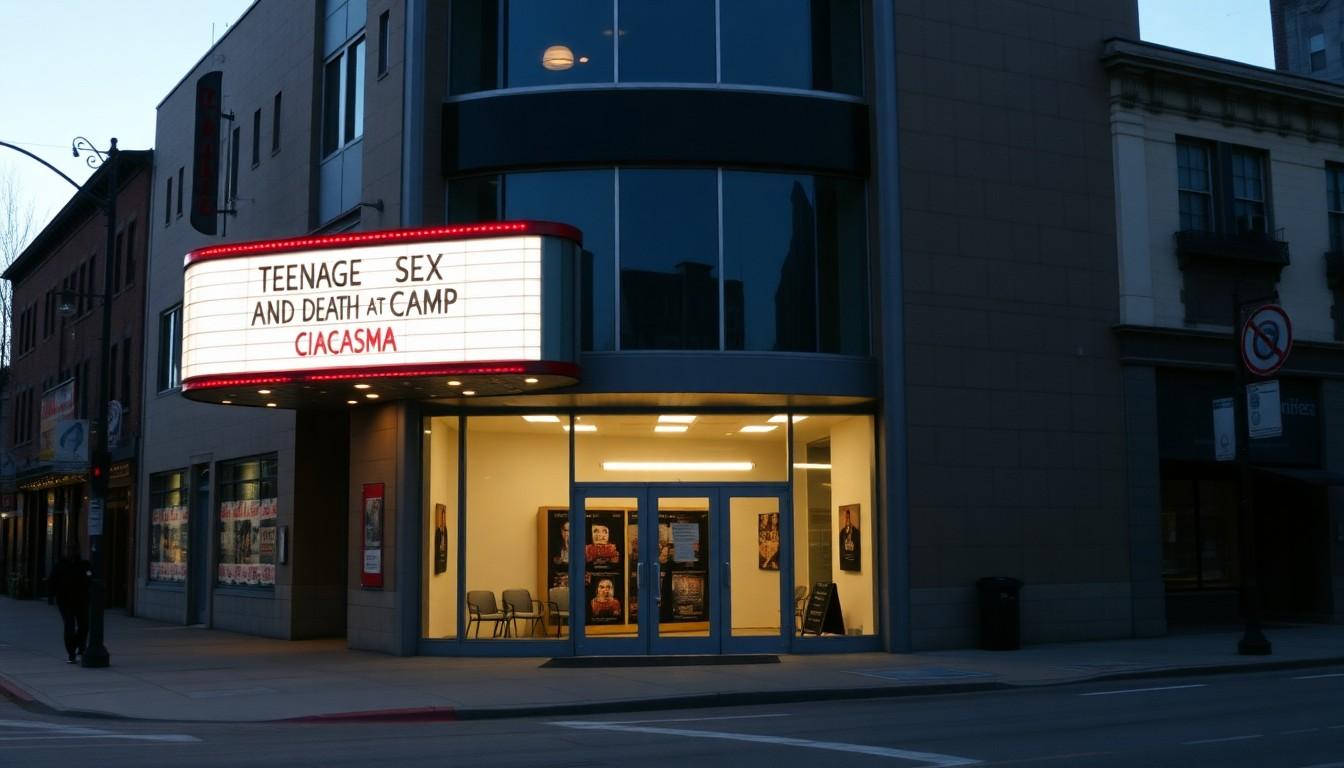
Viewers are returning to queer horror not simply for scares, but for the way it makes identity, bodies and social expectations feel visible. Jane Schoenbrun's Teenage Sex and Death at Camp Miasma arrives amid renewed interest in the genre, offering a thoughtful, unsettling look at why problematic horror can still matter to LGBTQ+ audiences.
Essential Takeaways
- Queer horror has deep roots: LGBTQ+ audiences have long found meaning in films that portray outsiders and “monsters”.
- Horror challenges normality: Slashers often attack the heterosexual family, couple and social order.
- Bodies are central: Blood, transformation and vulnerability can echo difficult experiences of embodiment.
- Problematic characters need context: Viewers can examine the social forces behind harmful representations rather than simply accepting or rejecting them.
- Camp Miasma takes a reflective route: The film is less a straightforward scare story than a meditation on watching horror itself.
Horror's queer appeal is older than the current trend
Queer horror may be enjoying a particularly visible moment, but the connection between LGBTQ+ audiences and frightening cinema is hardly new. Recent releases such as Leviticus, alongside the return of Ryan Murphy's knowingly camp American Horror Story, have helped bring the conversation into the mainstream.
Yet the attraction goes deeper than a taste for blood, latex and an ominous soundtrack. Horror has always been interested in people who don't fit neatly inside society's rules, which makes it a natural space for viewers questioning identity, desire and belonging. The Guardian's coverage of Teenage Sex and Death at Camp Miasma also underlines the film's appeal as a lavish, seductive take on slasher obsession. [2], [4]
That tension sits at the heart of Jane Schoenbrun's film. Rather than presenting a conventional killer-on-the-loose story, it follows Kris, a young filmmaker trying to remake the fictional Camp Miasma for a modern audience. She can see the franchise's transphobia clearly, but she remains captivated by it. [3], [5]
When the monster attacks the rules
One reason horror feels so resonant is that its basic engine is often an assault on “normality”. In many films, that normality is represented by the nuclear family, heterosexual romance or a tidy social hierarchy. Horror then gleefully tears those structures apart, usually with considerable noise.
The slasher is especially revealing. Sexually active teenagers are punished, outsiders are feared and the supposedly safe community turns hostile. For queer viewers, that can create a curious reversal: the world being defended by the film may look less comforting than the threat breaking through it.
That doesn't make every old horror film progressive. Far from it. But it can explain why audiences return to stories whose values they don't necessarily share. As reviews from TheWrap and The Week suggest, Camp Miasma uses its lurid, erotic and violent ingredients to examine the genre's own habits rather than simply repeat them. [3], [7]
Why body horror can hit differently
Horror is a physical genre. It makes viewers tense, flinch, cover their eyes and occasionally wonder why they paid to feel this stressed. Its fascination with flesh, blood and transformation can also speak to people whose relationship with their bodies is complicated or painful.
Body horror turns the human form into something unstable. Skin splits, identities shift and the familiar becomes strange. For some trans and queer viewers, that imagery can reflect feelings of alienation, dysphoria, desire or social discomfort in ways that more respectable dramas often avoid.
The effect can be both empowering and troubling. A monster may offer a way to reclaim shame, but identifying too closely with violence or deformity can also leave important questions unanswered. The Atlantic and TechRadar reviews position Schoenbrun's film as a work that lingers on this discomfort, asking viewers to notice not only the image on screen but their own response to it. [5], [6]
The problem with embracing the monster
Horror has produced some deeply harmful queer- and trans-coded figures. From Sleepaway Camp to The Silence of the Lambs, films have sometimes linked gender difference or queer suggestion with danger, pathology and murder.
That history can't be waved away because a later audience finds the films fascinating. The more useful response may be to ask what created these characters and what cultural fears they embody. A figure such as Buffalo Bill, for example, can be read not only as an offensive stereotype but also through questions about medical gatekeeping, state violence and exclusion from gender-related care.
This approach avoids two easy answers. Viewers don't have to see themselves in a degrading character, but neither must they pretend the character has nothing to reveal. Camp Miasma appears most interested in that middle ground, where fascination becomes analysis and discomfort becomes a reason to look closer. [2], [5]
Watching horror, then watching yourself watch it
The film's most intriguing idea is that queer viewers may not simply identify with horror's victims or monsters. They may also identify with the act of watching, questioning and reworking those images.
That is close to the idea of disidentification: refusing to accept a harmful representation as a definition of yourself while still finding material in it for thought, creativity and resistance. It's an especially useful way to approach a genre that can be both thrilling and cruel.
Reviews from The Guardian, SlashFilm and TechRadar point to a film that treats slasher fandom as emotional, sensual and intellectually messy. That combination matters. Sometimes the most revealing question isn't “Who is the monster?” but “Why did I recognise something in it?” [2], [4], [6]
Why queer horror still matters now
The renewed interest in queer horror reflects a wider shift in how audiences discuss genre cinema. Viewers are more willing to examine the politics of old films, while filmmakers are using familiar horror machinery to explore identity, trauma and power.
That doesn't mean every unsettling image needs to be redeemed. Some representations are simply damaging, and audiences are entitled to reject them. But thoughtful horror can create room for a more complicated response, one that acknowledges the harm while asking what the work reveals about the world that produced it.
For queer and trans viewers, that may be the lasting attraction. Horror offers a dark, imperfect mirror, but it is still a mirror. Watching it critically can turn fear into reflection and old stereotypes into a starting point for something more imaginative. [3], [7]
A good horror film doesn't just make you look away; sometimes it makes you ask why you looked in the first place.
Source Reference Map
Story idea inspired by: [1]
Sources by paragraph: