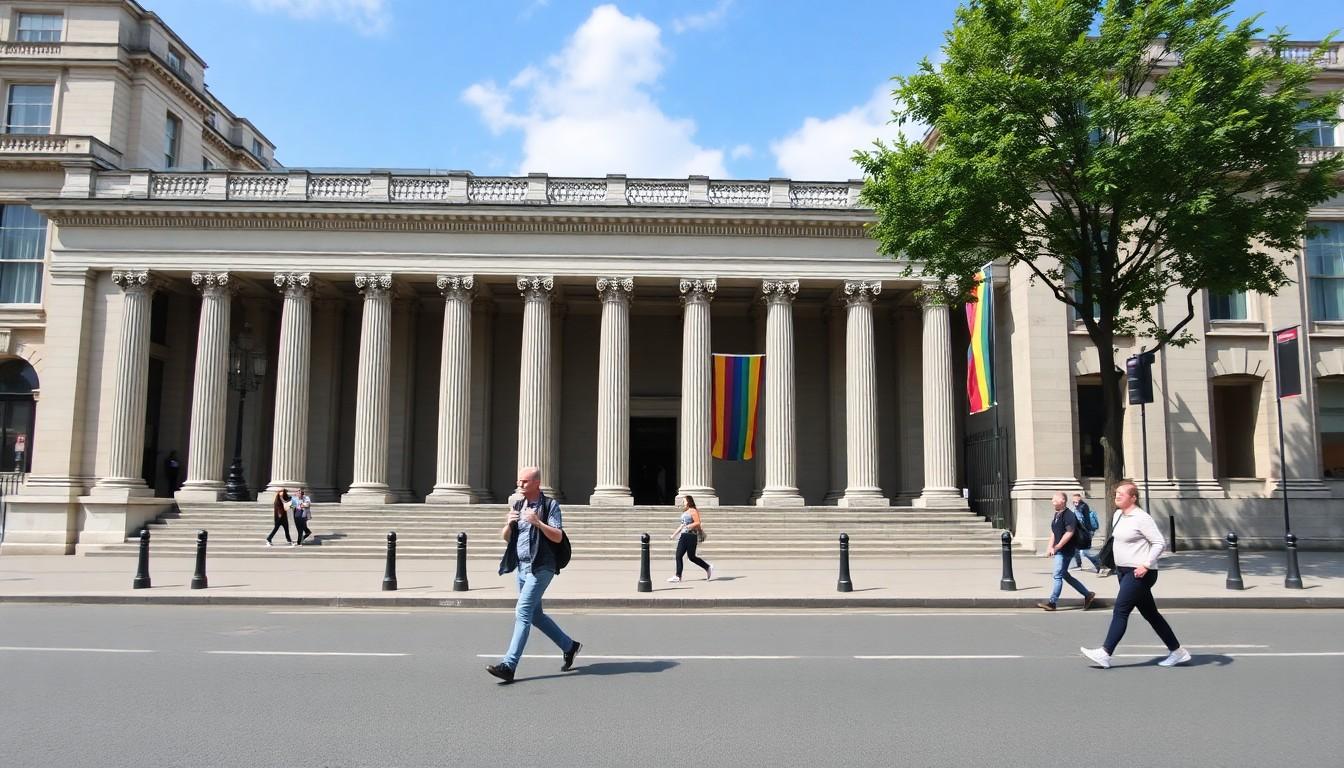
Visitors to London’s National Portrait Gallery can step into Tim Walker’s Fairyland, a colourful new exhibition exploring Queer history, creativity and community through more than 250 portraits. Running until February 2027, the show brings activists, performers, artists and cultural icons together in a vivid, emotionally generous celebration of difference.
Essential Takeaways
- A major new show: The exhibition brings together more than 250 photographs from Walker’s wide-ranging career.
- A Queer history lesson: Portraits connect campaigners, healthcare workers and artists with pivotal moments in British LGBTQIA+ history.
- Fantasy meets documentary: Walker’s theatrical eye sits alongside quieter, intimate images of people and their meaningful objects.
- A central London visit: The exhibition is at the National Portrait Gallery and is scheduled to run until 7 February 2027.
- More than celebrity: Famous faces share the spotlight with activists, social workers, performers and community figures.
Tim Walker’s Fairyland turns portraiture into a celebration
Tim Walker’s photographs are often associated with enormous sets, eccentric props and a delicious sense of make-believe. Here, though, the fantasy serves a bigger purpose. Fairyland: Love and Legends uses glamour and theatricality to place Queer lives, histories and achievements firmly at the centre of the National Portrait Gallery.
The exhibition grew from five years of conversations and creative collaboration with Queer people and allies in Britain and beyond. According to the National Portrait Gallery, its scale reflects Walker’s ambition to create not simply a display of famous sitters, but a broad portrait of community. The result feels less like a conventional roll call of celebrities and more like an exuberant family album.
That distinction matters. A bright costume or surreal backdrop may catch the eye first, but the emotional force comes from the people within each frame. Walker makes room for recognition, mischief and tenderness, often in the same image.
A history of resistance sits at its heart
The early part of the exhibition looks back to the campaigners and organisers who fought for Queer rights during decades marked by legal discrimination, public hostility and the HIV/AIDS crisis. Visitors encounter figures connected with activism, protest and community care, alongside portraits that acknowledge the joy and nightlife that helped sustain people through difficult years.
The National Portrait Gallery’s exhibition information places these stories within a longer history of LGBTQIA+ resistance. That context gives the photographs added weight, particularly when portraits of musicians and performers appear alongside healthcare professionals and activists. The effect is deliberately collective: progress is shown as something built by many hands.
Walker’s approach is respectful without becoming solemn. The photographs acknowledge grief and danger, but they also insist on pleasure, style and survival. That balance is one of the show’s strongest qualities, because history here is not flattened into tragedy.
From hospital wards to dance floors
One of the exhibition’s most moving ideas is the connection between care and culture. Portraits linked to the HIV/AIDS response sit alongside musicians whose work offered release, visibility and solidarity. The pairing suggests that a community’s survival depends on more than medicine alone. It also needs music, friendship, performance and spaces where people can feel seen.
ArtFund’s exhibition listing highlights the show’s attention to both established names and less celebrated contributors. That breadth gives the display a warm, democratic energy. The person who shaped public conversation and the person who quietly supported others are treated as part of the same story.
It’s a reminder that cultural history rarely moves in a straight line. A nightclub, a protest, a bookshop and a hospital can all become places of resistance, and Walker’s portraits allow those connections to sit side by side.
Fashion, performance and the power of self-invention
The exhibition’s later galleries turn towards fashion, makeup, drag and performance. Designers, actors, comedians, musicians and nightlife figures appear in images that explore how presentation can become both armour and liberation.
Wallpaper’s guide to London exhibitions places Fairyland among the city’s notable cultural events, while GalleriesNow describes the project as a significant presentation of Walker’s portrait work. That wider interest makes sense: the show offers the visual drama associated with Walker, but directs it towards identity and belonging rather than escapism alone.
Many sitters hold objects connected with their lives or work. A shop sign, a camera or a shell can carry an entire history in miniature. These details stop the portraits from feeling like polished publicity shots. They offer a small, tangible route into each person’s story.
Why the plain background matters
Walker is best known for elaborate visual worlds, so his simpler portraits can be surprisingly arresting. Digital Camera World has noted the contrast between his famous fantasy sets and images made against plain white backgrounds. Without elaborate scenery to compete for attention, the sitter’s expression, posture and presence become the spectacle.
That restraint also creates a useful rhythm across the exhibition. The grander photographs invite viewers into Walker’s imagination, while the quieter ones ask them to look more closely at the person in front of the lens. Together, they show that his real subject isn’t fantasy itself, but the freedom fantasy can make possible.
For visitors, the best approach is to allow time for both kinds of image. Pause over the theatrical portraits, certainly, but don’t rush past the quieter frames. They’re often where the exhibition’s most personal exchanges take place.
A generous, visually rich London exhibition
Fairyland: Love and Legends feels timely without being tied to a single moment. Its portraits honour people who changed Queer life through campaigning, creativity, care and sheer persistence, while also celebrating those who made room for joy.
The National Portrait Gallery is presenting the exhibition in London until 7 February 2027, according to its visitor information. Whether you arrive for Walker’s distinctive visual language, the starry names or the historical story, there’s a good chance you’ll leave thinking about the people just beyond the frame.
It’s a dazzling reminder that difference isn’t something to hide in the margins. In Walker’s Fairyland, it becomes the source of the light.
Explore the exhibition if you’re ready for portraiture with heart, sparkle and plenty to say.
Source Reference Map
Story idea inspired by: [1]
Sources by paragraph: