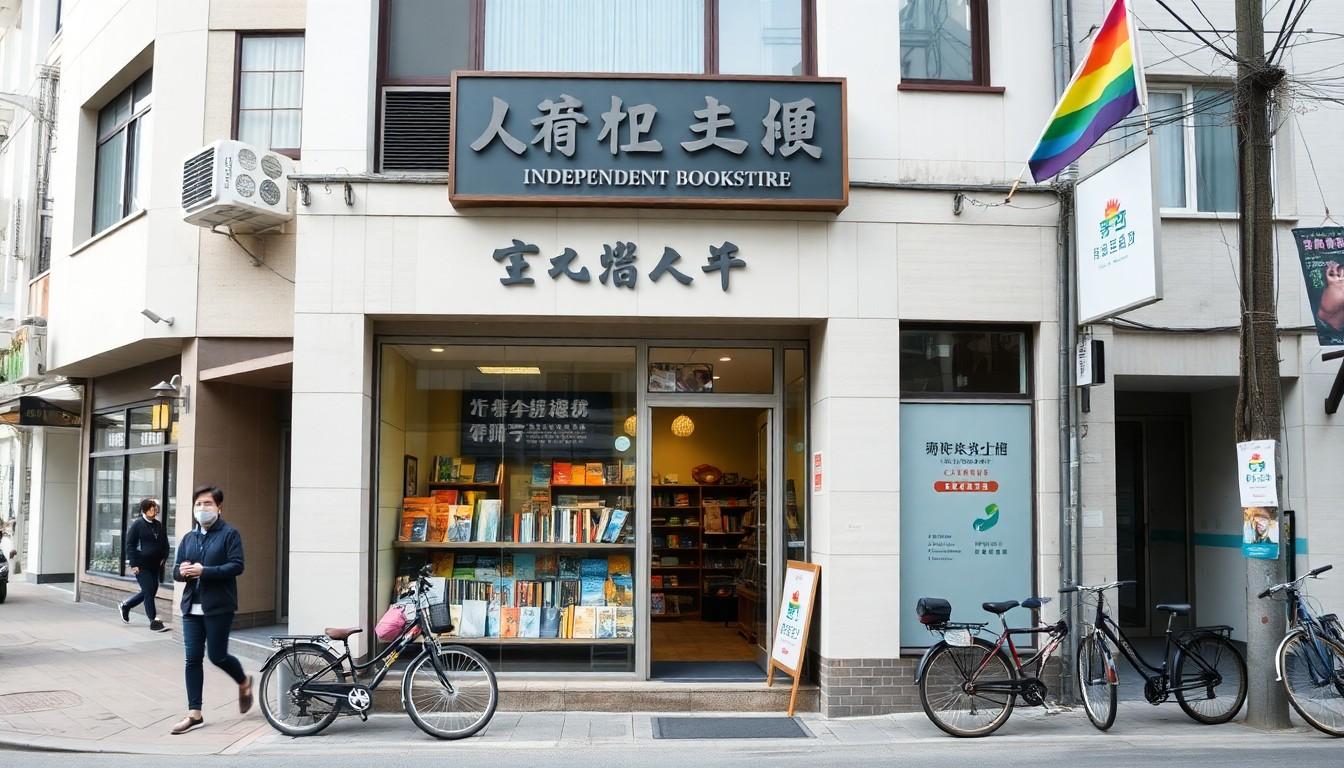
Visitors are discovering LGBTQ bookshops across Taiwan that offer more than shelves and coffee. In Taichung, Taoyuan and Hualien, these welcoming spaces connect readers with queer and feminist writing, practical support and open conversation, helping turn same-sex marriage's legal victory into everyday social acceptance.
Essential Takeaways
- More than bookshops: These spaces double as meeting points, advice centres and community hubs.
- Law isn't the whole story: Taiwan legalised same-sex marriage in 2019, but social attitudes remain uneven.
- Local context matters: Conservative cities often have fewer LGBTQ resources and support networks.
- Small encounters count: Talks, reading groups and casual visits can gently challenge long-held assumptions.
- A thoughtful mix of themes: Some shops combine gender titles with children's books, education, civic life and environmental subjects.
Where a bookshop becomes a safe place
Walk into A Room of One's Own in Taichung and the first impression is intimate rather than institutional. Visitors remove their shoes before entering a narrow townhouse filled with books, café details and personal touches. It feels more like being invited into someone's carefully protected home than stepping into a conventional high-street shop.
That atmosphere is part of the point. Founder Shan-Wen Tsai opened the gender-focused bookshop in 2009, when queer groups in central Taiwan had far less public visibility. The shop became a place where LGBTQ people could meet, browse and feel briefly free from the pressure of the outside world, according to The Nation.
For some visitors, simply seeing the shop was meaningful. One young woman reportedly broke down at the entrance after realising that a place devoted to gender and sexuality existed in her city. The emotional force of that moment is easy to understand: representation can begin with a rainbow sign, a visible shelf or the quiet assurance that someone else has asked the same questions.
Taiwan's marriage-equality victory left work unfinished
Taiwan became the first country in Asia to legalise same-sex marriage in 2019, a milestone that drew international attention. Yet the route to that achievement was bruising, and the public debate exposed deep divisions around marriage, education, family life and gender identity.
The 2018 referendum showed how complicated the mood remained. Voters backed conservative positions on several LGBTQ-related questions, while lawmakers ultimately created a separate legal framework for same-sex marriage rather than rewriting the civil code. The result delivered recognition, but not complete equality, as Langhuan owner Mia Chang argued in The Nation.
That distinction matters beyond Taiwan. A law can change quickly, while families, classrooms and neighbourhoods tend to move at a slower pace. Bookshops cannot settle every argument, but they can make difficult subjects visible without turning every conversation into a political showdown.
From Taichung to Hualien, the local picture changes
The three featured shops operate in very different settings. A Room of One's Own serves Taichung, Langhuan works in Taoyuan, and Good for Kids operates in Hualien, where founder Peggy Chiang described LGBTQ resources as particularly scarce.
In Taoyuan, Langhuan became a signature-collection point during the campaign around the referendum. Its public role also attracted quieter opposition, including anti-marriage pamphlets slipped into books by people pretending to browse. It sounds almost comic, but the incident captures the tension these businesses can face when reading becomes openly political.
Hualien brought a more direct backlash. Good for Kids was targeted by a boycott after supporting a local gender-related lecture series, even though gender was not originally intended to be the shop's defining identity. Chiang's response was practical: keep the rainbow flag, keep the gender section, but build a broader programme around picture books, special education, marine conservation and civic participation.
Why accidental encounters may change minds
The owners' approach is deliberately patient. They organise talks, courses, reading groups and book discussions, but they don't expect every visitor to arrive as a committed ally. Sometimes the most useful guest is the person who wandered in by chance.
One older Christian woman in Hualien reportedly attended a talk on Taiwan's gay-rights movement and was surprised by the hardship and length of the struggle. Her reaction was not a dramatic conversion, but it was a moment of recognition. That kind of response can travel through families and friendship circles, Chang told The Nation.
This is where physical bookshops still have an advantage over online debate. Digital spaces can offer reach and anonymity, but they also encourage people to retreat into familiar camps. A welcoming room, a cup of tea and a book left open on a table create a softer route into a subject that might otherwise feel threatening.
Choosing the right LGBTQ bookshop experience
For readers looking for gender and sexuality books, the most useful shop may not be the one with the biggest specialist section. Look for places that host events, work with local groups or offer a mixture of fiction, history, children's literature, health information and social commentary.
It also helps to consider the setting. A specialist shop can provide depth and community, while a broader independent bookshop may introduce gender themes to people who wouldn't actively search for them. Good for Kids' wider mix is a reminder that inclusion doesn't always need to announce itself with a dedicated campaign; sometimes it arrives through a picture book or an unexpected conversation.
And if you're visiting a small community bookshop, support can be simple. Buy a title, attend an event, recommend the space to someone who might need it, or allow yourself time to browse without arriving with a fixed answer. The most valuable exchange may happen beside the shelf, not on the stage.
Quiet persistence is the real model
None of these owners can easily measure how many minds a book, workshop or conversation has changed. Their work has no obvious finish line, and progress can feel frustratingly slow. Still, they continue because the presence of the shop itself sends a message: questions about gender and sexuality belong in public life.
Tsai has described books as a way of opening a different view of the world. Chang sees every conversation as a small addition to a larger movement, while Chiang uses a broad programme to help customers meet unfamiliar ideas without feeling pushed into a corner.
That may be the most durable lesson. Social change isn't always loud, rapid or easy to count. Sometimes it looks like a reader lingering over a title, an older visitor listening carefully, or a young person realising that their future doesn't have to follow someone else's script.
It's a small room, but the conversation can travel far.
Source Reference Map
Story idea inspired by: [1]
Sources by paragraph:
- Paragraph 1: [2], [4]
- Paragraph 2: [3], [5]
- Paragraph 3: [6], [7]
- Paragraph 4: [2], [4]
- Paragraph 5: [3], [6]
- Paragraph 6: [5], [7]
- Paragraph 7: [2], [3]
- Paragraph 8: [4], [6]
- Paragraph 9: [5], [7]
- Paragraph 10: [2], [4]
- Paragraph 11: [3], [5]
- Paragraph 12: [6], [7]
- Paragraph 13: [2], [3]
- Paragraph 14: [4], [5]
- Paragraph 15: [6], [7]
- Paragraph 16: [2], [4]
- Paragraph 17: [3], [6]
- Paragraph 18: [5], [7]
- Paragraph 19: [2], [3]
- Paragraph 20: [4], [6]
- Paragraph 21: [5], [7]