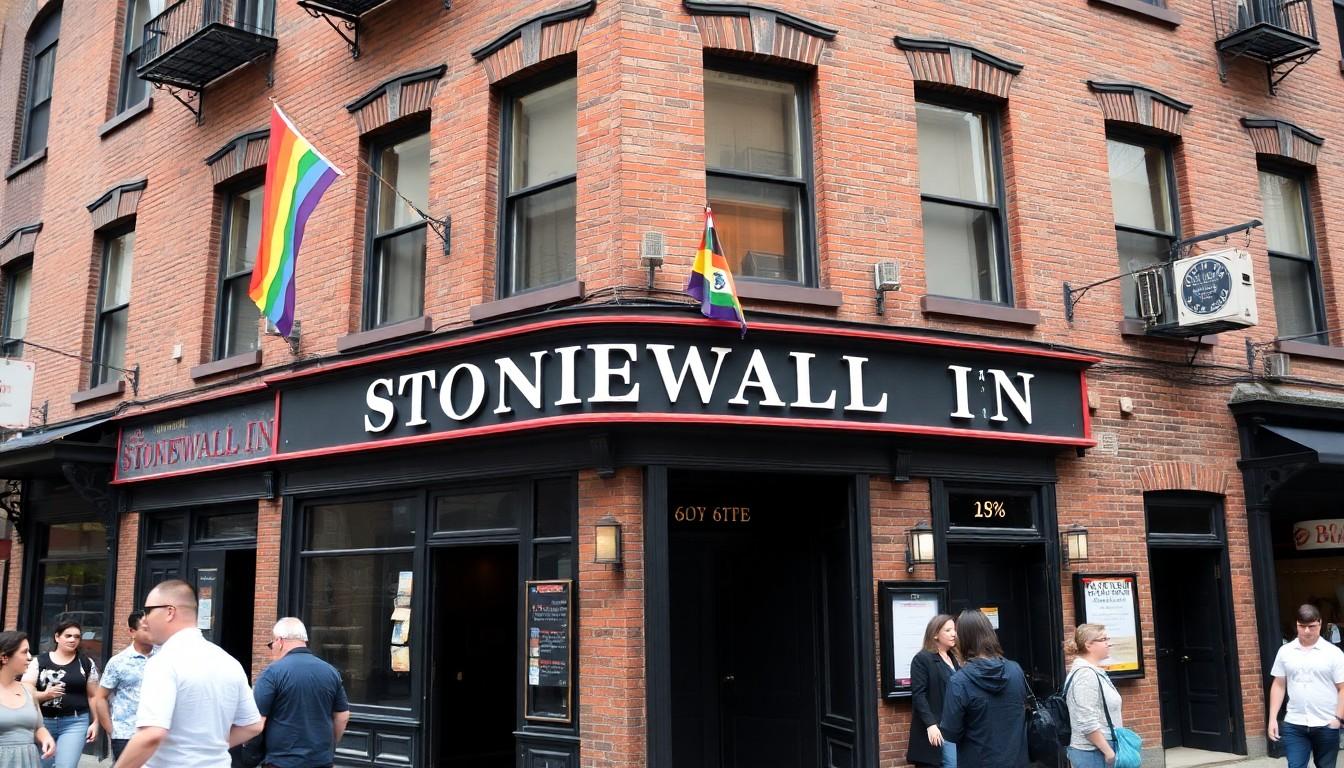
Stacy Lentz is helping turn the Stonewall Inn’s history into action, supporting LGBTQ+ communities, grassroots groups and safer spaces well beyond New York. As co-owner of the famous Greenwich Village venue and cofounder of the Stonewall Inn Gives Back Initiative, she’s making the case that queer history matters most when it remains active, shared and useful.
Stonewall is more than a landmark
For many visitors, the Stonewall Inn is a recognisable bar on Christopher Street. For Lentz, it’s also a living piece of LGBTQ+ history, carrying the energy of the 1969 uprising into the present day.
That distinction matters. A historic site can easily become frozen in time, admired from a distance but disconnected from everyday life. Lentz’s work pushes in the opposite direction, treating Stonewall as a platform for organising, education and solidarity.
The Stonewall Inn’s official history presents the venue as a central symbol of queer resistance, while its wider work aims to keep that story connected to communities facing new pressures. It’s a powerful reminder that legacy isn’t simply something you inherit. It’s something you use.
Turning remembrance into practical support
The Stonewall Inn Gives Back Initiative was created to support LGBTQ+ people and organisations working towards equality. Its focus includes safer spaces, community support and assistance for grassroots groups that may lack the visibility or resources of larger institutions.
That approach gives the initiative a distinctly practical edge. Pride flags and anniversary events can raise awareness, but local organisations often need funding, connections and sustained attention. Supporting that infrastructure is less flashy, perhaps, but it’s where long-term progress tends to take root.
According to the initiative’s mission and values, the work is grounded in equality, inclusion and community-led change. In other words, the goal isn’t to speak over marginalised groups, but to help amplify the work already being done.
A wider LGBTQ+ movement takes shape
One of the most significant developments in Lentz’s recent work has been the initiative’s expansion beyond the United States. That international outlook reflects how LGBTQ+ rights and safety are shaped by very different laws, cultures and local realities.
The need for adaptable support is obvious. A strategy that works in New York may not translate neatly elsewhere, so partnerships and listening become essential. Community groups on the ground understand their own challenges best, whether they’re dealing with political hostility, limited funding or simple isolation.
The initiative’s impact work points towards this broader model of connection. Stonewall’s name may be globally recognised, but the most meaningful results are likely to come through smaller organisations whose work rarely makes headlines.
Why inclusive belonging needs effort
Lentz’s message is straightforward but demanding: inclusion isn’t achieved by declaring good intentions once. It depends on listening across differences, welcoming people deliberately and making sure they have a genuine role in shaping change.
That’s especially relevant as LGBTQ+ communities continue to face uneven levels of acceptance and protection. Broad coalitions matter, but they only work when people are prepared to share space, reconsider assumptions and keep showing up after the celebratory moments have passed.
The Stonewall Inn’s values emphasise belonging as an active practice rather than a slogan. It’s a useful idea for organisations, workplaces and community groups alike, because a door being open doesn’t always mean everyone feels invited through it.
What comes next for Stonewall’s legacy?
After two decades as a co-owner of the Stonewall Inn, Lentz has helped connect a famous historic venue with a more expansive vision of social change. Her work suggests that preserving Stonewall’s legacy means doing more than protecting a building or retelling a familiar story.
It means funding community action, sharing resources and keeping the conversation international. The challenge now is maintaining that momentum while ensuring the movement remains rooted in the people it’s meant to serve.
History can be comforting, but it’s most valuable when it asks something of us. In Lentz’s case, that request is clear: make room, listen carefully and turn solidarity into action.
Explore the Stonewall legacy through the communities carrying its work forward.
Source Reference Map
Story idea inspired by: [1]
Sources by paragraph:
- Paragraph 1: [2], [3]
- Paragraph 2: [2], [4]
- Paragraph 3: [3], [5]
- Paragraph 4: [5], [6]
- Paragraph 5: [3], [4]
- Paragraph 6: [4], [6]
- Paragraph 7: [6], [7]
- Paragraph 8: [2], [5]
- Paragraph 9: [3], [4]
- Paragraph 10: [5], [6]
- Paragraph 11: [2], [3]
- Paragraph 12: [4], [5]
- Paragraph 13: [6], [7]
- Paragraph 14: [2], [4]