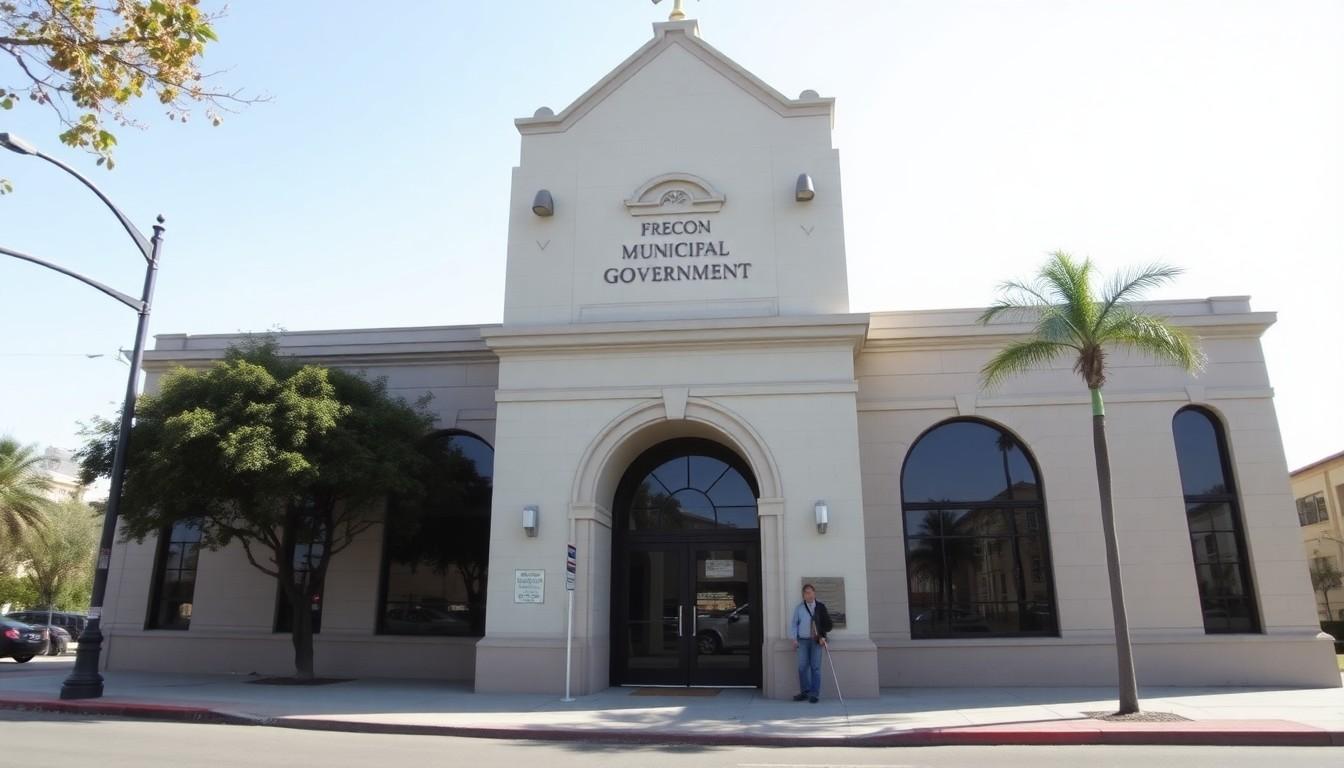
Community organiser Robin McGehee is taking her work from Fresno to a national stage, helping build an intersectional network focused on civic action, LGBTQ+ rights and local leadership. Her message is simple but powerful: when people speak up together, they can influence the shape of the future.
Essential Takeaways
- National reach: Together Across America has organisers working across 48 states.
- Local roots: McGehee became Fresno's first LGBTQ+ liaison in the Office of Community Affairs.
- Broad coalition: The initiative brings together community groups around multiple connected issues.
- Youth focus: Her next priority is supporting young leaders in Florida.
- Core message: She believes speaking out is a practical way to shape public life.
From Fresno to a much bigger conversation
Robin McGehee's work began with a distinctly local challenge: helping LGBTQ+ residents feel seen, heard and connected to city government. As Fresno's first LGBTQ+ liaison, she has spent three years working at the intersection of public service and community organising.
That role gives her a useful perspective. Local advocacy can feel close enough to touch, whether it's a town-hall meeting, a neighbourhood conversation or a resident trying to find the right support. But McGehee's influence now stretches well beyond California's Central Valley.
Her profile in Out's Out100 recognises that wider impact, particularly her work helping to launch Together Across America. The project is designed to turn concern into organised, neighbour-to-neighbour action.
What is Together Across America?
Together Across America is a community organising effort built around the idea that people can work across geographic and political divides. McGehee launched the initiative with the Gilbert Baker Foundation and the L-Project, bringing several strands of advocacy into one broader network.
The project takes an intersectional approach, meaning it connects LGBTQ+ rights with other concerns affecting communities across the country. That matters because people rarely experience public issues one at a time. Housing, education, safety, healthcare and representation often overlap in everyday life.
According to Together Across America's website, the organisation is focused on building relationships and encouraging people to participate locally. It is less about waiting for a perfect national moment and more about giving people a practical route into civic action.
Why local organising still matters
National politics can be noisy and exhausting, but local organising has a different texture. It happens in familiar places, among people who may already share schools, workplaces, streets or community spaces. That closeness can make action feel more manageable.
McGehee's work in Fresno reflects that approach. Local reporting from ABC30 and LGBTQ Fresno described her appointment as the city's first LGBTQ+ liaison, a role intended to improve communication between officials and the community.
That kind of bridge-building is easy to underestimate. A liaison may not produce dramatic headlines every week, but the role can help residents understand how decisions are made and how to raise concerns. In practice, better communication is often where lasting trust begins.
Young leaders are next in her sights
McGehee's next major focus is Florida, where she wants to support young leaders challenging what she describes as harsh political conditions. Her aim is not simply to speak on their behalf, but to help them develop the confidence and organising skills to lead for themselves.
That's an important distinction. Campaigns often need visible spokespeople, but durable movements depend on local people who know their own communities and can keep the work going after the headlines fade.
For younger activists, the message is encouraging: participation doesn't have to begin with a grand platform. It can start with a conversation, a shared concern or a small group deciding to act. Your phone, your front room and your community centre can all become organising tools.
A message about the future
McGehee's central phrase, "When we speak, we shape the world!", captures the spirit of her work. It sounds optimistic, but there's a practical point underneath it. Public language influences what people believe is possible, who feels welcome and which problems receive attention.
Together Across America also shows how advocacy groups are adapting to a more fragmented political landscape. Instead of relying only on large national organisations, the movement model places more emphasis on networks, relationships and local knowledge.
The approach won't make difficult politics disappear overnight. Still, it offers something many people are looking for: a way to move from passive frustration to shared purpose. And for communities facing pressure, that can be a meaningful first step.
How to get involved locally
People interested in McGehee's organising model can begin by looking for existing community groups rather than trying to build everything from scratch. Local LGBTQ+ organisations, mutual-aid networks and civic associations often know which issues need attention and where volunteers can help.
It also pays to be specific. Writing to a local representative, attending a public meeting or helping a neighbour access services may feel modest, but these actions create the relationships that larger campaigns depend on.
Together Across America encourages people to connect with organising efforts in their own areas. For anyone who has been wondering how to make a difference, that can be a more realistic starting point than trying to solve the whole country in one afternoon.
Find a local way to speak up, connect and help shape what comes next.
Source Reference Map
Story idea inspired by: [1]
Sources by paragraph:
- Paragraph 1: [6], [7]
- Paragraph 2: [2], [4]
- Paragraph 3: [3], [5]
- Paragraph 4: [3], [5]
- Paragraph 5: [6], [7]
- Paragraph 6: [2], [4]
- Paragraph 7: [3], [5]
- Paragraph 8: [3], [5]
- Paragraph 9: [6], [7]
- Paragraph 10: [3], [5]
- Paragraph 11: [3], [5]
- Paragraph 12: [3], [5]
- Paragraph 13: [3], [5]
- Paragraph 14: [3], [5]
- Paragraph 15: [3], [5]
- Paragraph 16: [3], [5]
- Paragraph 17: [3], [5]