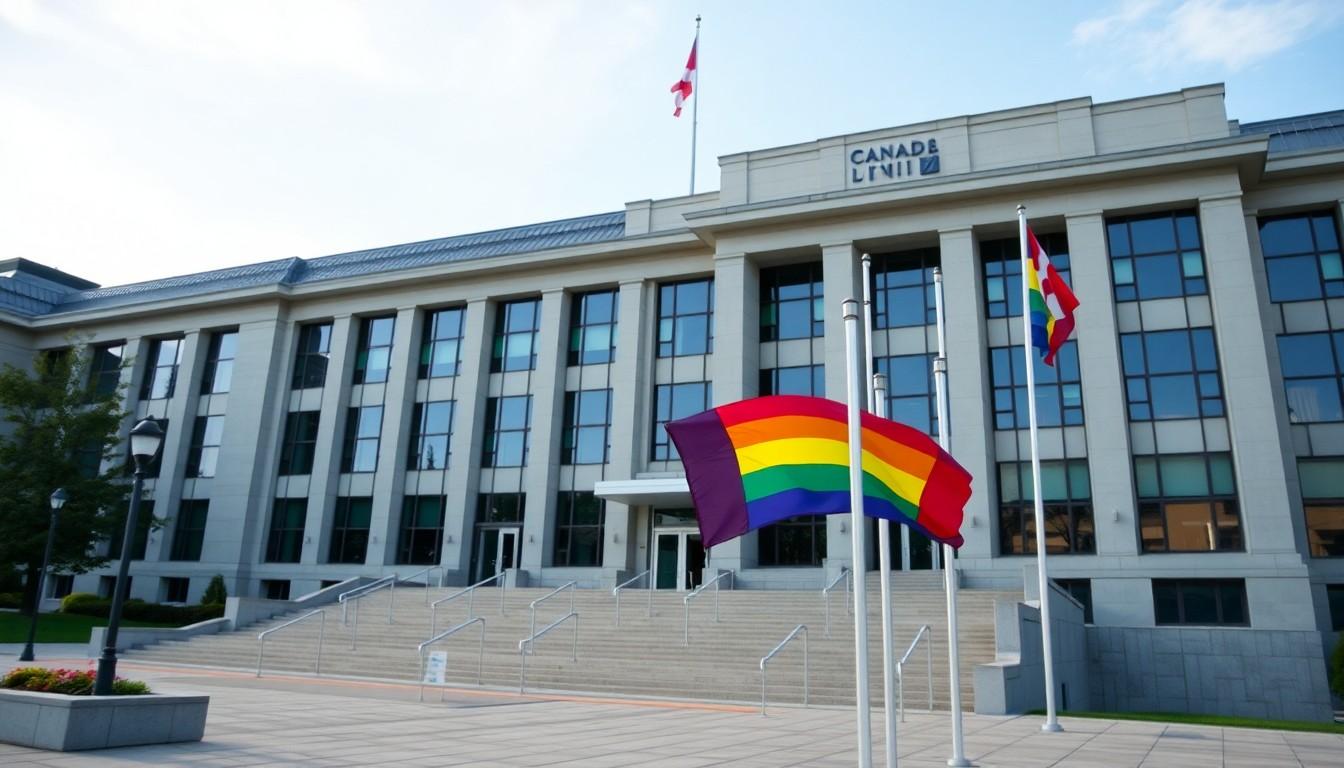
LGBTQ+ Canadians and community organisations are urging Prime Minister Mark Carney to renew and expand the federal 2SLGBTQIA+ Action Plan before it expires in March 2027. With hate rising and essential services under pressure, advocates say continued funding and firm political leadership matter now more than ever.
Essential Takeaways
- A deadline is approaching: The federal 2SLGBTQIA+ Action Plan is due to expire in March 2027.
- Community groups want certainty: Advocates are calling for a renewed, properly funded plan rather than a gap in support.
- Hate remains a concern: New federal measures and community reporting point to continuing pressure on LGBTQ+ people.
- Services are at stake: Local organisations rely on public funding for safety, health, outreach and inclusion work.
- The next step is political: Supporters want renewal reflected in the 2026 federal budget.
Canada’s LGBTQ+ action plan faces a crucial test
The strongest argument for renewal is also the simplest: progress can be lost when it isn’t actively protected. Canada’s federal 2SLGBTQIA+ Action Plan was created to coordinate work on equality, safety, inclusion and community support, but its future is now becoming a pressing political question.
Government information describes the plan as a framework for tackling discrimination and improving federal action for 2SLGBTQIA+ people. Its supporters say that framework needs to continue, particularly as organisations face rising demand and a harsher public climate. The Canadian Media Guild has also backed calls to renew and broaden the plan, according to its public statement.
That makes the approaching 2027 expiry date more than a bureaucratic milestone. For many community groups, it could determine whether long-term projects continue smoothly or are forced into another round of uncertainty.
Why funding matters beyond Ottawa
A national plan only works when it reaches people where they live. Local LGBTQ+ organisations provide practical support, from community programming and advocacy to help for people facing discrimination, isolation or threats. They often operate close to the ground, with small teams and little room to absorb sudden funding gaps.
Policy coverage from Senso Magazine highlights the importance of renewal for organisations across Canada, while government planning documents show that federal departments continue to treat 2SLGBTQIA+ inclusion as part of their wider responsibilities. The less glamorous truth is that equality work needs staff, rent, training and reliable administration. Good intentions alone don't keep a helpline open.
There’s also an economic argument. Removing barriers helps more people participate fully in work, education and public life. Funding community services can therefore be seen not simply as spending, but as infrastructure that helps people remain safe, connected and able to contribute.
A tougher climate is changing the conversation
Advocates say the current environment feels markedly less secure than it did a decade ago. International attacks on LGBTQ+ rights have sharpened fears that rhetoric can quickly become policy, while Canadian communities continue to report hostility and discrimination.
The federal government has responded in part through stronger hate-crime protections. According to the Department of Justice, new legislation has increased protections and strengthened the legal response to hate-motivated offences. That’s significant, but criminal law is only one piece of the picture. Prevention, education, mental-health support and community-led services still matter.
A renewed action plan could connect those strands, giving departments and community organisations a clearer shared direction. Without that coordination, supporters fear that important work will become fragmented, short-term or vulnerable to shifting political priorities.
What should a renewed plan include?
Renewal shouldn't mean simply extending the existing document with a fresh cover. Community organisations are calling for an approach that reflects the changing landscape, including stronger support for trans people, better regional coverage and more stable funding arrangements.
The Coalition of Canadian Municipalities and other sector voices have supported expansion of the federal plan, while Urania Institute reporting has focused on the importance of funding for 2SLGBTQIA+ organisations. Those calls point to a practical lesson: national commitments need measurable goals, transparent reporting and funding that lasts long enough for projects to work.
For readers wondering what meaningful renewal looks like, the basics are fairly clear. It should set out who is responsible, what progress will be measured and how community groups can access support without repeatedly starting from scratch. A plan that is easy to announce but difficult to deliver won’t be much use to anyone.
The 2026 budget could set the tone
The most immediate opportunity is the federal budget. Advocates want the government to confirm renewal before the existing plan runs out, rather than waiting until organisations are already planning for closures or cutbacks.
That timing would also send a broader signal. Standing behind LGBTQ+ rights when the subject is politically comfortable is one thing; maintaining support when the debate is noisier takes more conviction. A funded plan would show that inclusion is part of Canada’s long-term public policy, not a temporary campaign message.
There’s a human scale to all this, too. For someone looking for a safe service, a youth group or a local advocate, government strategy can feel very distant. But when funding disappears, the effects are immediate, visible and deeply personal.
Renewing the plan won't solve every threat facing LGBTQ+ Canadians, but it would give communities a stronger footing for the work ahead.
Source Reference Map
Story idea inspired by: [1]
Sources by paragraph:
- Paragraph 1: [3], [5]
- Paragraph 2: [2], [6]
- Paragraph 3: [3], [5]
- Paragraph 4: [5], [7]
- Paragraph 5: [6], [7]
- Paragraph 6: [3], [4]
- Paragraph 7: [4], [6]
- Paragraph 8: [2], [5]
- Paragraph 9: [5], [7]
- Paragraph 10: [2], [6]
- Paragraph 11: [3], [4]
- Paragraph 12: [5], [7]
- Paragraph 13: [2], [3]
- Paragraph 14: [4], [6]
- Paragraph 15: [3], [5]
- Paragraph 16: [2], [7]
- Paragraph 17: [3], [6]
- Paragraph 18: [4], [5]
- Paragraph 19: [2], [7]
- Paragraph 20: [3], [4]