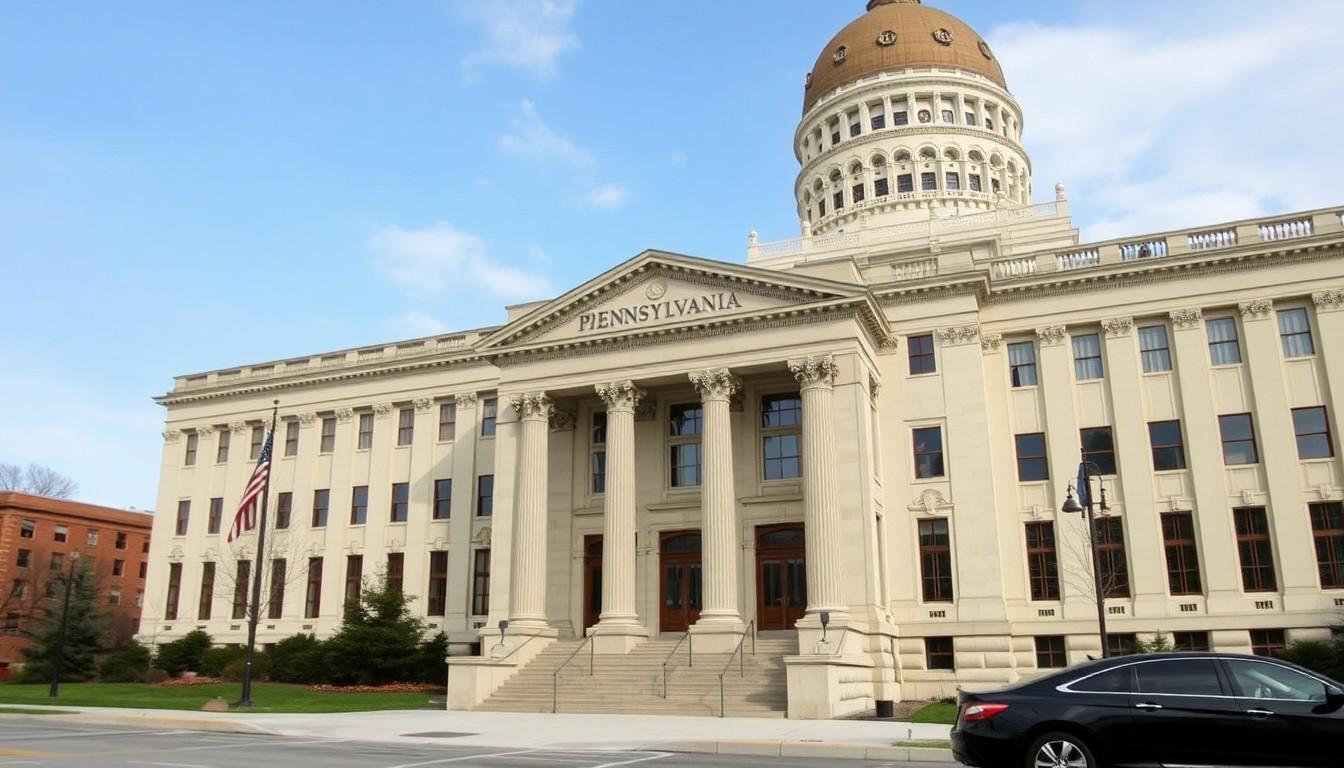
Voters across Pennsylvania are weighing candidates’ records on LGBTQ+ rights ahead of the 2026 election. From the governor’s race to closely fought congressional and state Senate contests, positions on equality, nondiscrimination and trans inclusion could help shape policy in Harrisburg and Washington.
Essential Takeaways
- Governor’s choice: Josh Shapiro has a strong pro-equality record, while Stacy Garrity has emphasised opposition to trans inclusion in sport.
- Control matters: The state Senate’s narrow Republican majority has helped stall the Fairness Act.
- Competitive contests: Congressional races in districts including PA-7, PA-8 and PA-10 are expected to be closely fought.
- Records vary: Some candidates have clear voting histories, while others have offered broad statements but few specific commitments.
- Look beyond slogans: Voters should check legislation, public votes and concrete policy promises rather than relying only on campaign branding.
The governor’s race sets the tone
The governor’s contest offers Pennsylvania voters the clearest contrast on LGBTQ+ policy. Josh Shapiro has consistently backed nondiscrimination protections and has pledged to sign the Fairness Act if lawmakers send it to his desk. The state’s existing protections remain incomplete, making that promise particularly significant. According to Pennsylvania’s governor’s office, the commonwealth has marked decades of protection from discrimination for LGBTQ+ residents, but campaigners continue to press for broader statutory safeguards. [4]
Shapiro has also opposed restrictions targeting trans young people and challenged federal policies in court. His record includes support for LGBTQ+ crisis services and legal arguments defending trans students, although his appointment of Seth Grove to the Pennsylvania Human Relations Commission drew criticism from some activists.
Stacy Garrity, Pennsylvania’s treasurer, has taken a sharply different public approach. She has aligned herself closely with Donald Trump and has made opposition to trans participation in girls’ and women’s sport a prominent theme. Garrity has also declined to answer some LGBTQ+-related questionnaires, leaving voters to piece together her position from past statements and campaign messaging. Her current role as treasurer is outlined by the Pennsylvania Treasury, which describes the office’s responsibilities and statewide remit. [5], [6]
Ken Krawchuk, the Libertarian candidate, frames LGBTQ+ rights through an individual-liberty lens. He opposes special legal protections, arguing that government should treat everyone equally rather than create category-specific safeguards. It’s a position that may appeal to voters wary of government intervention, but it leaves open important questions about discrimination in workplaces, housing and public services.
Why the lieutenant governor still matters
The lieutenant governor isn’t simply a ceremonial running mate. The office presides over the state Senate and can cast a deciding vote when the chamber is split, so the holder can influence whether equality legislation advances or stalls.
Austin Davis, the Democratic incumbent, has a record that includes support for the Fairness Act and expanded hate-crime protections. He has also opposed Republican-backed measures widely criticised as discriminatory towards trans people. Activists have nevertheless questioned his past record on the treatment of trans inmates at Allegheny County Jail and the timing of his involvement with the General Assembly’s LGBTQ Equality Caucus.
Republican challenger Jason Richey has presented himself as a supporter of “traditional family values”, including opposition to trans inclusion in sport. His campaign language suggests a more socially conservative direction, particularly on questions involving schools, young people and gender identity.
For voters, the practical question is simple: would the candidate use the office’s influence to support equality legislation, block it or leave the Senate’s current stalemate untouched?
House races could reshape federal protections
Pennsylvania’s closely contested US House districts are worth watching because the national balance of power could determine whether federal LGBTQ+ legislation moves forward. Several races are competitive, including contests in the Lehigh Valley, Scranton area and Harrisburg region.
In PA-1, Republican incumbent Brian Fitzpatrick has one of the more mixed records. He supported the Equality Act and the Respect for Marriage Act, but has also backed measures restricting trans-affirming healthcare, school privacy and participation in sport. That combination makes him difficult to place neatly in either camp.
PA-7’s Ryan Mackenzie has opposed the Fairness Act at state level and supported a federal trans sports ban. Democratic challenger Bob Brooks has promised to defend marriage equality and nondiscrimination laws, although his campaign has offered fewer detailed proposals on trans healthcare or inclusion.
In PA-8, Rob Bresnahan has backed legislation restricting classroom discussions of gender identity and sexual orientation, as well as limits on gender-affirming care for minors. Paige Cognetti, his Democratic challenger, has received support from the Human Rights Campaign and previously backed a Scranton conversion-therapy ban, but her campaign has made relatively few detailed LGBTQ+ promises.
PA-10 brings another complicated matchup. Scott Perry has supported marriage equality legislation in one vote but later rejected the final version, while continuing to oppose trans inclusion in sport. Janelle Stelson has also opposed trans women competing alongside cisgender peers, although she has argued that such decisions should be made by doctors, families and sporting bodies rather than federal politicians.
State Senate control could decide the Fairness Act
Democrats need to flip at least three seats to take control of Pennsylvania’s Senate. That narrow margin matters because it has helped keep the Fairness Act on the legislative waiting list, despite repeated efforts to expand protection based on sexual orientation and gender identity.
The PA-6 contest pits Republican Frank Farry against Democrat Eileen Hartnett Albillar. Farry has repeatedly voted for trans sports restrictions, while Albillar has described her politics as rooted in social justice and support for people regardless of who they love or how they live. Her public campaign material, however, contains few specific LGBTQ+ commitments.
In PA-16, the contrast is more direct. Republican Jarrett Coleman has voted against trans inclusion in sport, while Democrat Mark Pinsley has promised explicit legal protections, easier processes for changing names and gender markers, and improved access to gender-affirming care. For voters seeking a detailed platform, Pinsley has supplied considerably more practical detail than many candidates in the field.
Other closely watched races include PA-24, where Republican Tracy Pennycuick has repeatedly backed sports restrictions, and PA-40, where Republican Rosemary Brown has done the same. Their Democratic challengers, Chris Thomas and Brian Wrightson, have spoken against attacks on trans people, but their campaigns differ in how clearly they set out proposed policy.
How to assess a candidate’s LGBTQ+ record
Campaign appearances at Pride events can be meaningful, but they’re only one piece of the puzzle. Voters should look for recorded votes, sponsorship of legislation, statements on nondiscrimination, and specific plans covering schools, healthcare, housing and public services.
It’s also worth separating a candidate’s personal support from their likely impact in office. A governor can sign or veto legislation, a senator can help determine whether a bill reaches a vote, and a member of Congress can influence federal protections and oversight. Those institutional powers matter as much as a polished endorsement list.
Finally, beware of vague language. “Equality for all” sounds reassuring, but it doesn’t answer whether a candidate supports the Fairness Act, conversion-therapy bans, gender-marker reforms or access to gender-affirming healthcare. The most useful voter guide is the one that turns warm words into checkable commitments.
Pennsylvania’s 2026 races show that LGBTQ+ policy is rarely a neat left-versus-right story. Some candidates have supportive votes alongside troubling ones, while others speak sympathetically but avoid detailed pledges. That makes careful comparison more important than ever.
A few minutes checking the record could reveal far more than a campaign slogan.
Source Reference Map
Story idea inspired by: [1]
Sources by paragraph:
- Paragraph 1: [2], [4]
- Paragraph 2: [4], [7]
- Paragraph 3: [5], [6]
- Paragraph 4: [3], [5]
- Paragraph 5: [2], [4]
- Paragraph 6: [7], [4]
- Paragraph 7: [2], [3]
- Paragraph 8: [4], [7]
- Paragraph 9: [2], [3]
- Paragraph 10: [4], [5]
- Paragraph 11: [6], [7]
- Paragraph 12: [2], [4]
- Paragraph 13: [3], [5]
- Paragraph 14: [4], [6]
- Paragraph 15: [2], [7]
- Paragraph 16: [3], [4]