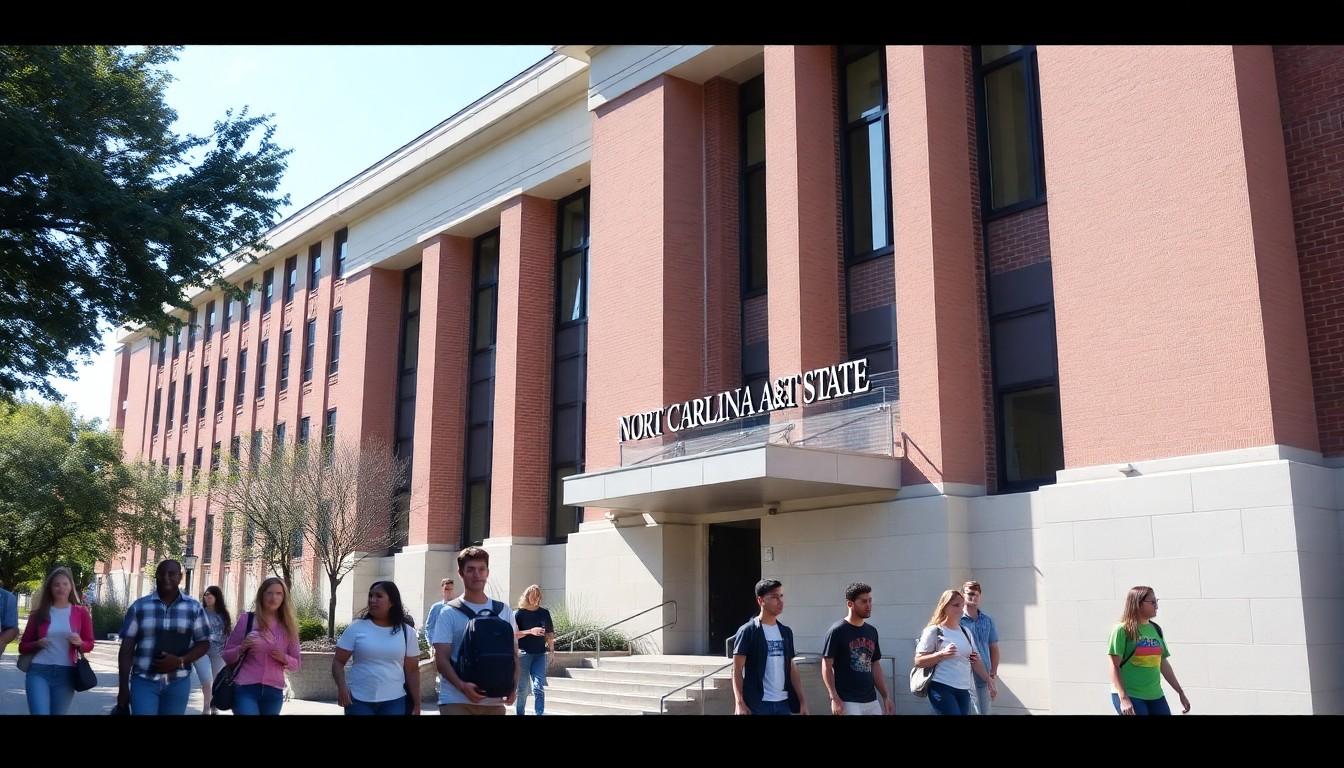
Students at North Carolina A&T in Greensboro are gathering for HBCU Out Loud Day, a national initiative celebrating Black queer and transgender voices while encouraging civic participation. The event pairs entertainment, representation and early-voting support, giving students a practical route from a conversation about visibility to the ballot box.
Essential Takeaways
- A national programme: HBCU Out Loud Day was created to support safer, more welcoming spaces for Black LGBTQ+ students.
- A star-led conversation: Jordan Aaron, known for Netflix's A Different World, is joining Human Rights Campaign president Kelley Robinson.
- Voting takes centre stage: The Vote Out Loud programme will connect students with nearby early-voting locations.
- A campus-based event: North Carolina A&T's Student Center is hosting the Greensboro gathering.
- Representation matters: Organisers are linking media visibility with political participation and youth leadership.
Representation steps off the screen
The most striking part of HBCU Out Loud Day is the way it brings pop culture into a campus conversation. Jordan Aaron's appearance gives students a recognisable face from A Different World, while the event's wider purpose focuses on the everyday reality of being Black, queer or transgender at an HBCU.
According to Berklee College of Music, Aaron's connection to the Netflix project reflects a wider effort to revisit the college experience through a contemporary lens. That makes the event feel more personal than a standard panel: it's about who gets seen, who gets heard and who feels able to show up fully. [7]
Why HBCU Out Loud Day matters
The Human Rights Campaign Foundation launched HBCU Out Loud Day as a national day of action designed to celebrate Black LGBTQ+ students and encourage stronger campus communities. Its programmes have developed from visibility campaigns into broader conversations about safety, belonging and participation.
Previous editions have also highlighted the importance of student-led action at historically Black colleges and universities. The Human Rights Campaign has described the initiative as a way to uplift queer and transgender students rather than asking them to remain quietly on the margins. [3], [4], [6]
A conversation with a practical next step
At North Carolina A&T, the programme includes a discussion between Kelley Robinson and Aaron about Black queer representation in media. The topic is timely, but the organisers aren't leaving the message in the auditorium.
After the conversation, buses are scheduled to take students to their nearest early-voting location. North Carolina A&T's event listing identifies Vote Out Loud as part of the campus programme, turning political encouragement into a simple, immediate action for eligible students. [2]
That matters because voting can feel abstract when it's presented as a slogan. A ride to the polling place, by contrast, removes one small but real barrier. Sometimes the most useful part of civic engagement is knowing exactly how to get there.
From celebration to civic confidence
The HBCU Out Loud programme has increasingly connected LGBTQ+ visibility with voter engagement. In its earlier announcements, the Human Rights Campaign Foundation encouraged Black queer young people to make their voices heard not only in cultural spaces but also through participation in elections. [5]
That approach recognises a familiar pattern: representation can open the door, but confidence and access help people walk through it. For students, the event offers both the emotional lift of seeing themselves reflected and the practical information needed to take part.
What students and organisers are signalling
The Greensboro event also shows how HBCUs remain important spaces for conversations that combine identity, history and public life. A panel featuring a performer, a national civil rights leader and students creates room for discussion that feels both celebratory and purposeful.
The Human Rights Campaign's annual updates suggest the initiative is becoming a recurring part of the HBCU calendar, rather than a one-off campaign. That continuity could be its greatest strength: safe spaces are built through repeated effort, not a single afternoon of speeches. [3], [4]
For students attending, the message is refreshingly direct. Your voice belongs in the classroom, in popular culture and at the ballot box.
A campus celebration becomes more powerful when it helps students turn visibility into action.
Source Reference Map
Story idea inspired by: [1]
Sources by paragraph: