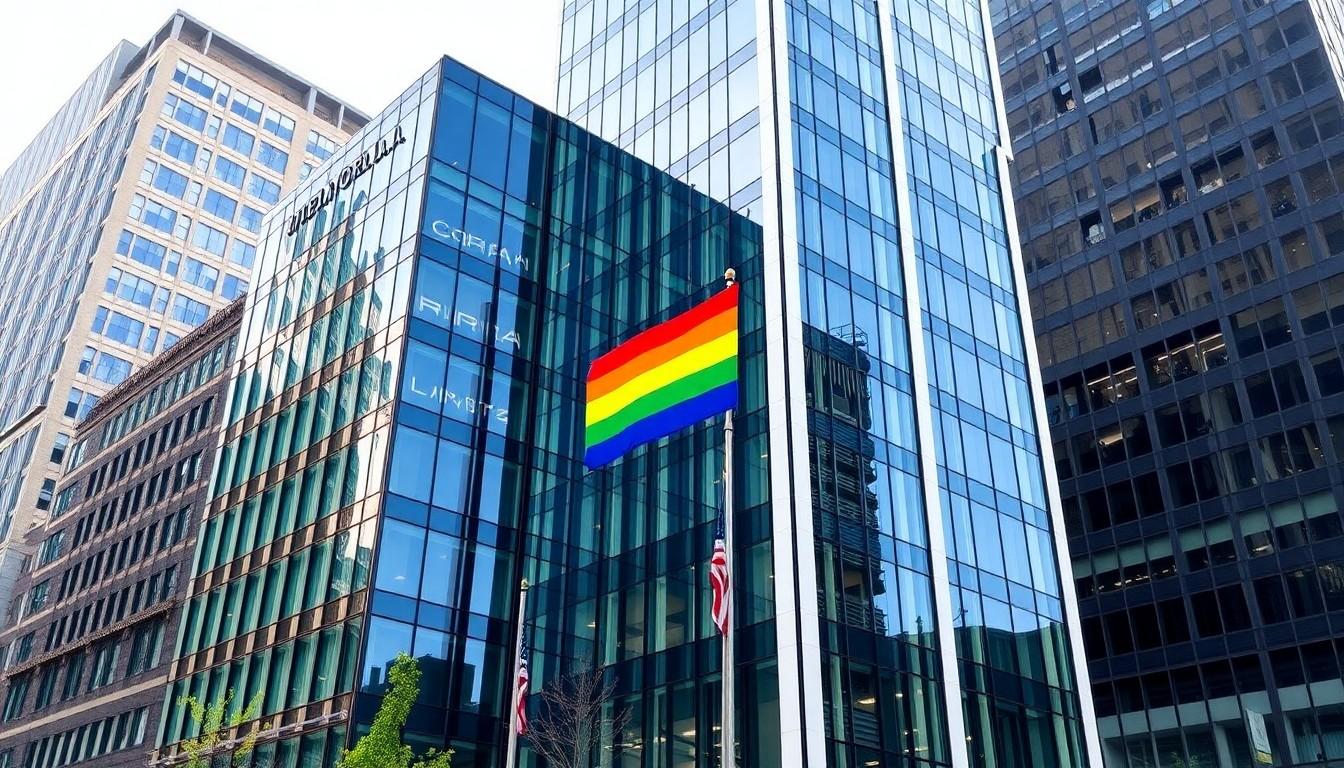
Companies across the US are naming far fewer LGBTQ+ people in board diversity disclosures, according to the latest OutQUORUM report. The sharpest fall comes as businesses respond to legal, political and shareholder pressure, raising fresh questions about visibility, accountability and who gets a route to the top.
Essential Takeaways
- Disclosure has plunged: The number of US companies naming LGBTQ+ people fell from 1,874 to 270.
- The retreat was selective: 443 companies removed LGBTQ+ references while retaining gender and race or ethnicity disclosures.
- Fortune 500 visibility is shrinking: Only 23 companies now name LGBTQ+ people, compared with 148 previously.
- The legal backdrop changed: A US appeals court overturned Nasdaq's board diversity rules, but voluntary reporting remains possible.
- Some companies are holding firm: Colgate-Palmolive, Cisco, TJX and Ulta Beauty are among those continuing to identify LGBTQ+ inclusion in board policies.
LGBTQ+ board diversity reporting has fallen sharply
The headline figure is difficult to miss. Out Leadership's OutQUORUM 2026 report says the number of US public companies naming LGBTQ+ people in board diversity policies or composition reports fell by 86%, from 1,874 in 2024 to 270 during the 2025-26 proxy season.
The research reviewed public board documents from 3,599 companies. It measures what businesses disclose, rather than claiming that LGBTQ+ directors themselves necessarily left their seats. That distinction matters, because a board can become less visible on paper without its membership changing overnight.
Even so, the quiet removal of LGBTQ+ identity from corporate reporting sends a loud signal. As Out Leadership founder Todd Sears put it in the report, "What isn't measured doesn't count." The concern is that employees, shareholders and customers are left with less information about who is reaching the boardroom.
Why are companies saying less?
Several developments arrived within a relatively short period. In December 2024, the US Fifth Circuit overturned Nasdaq's board diversity rules, which had required listed companies to publish a standardised diversity table. Legal analyses from Skadden and Willkie said the ruling removed the exchange's disclosure requirement, rather than creating a blanket ban on voluntary reporting.
The political climate also shifted. The report points to a January 2025 executive order targeting private-sector diversity, equity and inclusion programmes, alongside shareholder proposals challenging the consideration of sexual orientation in director selection.
The result appears to have been caution by omission. Among Nasdaq-listed companies that previously named LGBTQ+ people, disclosure fell from 1,602 to 206. But the change wasn't limited to Nasdaq, with 79% of affected companies outside the exchange also dropping the reference.
The most revealing change is the selective one
Of the companies that named LGBTQ+ people in 2024, 1,619 stopped doing so, while just 15 began. In 443 cases, businesses removed LGBTQ+ people but continued naming both gender and race or ethnicity. A further 202 removed LGBTQ+ people without dropping any other group covered by the report.
That pattern makes this more than a general retreat from board diversity language. It suggests LGBTQ+ identity has become particularly sensitive in corporate disclosure, even where companies still want to demonstrate broader representation.
The wider boardroom picture is already uneven. Earlier industry research has highlighted persistent gaps in gender diversity and a stalled pipeline for Fortune 500 directors. The latest figures add another layer: even when representation exists, investors may no longer be able to see it clearly.
What the numbers mean for employees and investors
LGBTQ+ people are estimated to make up around 9% of US adults, and an even larger share of younger adults, according to figures cited by Out Leadership. Yet LGBTQ+ directors accounted for roughly 1% of American board seats, making accurate reporting especially important in a group whose identity isn't visible from a corporate headshot.
That visibility can affect confidence inside organisations, too. Out Leadership's separate research found a decline in LGBTQ+ career confidence, while many Gen Z respondents said they adjust their appearance or mannerisms to minimise their identity at work. A board policy won't solve that problem alone, but it can help show whether senior leadership sees inclusion as part of the company's future.
Investors are also losing a useful comparison point. BlackRock's 2026 US guidelines, as well as guidance from CalPERS and Glass Lewis, continue to recognise LGBTQ+ identity as relevant to board oversight. When companies stop reporting, shareholders have fewer consistent measures for assessing progress.
Some companies are keeping LGBTQ+ inclusion visible
Not every business is retreating. Colgate-Palmolive's board candidate policy continues to refer to a range of backgrounds, including sexual orientation and gender identity. The company also opposed a shareholder proposal that sought to remove that standard.
Cisco, TJX and Ulta Beauty are among the 23 Fortune 500 companies still naming LGBTQ+ people in board disclosures, down from 148 in 2024. Jacobs Solutions added LGBTQ+ people in its latest proxy, while Corning added an LGBTQIA+ row to its diversity table.
The contrast is striking. Canadian disclosure fell by 15%, and UK disclosure by 29%, while the US decline reached 86%. That difference suggests the American rollback reflects more than a single court decision; it also reflects a broader response to political pressure and changing expectations around corporate DEI.
For boards, the practical choice is fairly simple: continue voluntary self-identification, keep director searches open to qualified candidates and explain any major reporting change to shareholders. In a period when corporate language is being watched closely, silence can look like a decision.
A boardroom may be quiet, but its paperwork still tells a story.
Source Reference Map
Story idea inspired by: [1]
Sources by paragraph:
- Paragraph 1: [2], [5]
- Paragraph 2: [2], [5]
- Paragraph 3: [2], [5]
- Paragraph 4: [3], [4]
- Paragraph 5: [2], [5]
- Paragraph 6: [2], [5]
- Paragraph 7: [2], [5]
- Paragraph 8: [2], [6]
- Paragraph 9: [2], [7]
- Paragraph 10: [2], [5]
- Paragraph 11: [2], [5]
- Paragraph 12: [2], [5]
- Paragraph 13: [2], [6]
- Paragraph 14: [2], [5]
- Paragraph 15: [2], [5]
- Paragraph 16: [2], [5]