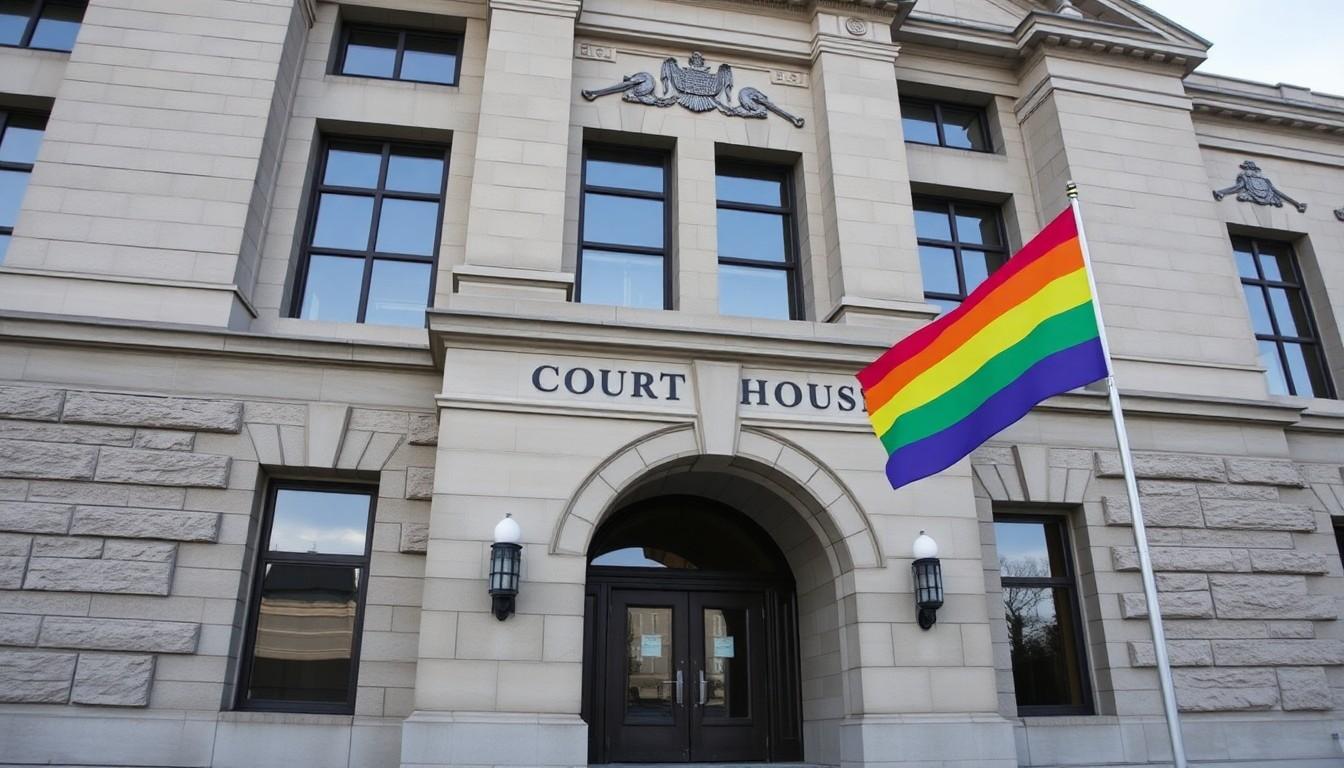
Readers are turning to Harvey Brownstone’s memoir, Without Prejudice: My Life as a Gay Judge, for an unvarnished account of family rejection, legal ambition and life on the bench. Published by ECW Press, the book matters because it links one man’s survival story with Canada’s changing approach to equality, justice and representation.
Essential Takeaways
- A barrier-breaking career: Brownstone became Canada’s first openly gay judge.
- A difficult beginning: The memoir explores rejection, poverty, depression and homophobia.
- A courtroom perspective: It examines criminal and family justice through a judge’s eyes.
- A wider legacy: A 2026 film adaptation is expected to bring the story to new audiences.
- A compact read: The 232-page memoir blends personal history with legal and social commentary.
A memoir that refuses to smooth the edges
Some life stories arrive polished for public consumption. Without Prejudice appears to take the opposite route, offering a candid account of Harvey Brownstone’s journey from a bullied young man to lawyer, judge, author and broadcaster.
The emotional force comes from the contrast. Brownstone’s later public stature sits alongside memories of family rejection, financial insecurity and isolation. In an excerpt published by Queen’s University, the memoir’s personal dimension is clear: this isn’t simply a career retrospective, but an attempt to understand what survival demanded. [4]
That gives the book a distinctive texture. There’s the formal world of courtrooms and legal decisions, but also the quieter, more painful details of trying to build a life when support disappears.
From rejection to the courtroom
Brownstone grew up in Hamilton, Ontario, before studying law and developing a career in legal practice. His appointment to the Ontario Court of Justice made him a landmark figure, but the memoir suggests the route there was neither straight nor comfortable.
Canadian Lawyer’s coverage presents Brownstone as unusually direct about the pressures surrounding his career, including homophobia, institutional resistance and professional sabotage. His sexuality wasn’t a footnote to his public life; it shaped how he experienced workplaces, authority and belonging. [3]
That context matters for readers who know legal institutions mainly through television dramas. Becoming a judge may look like the end of a long professional climb, but Brownstone’s account points to the personal cost of reaching a position where every decision carries public weight.
What the book says about Canada’s courts
The memoir also turns its attention to the machinery of justice. Brownstone reflects on criminal and family courts, judicial administration and the practical pressures facing judges who must make decisions affecting people’s liberty, homes and relationships.
In interviews with Canadian Lawyer, he has been forthright about the shortcomings he sees in the system. That frankness gives the book a sharper edge than a conventional triumph-over-adversity story. It asks not only how Brownstone succeeded, but whether the institutions around him worked as well as they should. [5]
For readers interested in family law, the courtroom chapters may be particularly revealing. These cases rarely feel abstract to the people involved, and Brownstone’s perspective brings that human reality into focus.
Why his personal history changes the reading
Brownstone’s early experiences inevitably inform the way he describes public institutions. Someone who has known rejection and vulnerability first-hand may notice forms of exclusion that others can overlook, even while navigating the need for impartiality.
A Queen’s University feature highlights the memoir’s connection to Brownstone’s earlier life and writing, while later coverage places his story within a wider conversation about LGBTQ+ representation in Canadian public life. [4] [6] The result is a book that sits between autobiography, social history and legal commentary.
It’s also a reminder that progress can feel uneven. Public attitudes have changed dramatically across Brownstone’s lifetime, but the memoir’s themes, including prejudice, institutional inertia and the search for dignity, remain stubbornly recognisable.
A story moving beyond the page
The book’s reach is set to grow with a feature-film adaptation directed by Shane Stanley. Publicly reported details indicate that David Arquette will play Brownstone, with the film scheduled for release in 2026.
That adaptation could introduce the story to people who wouldn’t normally pick up a legal memoir. The challenge, of course, will be preserving the quieter parts: the loneliness, uncertainty and private effort behind the public milestone. A courtroom drama can show a decisive moment, but a memoir can reveal the long stretch of doubt beforehand.
Brownstone has described adversity as a motivating force in interviews, and that idea runs through the book’s broader message. It doesn’t make hardship desirable, but it does show how determination can grow in difficult ground. [5] [7]
Who should read Without Prejudice?
The memoir will appeal to readers interested in LGBTQ+ history, Canadian law, judicial life and stories of professional resilience. It should also suit anyone curious about how social change looks from inside a major public institution.
At 232 pages, it’s substantial without feeling intimidating, and the combination of personal disclosure and legal observation gives it more range than a straightforward career memoir. Read it for the history, the court insight or simply the human story; each offers a different way in.
For readers comparing memoirs about justice and social progress, this is likely to stand out because Brownstone doesn’t separate the personal from the professional. His life story is the lens through which he examines both.
It's a candid record of one barrier-breaking life and the changing country that shaped it.
Source Reference Map
Story idea inspired by: [1]
Sources by paragraph: