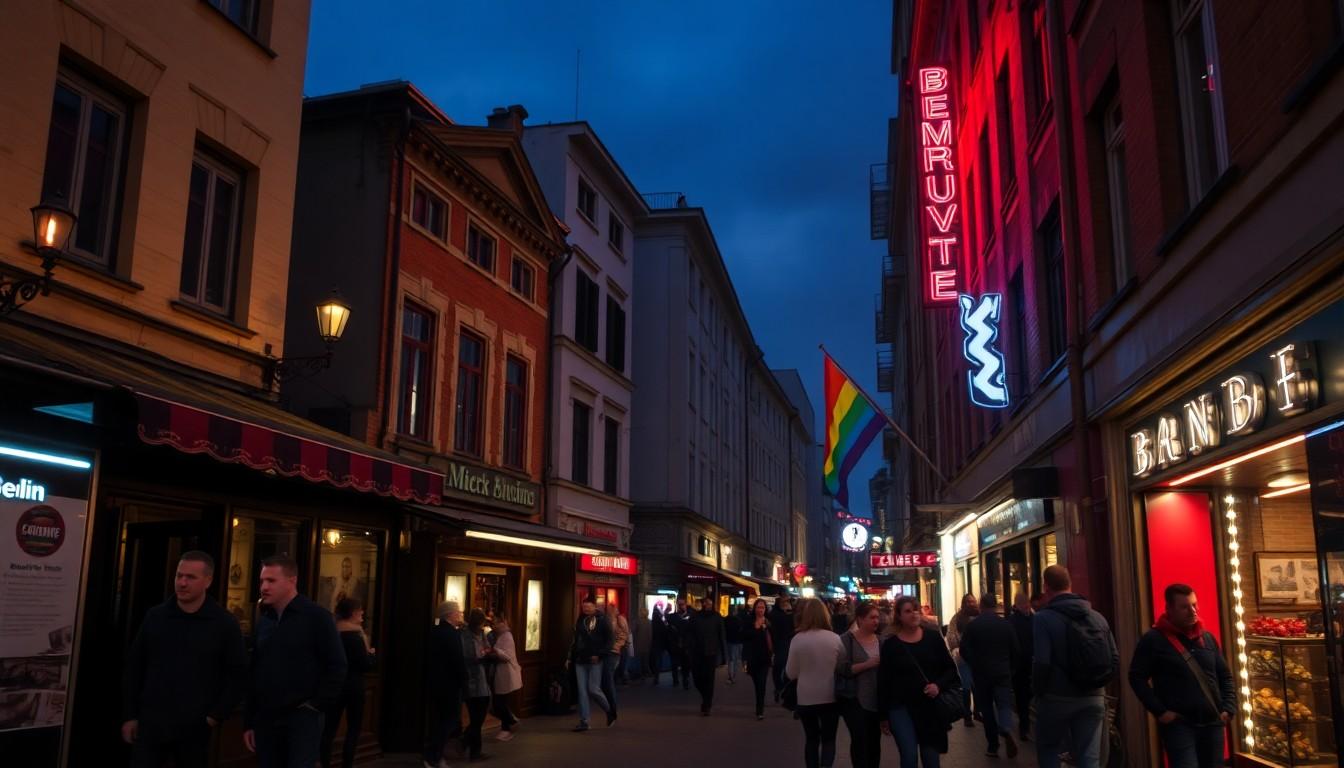
Berlin’s queer nightlife remains vivid, inventive and deeply social, but rising costs and rapid commercialisation are changing who can take part. Artist and organiser Luca Eck explains why grassroots scenes still matter, how community-led platforms could help, and why the city’s underground may need to slow down to survive.
Essential Takeaways
- The pace has changed: Queer scenes are moving from intimacy to mainstream visibility much faster than before.
- Affordability is a real concern: Rising ticket prices can push out the people who helped build these communities.
- Grassroots culture is growing: Beyond polished commercial venues, Berlin has a broader mix of queer and FLINTA-led events.
- Community tools matter: Eck is developing a manually curated discovery and ticketing platform with accessibility in mind.
- Berlin isn't the only reference point: International crowds, particularly in the US, can feel more open to genre-crossing sets.
Berlin's underground has entered a faster cycle
Berlin's queer nightlife has always been more than a collection of clubs. It functions as a social map, a creative laboratory and, for many people, a place where identity can be explored without explanation. But according to artist Luca Eck, the journey from intimate scene to commercial product is now happening at striking speed.
The familiar cycle is still there. A small community develops its own sounds, looks and rituals, then attracts wider attention before promoters, brands and larger audiences arrive. What's changed is the pace, with ideas travelling quickly online and scenes gaining visibility before they've had time to settle into themselves.
That tension sits at the heart of Berlin's LGBTQ+ culture, which has long combined nightlife, performance and political expression. Background on the city's queer communities from Wikipedia and VisitBerlin shows how deeply clubs and social spaces are woven into Berlin's cultural identity. [7] [5]
Who can still afford to be part of the scene?
A night out now involves more than the ticket. There's transport, drinks and the quiet pressure to attend regularly if you want to remain connected to a community. Eck points to the jump from roughly 12 or 15 euros for entry in earlier years to around 25 euros today, while recognising that organisers are also dealing with higher production costs.
That makes the economics awkward. Promoters may struggle to make a profit, yet the final price can still exclude the dancers, DJs and volunteers who give a scene its character. A party can be fairly priced from the organiser's perspective and still feel inaccessible to the people it hopes to serve.
Berlin's LGBTQ+ club listings continue to show a wide range of venues and events, from established clubs to smaller community-focused gatherings. The challenge is ensuring that variety remains practical to access, rather than simply visible in an online guide. [2] [4]
The grassroots scene is broader than the stereotype
It's easy to talk about Berlin nightlife as though its best days are behind it. Eck's view is more nuanced. The commercial layer may borrow queer imagery without carrying its history, but the wider grassroots ecosystem is more diverse than the old image of a scene dominated by European gay men.
FLINTA-led parties and queer collectives from different parts of the world are expanding the city's nightlife vocabulary. That matters because representation isn't just a matter of who appears on a poster. It shapes the music, the crowd, the door policy and the feeling of whether a room is genuinely yours.
Listings from Queer Berlin Guide and Queer Guide reflect that breadth, presenting nightlife as a network of events and communities rather than a single Berlin sound. For anyone searching for queer nightlife in Berlin, the most rewarding night may be found away from the obvious club names. [2] [3]
Could community-owned platforms change discovery?
Eck is responding to the problem through infrastructure as well as music. Their event discovery and ticketing platform aims to reduce costs for partners, offer a non-profit ticketing model and keep curation in human hands instead of relying on recommendation algorithms.
That approach feels particularly relevant in nightlife, where algorithms can quickly reward the biggest events and make everything else harder to find. Manual selection may be slower, but it can give smaller collectives a better chance of reaching people who are actively looking beyond the mainstream.
For organisers, the practical appeal is clear: lower software fees, fairer visibility and more control over how an event is presented. For audiences, it could mean fewer repetitive recommendations and more genuine discoveries, whether that's a tiny experimental night or one of the best queer parties in Berlin for a particular musical niche. [3] [6]
Berlin's sound is getting less tidy
Eck's own music mirrors this refusal to stay in one lane. After a decade playing double bass in a classical orchestra, they draw on Eurodance, club music and the rougher edges of Berlin nightlife, combining distorted textures with direct melodies and pop-minded vocals.
That blend also reflects a wider argument about what club music is supposed to do. In some Berlin rooms, genre loyalty can feel like an unspoken dress code. Eck says audiences encountered during a recent US tour appeared more willing to embrace abrupt changes, from trap to electroclash and hardstyle, without treating the mixture as a provocation.
It's an intriguing contrast. Berlin's reputation gives it enormous cultural weight, but that same history can make some crowds protective of a particular idea of authenticity. Meanwhile, younger and more fluid scenes are quietly asking whether experimentation should sound polished, serious or recognisably Berlin at all. [5] [6]
What would genuine support look like?
For Eck, protecting queer nightlife requires more than a Pride-season booking or a colourful campaign. The stronger answer would involve public funding, support for independent venues, long-term residencies and direct resources for the collectives doing the everyday work of building trust.
That could also help solve the ticket-price dilemma. If venues and organisers had more stable backing, they wouldn't have to balance every cost against the price of entry. Accessibility isn't just about making a night cheap; it's about giving people a realistic chance to return, participate and feel that they belong.
Berlin's queer nightlife is still moving, but its future may depend on creating more breathing room. The city doesn't need to freeze the underground in place. It needs to let communities develop at a human pace, before the next trend arrives and carries the room somewhere else. [4] [7]
The underground still has plenty of life, but it needs space, money and time to remain its own.
Source Reference Map
Story idea inspired by: [1]
Sources by paragraph: