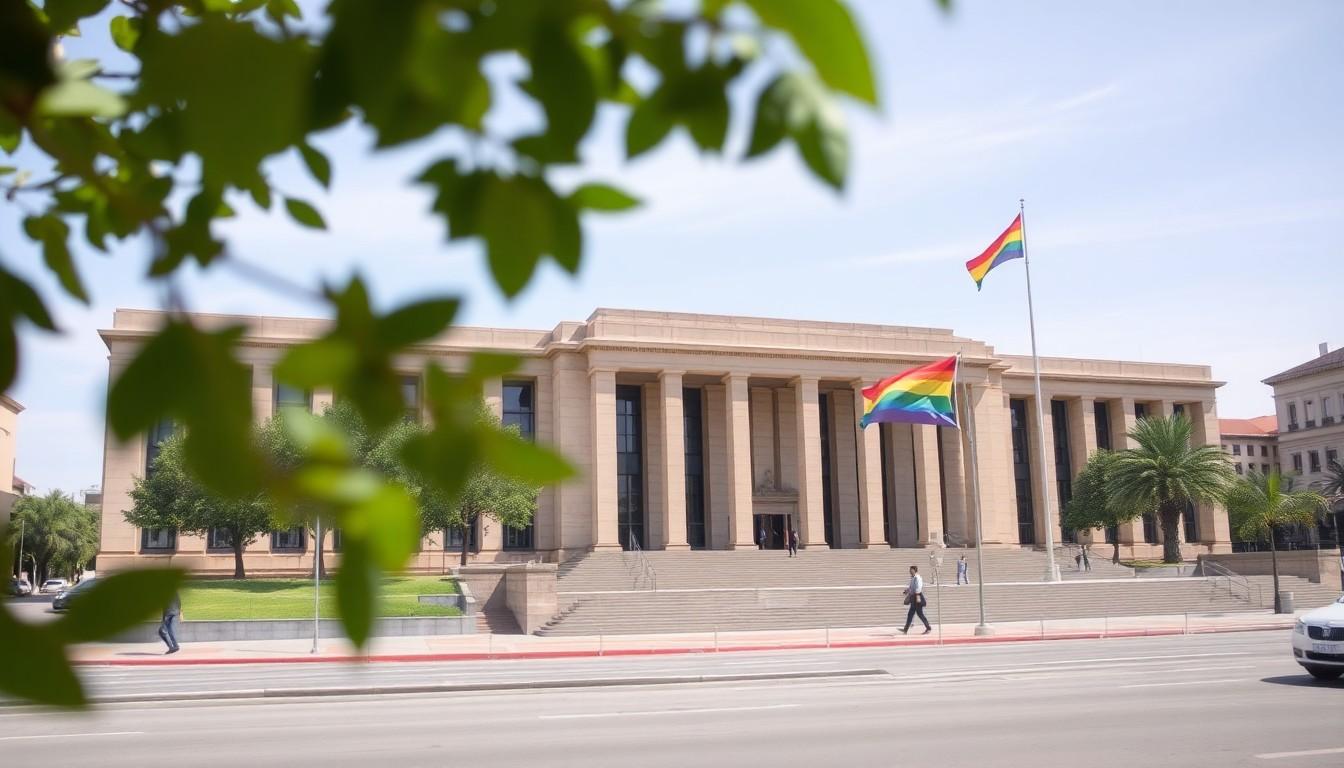
Pride events across South Africa are returning to a history that began with protest, not just partying. As communities mark the legacy of the country’s first Pride march, the focus is turning to what queer freedom means in daily life, from safer schools and homes to fair treatment for LGBTQIA+ asylum seekers.
Essential Takeaways
- A historic beginning: South Africa’s first Pride march took place in Johannesburg on 13 October 1990, challenging apartheid-era discrimination.
- Rights with real limits: The Constitution protects equality and dignity, but many LGBTQIA+ people still face bullying, rejection and violence.
- Visibility matters: Public celebration can offer hope to young people who feel isolated or unsafe.
- Pride needs practical action: Families, schools, public bodies and communities all have a role in turning legal protection into everyday safety.
Pride began as protest, not simply celebration
There’s a particular energy to a Pride march, the bright colours, the music, the signs held high. But behind the joy is a more serious story. South Africa’s first Pride march, held in Johannesburg in 1990, brought LGBTQIA+ people together to challenge discrimination during the final years of apartheid, according to South African History Online.
That history gives today’s celebrations their weight. The march wasn’t only about visibility; it was an assertion that queer people belonged in the country’s future and had the right to shape it. Research on the visual symbolism of the 1990 Pride celebration also highlights how public visibility became a powerful form of resistance and community-building.
As Pride grows larger and more commercial, it can be tempting to focus on the colourful spectacle. Yet the original demand remains remarkably clear: freedom must be lived openly, safely and with dignity. That’s why the best Pride celebrations keep one eye on the party and the other on the unfinished work.
Constitutional equality hasn’t ended discrimination
South Africa’s Constitution protects equality and prohibits unfair discrimination, including discrimination based on sexual orientation. Section 9 establishes that everyone is equal before the law, while the Bill of Rights places dignity and equal protection at the centre of the country’s democratic framework, according to official constitutional guidance.
The legal position is significant. South Africa became the first African country to legalise same-sex marriage in 2006, a landmark that still stands out across the continent. But a strong legal framework doesn’t automatically change what happens in a classroom, a family home, a shelter or a public office.
That gap between rights on paper and rights in practice is where many queer people still feel the strain. A teenager may technically be protected from discrimination yet remain frightened of being bullied at school or rejected at home. The law can open the door, but communities still have to make it safe to walk through.
For young people, Pride can mean hope
For an LGBTQIA+ teenager, Pride may represent far more than a weekend event. It can be the first time they see people living openly, confidently and without apology. That glimpse matters when family rejection, school bullying or online hostility has made the future feel very small.
Schools have a particularly important role. Clear anti-bullying policies, trusted staff and respectful language can make a practical difference, especially for learners who don’t yet have the independence or money to leave an unsafe environment. Repeatedly mocking someone’s identity or deliberately misgendering them isn’t harmless simply because it happens online.
Families matter too. Losing emotional or financial support can push young people into homelessness or leave them trapped in unsafe households. Support doesn’t always require perfect understanding on day one, but it does require listening, using someone’s chosen name and making sure home remains a place of safety.
Poverty and prejudice often reinforce each other
Discrimination rarely arrives alone. Queer people with fewer financial resources may have limited access to alternative housing, counselling, legal support or safe transport. If home becomes hostile, leaving may not be a realistic option, however unsafe the situation feels.
This is why conversations about Pride need to include inequality. A person with money, connections or a supportive workplace may have more room to manage prejudice than someone facing unemployment, insecure housing or family dependence. Acceptance can become conditional, and the price of belonging may be silence.
The same concern applies to LGBTQIA+ people seeking asylum after fleeing persecution elsewhere. They may encounter xenophobia and suspicion while trying to access protection, creating a painful contradiction: a country that promises safety can still contain systems that feel threatening or dismissive.
The next step is making freedom ordinary
South Africa’s constitutional protections remain important, particularly as debates elsewhere in the region raise concerns about LGBTQIA+ rights and sexual and reproductive freedom. Official constitutional materials make clear that equality and dignity are not optional values; they are foundational commitments.
Still, Pride cannot carry this responsibility alone. Families can challenge rejection, schools can act against bullying, public officials can treat asylum seekers fairly, and institutions can respond when discrimination is reported. These steps may sound ordinary, but ordinary safety is precisely what many people are still waiting for.
Perhaps the most meaningful measure of progress is not how spectacular a march looks, but whether a young person can return home without fear, attend school without hiding and find help without being judged. Pride should celebrate survival and achievement, but it should also keep that quieter promise in view.
Pride is both a celebration of progress and a reminder that freedom must be felt in everyday life.
Source Reference Map
Story idea inspired by: [1]
Sources by paragraph:
- Paragraph 1: [2], [4]
- Paragraph 2: [2], [4]
- Paragraph 3: [3], [7]
- Paragraph 4: [5], [6]
- Paragraph 5: [3], [7]
- Paragraph 6: [5], [6]
- Paragraph 7: [3], [7]
- Paragraph 8: [5], [6]
- Paragraph 9: [5], [7]
- Paragraph 10: [3], [7]
- Paragraph 11: [5], [6]
- Paragraph 12: [2], [4]
- Paragraph 13: [3], [7]
- Paragraph 14: [5], [6]
- Paragraph 15: [2], [4]