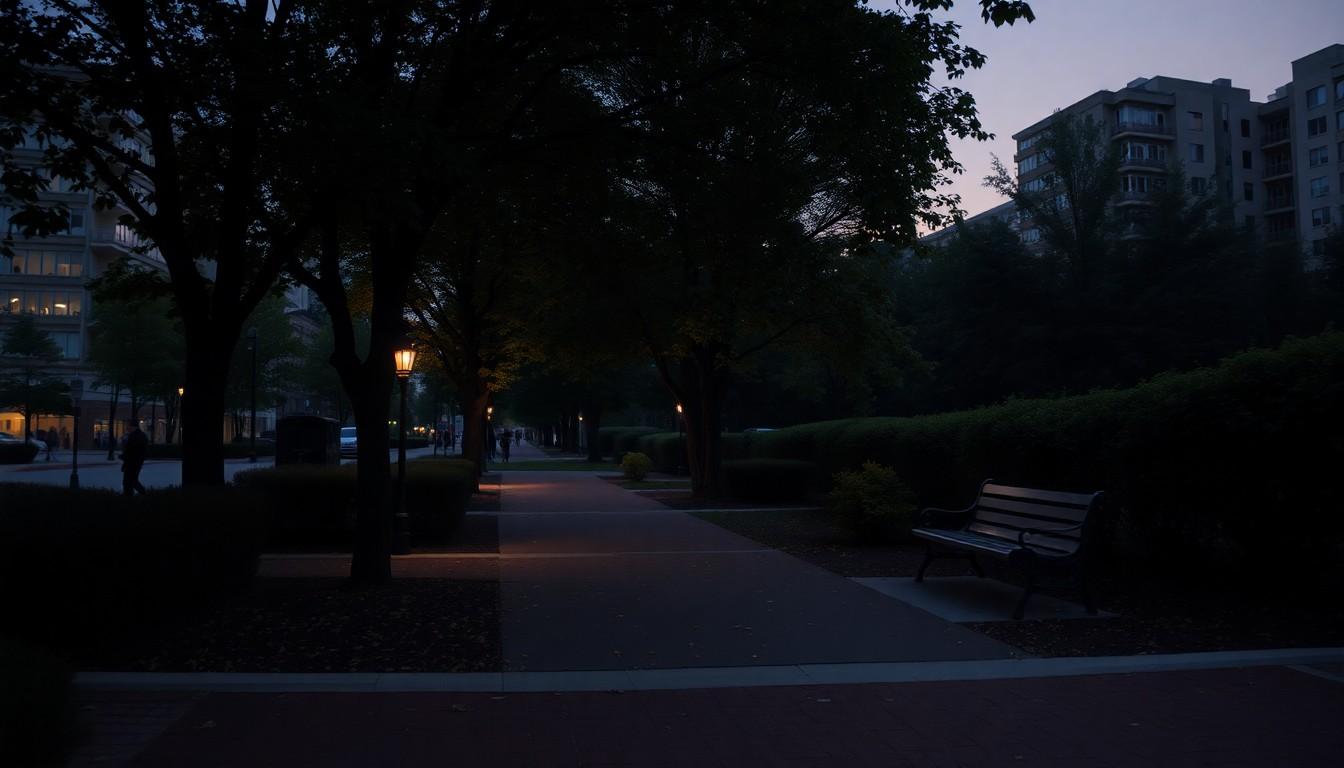
Readers are revisiting gay cruising in 2026, asking why public sexual encounters persist when bars, clubs and dating apps are widely available. The answer sits between queer history, private desire and public responsibility, with anonymity and spontaneity still appealing to some men, even as consent, safety and local law remain essential.
Essential Takeaways
- A long queer history: Cruising developed partly because gay men lacked safe, legal and welcoming places to meet.
- More than sex: Parks, toilets, beaches and other locations have also functioned as social spaces shaped by coded communication.
- Respectability has a cost: Greater acceptance can still pressure LGBTQ+ people to present a private, conventional version of sexuality.
- Consent remains non-negotiable: Ambiguous signals can never replace clear agreement, and public exposure can affect unwilling bystanders.
- Know the law: Public sexual activity may lead to arrest, fines or other serious consequences, depending on location.
Cruising began as survival, not nostalgia
Gay cruising is often discussed as though it belongs to a vanished era, before apps and welcoming venues changed queer life. But the history is more complicated. For generations, men seeking same-sex encounters were pushed towards parks, public toilets, beaches, gyms and other places where privacy was scarce but anonymity was possible, according to historical accounts from The Gay Gear and Gay Sonoma.
Those locations weren't designed for intimacy, of course. Their sexual use altered how people moved through them, turning ordinary public settings into places with hidden meanings. A path, a glance or a familiar corner could become part of a private map known mainly to people who understood the local code.
That history matters because it challenges the idea that cruising is simply reckless behaviour left over from the past. For some men, it emerged from exclusion, limited money, racial and class barriers, or discomfort with commercial gay venues. A bar might require spending money and performing a particular kind of social confidence. A public space could offer something quieter and less formal.
Why apps haven't made the old codes disappear
Dating apps have made desire more searchable, direct and convenient. They can help people identify one another before meeting, but they don't recreate every quality of a spontaneous encounter. Cruising relies on atmosphere as much as information: the hush of a park, a shared look, the sense that an ordinary place has briefly acquired another meaning.
The concept of heterotopia, associated with Michel Foucault, helps explain that shift. In simple terms, a heterotopia is a real place that operates according to different rules or meanings from those normally attached to it. Foucault's writing, alongside later discussions of the concept, has encouraged queer theorists to examine how spaces can contain competing forms of behaviour and power.
That doesn't make every public location a free-for-all. It does explain why cruising has cultural force. The setting becomes neither fully public nor genuinely private, but an unstable in-between space where people test recognition, concealment and possibility.
The appeal lies in uncertainty, but so does the danger
Cruising's communication is often indirect. Eye contact, distance, timing and gesture can signal interest without a spoken declaration. For some participants, that uncertainty creates anticipation and a sense of discovery that a carefully arranged app date can't quite match.
But ambiguity is not consent. The same look may mean curiosity, politeness, confusion or nothing at all. Cottaging, a term commonly used for men seeking sex in public toilets or similar places, has long depended on shared social codes, yet those codes can be misread, especially by newcomers or people unfamiliar with the setting.
That's the point at which romantic stories about risk need a firm reality check. Excitement must never outweigh another person's right not to witness sexual activity, and no one should be pressured into an encounter. Clear communication, respect for boundaries and an immediate willingness to stop are more important than preserving the mood.
Acceptance can create a new kind of pressure
The modern LGBTQ+ landscape offers far more visible routes to connection than previous generations had. Gay bars, clubs, apps and organised communities can provide friendship, sex and belonging, but they can also reward a narrow image of respectable queer life: private, couple-based, commercially engaged and easy for mainstream society to understand.
That tension sits at the heart of the current debate. Some critics believe public sex reinforces harmful stereotypes and damages hard-won acceptance. Others argue that condemning it too quickly creates a hierarchy of gay identities, where only certain bodies, relationships and desires are treated as legitimate.
Neither position requires ignoring the practical effects. A person can oppose shame-based judgement while still insisting on consent, discretion and legal awareness. The more useful question isn't simply whether cruising is respectable. It's who is affected, what has been agreed, and whether the setting is appropriate.
A safer conversation needs less shame and more responsibility
Anyone considering a public encounter should first check local law and understand that regulations vary widely. Public indecency, exposure and sexual activity rules can carry serious penalties, including arrest or fines. A location that feels familiar or tolerated isn't automatically lawful, and online claims about a spot may be outdated.
It also helps to avoid places used by children, families or people who haven't chosen to be part of a sexual environment. Don't treat silence, a glance or physical proximity as permission. If interest isn't mutual and clear, step away; if you're unsure, ask or leave the situation alone.
The debate is likely to continue because cruising sits at an awkward but revealing intersection of liberation, privacy and public life. Its persistence doesn't prove that gay culture has failed to modernise. It shows that people still seek forms of connection that mainstream spaces don't entirely replace, while reminding us that freedom works best when it includes responsibility.
It's possible to reject gay shame without treating public space as consequence-free.
Source Reference Map
Story idea inspired by: [1]
Sources by paragraph:
- Paragraph 1: [5], [6]
- Paragraph 2: [2], [3]
- Paragraph 3: [4], [5]
- Paragraph 4: [6], [7]
- Paragraph 5: [2], [3]
- Paragraph 6: [4], [5]
- Paragraph 7: [5], [6]
- Paragraph 8: [2], [3]
- Paragraph 9: [4], [7]
- Paragraph 10: [5], [6]
- Paragraph 11: [2], [3]
- Paragraph 12: [4], [7]
- Paragraph 13: [5], [6]
- Paragraph 14: [2], [3]
- Paragraph 15: [4], [7]
- Paragraph 16: [5], [6]
- Paragraph 17: [2], [3]
- Paragraph 18: [4], [7]
- Paragraph 19: [5], [6]
- Paragraph 20: [2], [3]
- Paragraph 21: [4], [7]