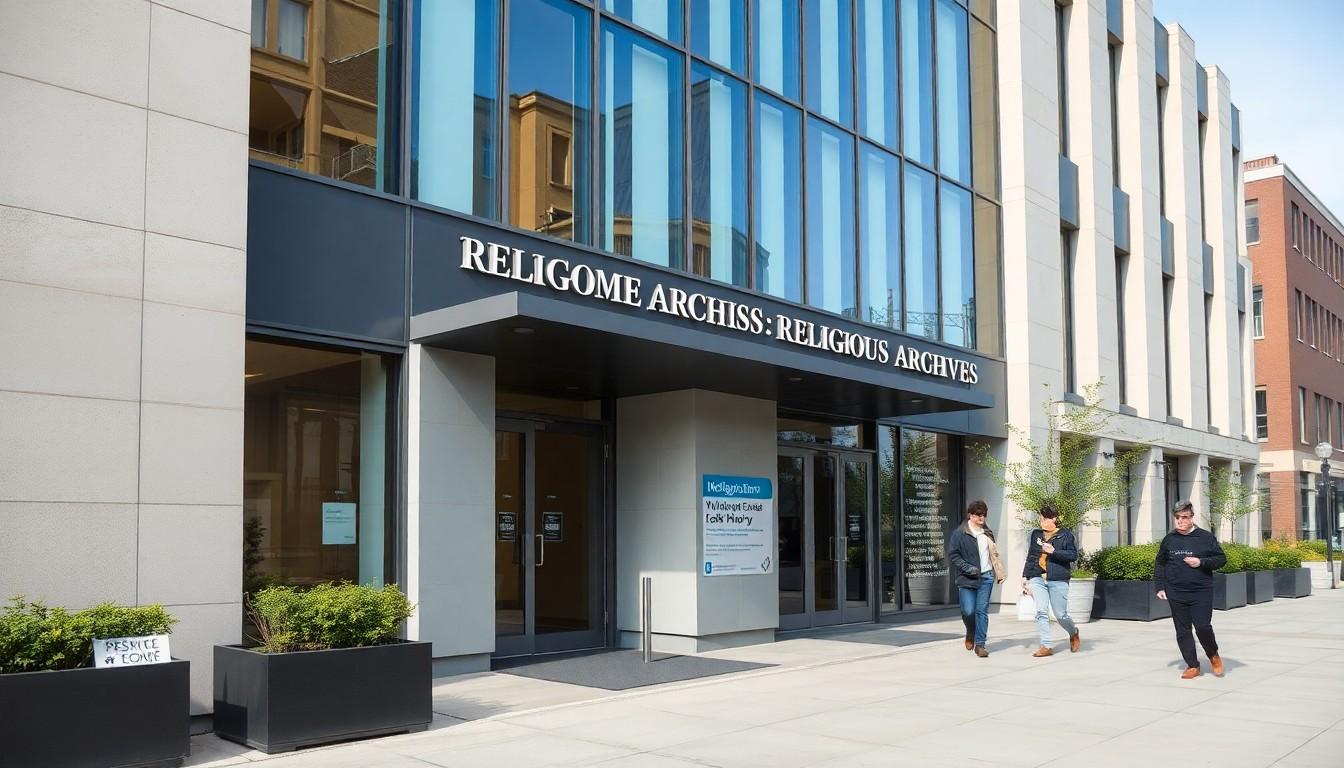
Remembering 25 years of LGBTQ+ religious activism, the LGBTQ+ Religious Archives Network has celebrated the people who challenged exclusion, built affirming faith communities and made queer spiritual history harder to erase. Its anniversary gala offered both a tribute to past pioneers and a hopeful look at the organisers carrying that work forward.
Essential Takeaways
- A landmark anniversary: LGBTQ-RAN marked 25 years of collecting and sharing LGBTQ+ religious history.
- Sacred Rebels honoured: Five influential figures were recognised for advancing queer inclusion across faith communities.
- New voices celebrated: Three current changemakers were highlighted for activism, theology and community care.
- Archives matter: The organisation connects researchers with collections, oral histories, exhibitions and practical archiving guidance.
- Memory as protection: Speakers stressed that preserving these stories helps communities resist erasure and find belonging.
A quarter-century of queer religious history
The strongest message from LGBTQ-RAN's anniversary gala was simple: memory can be a form of resistance. As speakers revisited decades of organising, ministry and scholarship, the event felt less like a formal awards ceremony and more like a family reunion for people who'd had to build their own rooms inside institutions that didn't always welcome them.
LGBTQ-RAN began in 2001 as a project of Chicago Theological Seminary. It later operated through the Center for LGBTQ & Gender Studies in Religion at the Pacific School of Religion before becoming independent in 2020, according to the organisation's background information.
Today, its work stretches beyond storing documents in quiet boxes. The network collects oral histories, develops online exhibitions, supports public programmes and helps researchers locate collections around the country. Its archiving toolkit also gives communities a practical way to preserve their own material, from personal papers to photographs and recordings.
The pioneers who changed faith communities
The gala's five Sacred Rebels included Rev. Dr. William Johnson, Mx. Chris Paige, Rev. Irene Monroe, Rabbi Sharon Kleinbaum and Rev. Dr. Nancy Wilson. Their work spans Christian denominations, Jewish congregations, trans spiritual communities and public conversations about race, sexuality and religious power.
Johnson was recognised as the first openly gay minister ordained in the United Church of Christ, while Kleinbaum was celebrated for leading Congregation Beit Simchat Torah through the AIDS crisis and decades of LGBTQ+ advocacy. Wilson, meanwhile, helped steer the Metropolitan Community Church through campaigns for marriage equality and legal protection.
Monroe's contribution has been especially rooted in confronting silence around sexuality in Black churches. Her work has brought theology into broadcasting, journalism and public debate, challenging the idea that LGBTQ+ lives sit outside religious community. It's a reminder that inclusion isn't only about opening a door; sometimes it's about asking who was kept outside, and why.
Trans spirituality takes its rightful place
Mx. Chris Paige's recognition highlighted another crucial part of the story: trans people have often had to create the language, spaces and institutions they needed themselves. Through Transfaith, Paige helped develop a national platform for trans-inclusive religious organising and education.
The organisation's early focus on Abrahamic traditions later broadened towards a more multi-tradition, multiracial and multi-gender approach, as described during the gala. That evolution matters because queer spiritual life isn't one tidy category. It includes people shaped by formal religion, inherited ritual, personal mysticism and practices that don't fit neatly into a single label.
For anyone researching LGBTQ+ religious history, this is where archives become especially valuable. They preserve not only official statements and institutional records, but also the less polished evidence of community life: newsletters, sermons, event flyers, personal correspondence and oral testimony. Those details often carry the warm, complicated human truth that formal histories miss.
Today's changemakers are building what comes next
LGBTQ-RAN also recognised three current changemakers: Rev. Dr. Adalfie Johnson, Dr. Samuel Ernest and Sapna Pandya. Their work reflects the broad range of contemporary LGBTQ+ faith activism, from pastoral leadership and theological publishing to creating safer spaces for communities of colour.
Ernest's Homodoxy press, for example, gives gay, queer and trans theology and literature a dedicated home. That kind of publishing matters because ideas can disappear when they aren't given a platform, while a small press can make room for writing that larger institutions overlook.
Pandya's focus on preventing future harm also points to the practical side of this work. Celebration is important, but so is safeguarding people now. The anniversary event connected the emotional power of old stories with the everyday responsibility of making religious communities safer and more welcoming.
Why preserving these stories matters now
Former LGBTQ-RAN archivist Doris Malkmus reflected on how poorly many traditional archives once served LGBTQ+ history, while religious history was often overlooked by academic collections. That double gap left communities vulnerable to being forgotten, even when their members had spent decades changing institutions.
The network's work helps close that gap. It gives researchers a route into under-recorded histories, but it also gives communities permission to see their own lives as historically significant. A small congregation's meeting notes or a minister's handwritten sermon may look ordinary at the time, yet become priceless evidence of how change actually happened.
The gala's most moving idea was that remembering can nourish people. For LGBTQ+ believers facing renewed hostility, these records offer more than background information. They say that others have struggled, organised, prayed, created and persisted before them, and that belonging has never been as impossible as it may sometimes feel.
Preserving queer faith history is one way to make sure those hard-won voices remain audible.
Source Reference Map
Story idea inspired by: [1]
Sources by paragraph:
- Paragraph 1: [2], [4]
- Paragraph 2: [3]
- Paragraph 3: [3], [5]
- Paragraph 4: [2], [6]
- Paragraph 5: [2], [7]
- Paragraph 6: [2], [4]
- Paragraph 7: [2], [5]
- Paragraph 8: [3], [6]
- Paragraph 9: [2], [7]
- Paragraph 10: [2], [4]
- Paragraph 11: [3], [5]
- Paragraph 12: [2], [6]
- Paragraph 13: [3], [7]
- Paragraph 14: [2], [4]
- Paragraph 15: [3], [5]