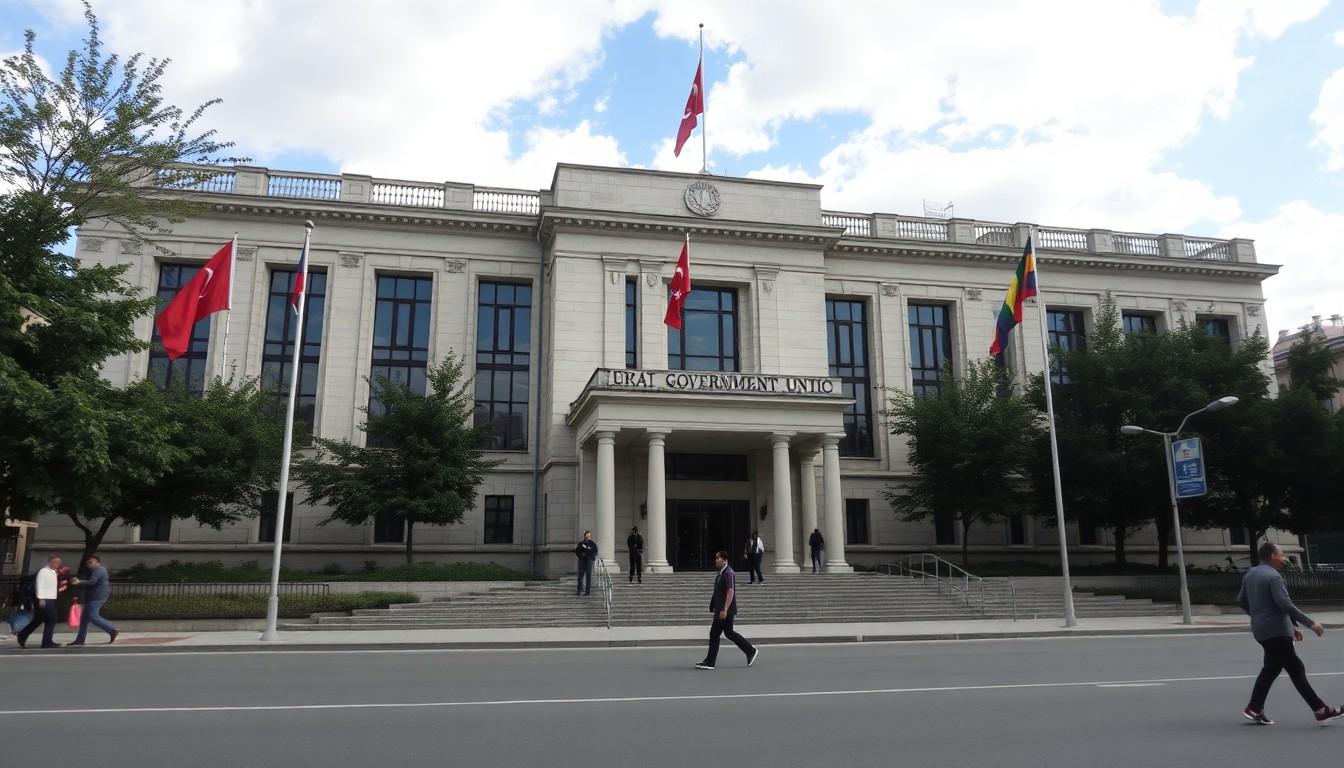
Authorities in Türkiye have detained LGBTQIA+ activists and raided support groups in a sweeping operation that rights organisations say threatens civil society. The crackdown, reported across Ankara, Istanbul and other cities, matters beyond Türkiye: similar “traditional family” rhetoric is reshaping debates on LGBTQIA+ rights, public funding and political power across Europe.
Essential Takeaways
- More than 100 people detained: The raids targeted LGBTQIA+ organisations and HIV-advocacy groups in several Turkish cities.
- Protests were also suppressed: Around 150 protesters, including journalists, were reportedly arrested after demonstrations against the operation.
- Trans detainees face particular risks: Reports include strip searches, interrupted hormone treatment and limited access to lawyers and medical care.
- Online pressure is spreading: Authorities have blocked or restricted accounts and websites linked to rights groups, journalists and civil-society organisations.
- The rhetoric travels: “Protecting children” and “defending the family” are increasingly being used across Europe to justify restrictions on LGBTQIA+ visibility and organising.
Türkiye's crackdown targets more than protest
The sharpest detail is the scale of the operation. Turkish authorities raided offices associated with LGBTQIA+ rights and HIV support, while protesters who objected to the action were detained as well. Human Rights Watch described the campaign as a serious blow to the rule of law, while other reports documented arrests across the country.
The operation, called “My Family is Safe”, was presented by officials as a defence of children, family life and social order. Prosecutors reportedly accused organisations of offences including obscenity, assisting prostitution and maintaining foreign financial links. It is a familiar political formula, but the consequences are intensely physical: locked doors, seized equipment and people taken away from their communities.
Digital restrictions have added another layer. Reports from UPI and the Los Angeles Times said accounts and websites connected to rights organisations, media outlets and advocacy groups had also been blocked or restricted. For small organisations, losing an online presence can be almost as damaging as losing an office, because it cuts off legal updates, health information and emergency contact routes.
Why trans people are especially vulnerable
Trans people face particular danger when a government turns identity, healthcare and public visibility into matters of suspicion. The Trans Europe and Central Asia network has reported that at least 27 trans women are in pre-trial detention, with many facing prostitution or obscenity-related charges.
Accounts cited by rights groups include humiliating treatment, strip searches and obstacles to legal representation. Interrupted access to hormone replacement therapy is not a minor administrative inconvenience either. For someone relying on regular treatment, detention can quickly become a health crisis.
That is why the raids on LGBTQIA+ and HIV-support organisations matter so much. These groups often provide practical help that formal systems fail to deliver, from referrals and medication information to legal advice and a safe place to ask an awkward question. As LGBTQ Nation and Metro Weekly reported, the operation has alarmed advocates precisely because it reaches beyond nightlife or protest and into essential support networks.
The “traditional family” script is spreading
Türkiye is not operating in a political vacuum. Across Europe, populist movements have increasingly framed LGBTQIA+ people as an ideological threat rather than as citizens seeking equal treatment. The language often sounds protective, even gentle: children must be safeguarded, families must be defended, schools must remain neutral.
But the policy direction can be far harsher. Hungary has used constitutional amendments and restrictions on LGBTQIA+ representation, while Poland's former “LGBT-free zones” showed how campaign slogans could become local government policy. The wording may differ from country to country, yet the underlying move is similar: describe a community as an abstract ideology, then limit its rights without openly admitting that people are being targeted.
That framing also makes a useful political distraction. As Kaos GL editor-in-chief Yıldız Tar argued, poverty, weak social policy and femicide pose real threats to families. Blaming queer people is easier than fixing those problems, and sadly, it fits neatly into a campaign speech.
Germany shows how rhetoric can become policy
Germany's experience illustrates why campaign language deserves attention before it becomes legislation. Far-right groups have targeted Pride events, while anti-LGBTQIA+ messages have become more visible in political debate and local protests. Violence around Christopher Street Day celebrations has also underscored the risks facing organisers and attendees.
The debate has moved beyond street demonstrations. Critics point to attempts to withdraw public funding from Pride events and to parliamentary claims portraying queer education, drag performances and LGBTQIA+ visibility as threats to children. These arguments are not identical to the Turkish raids, but they rely on the same basic trick: defining LGBTQIA+ equality as an ideology imposed on an otherwise “normal” majority.
Recent reports about a police raid on Casa Kuà, a trans health and community centre in Berlin, have intensified those concerns. Community accounts said officers focused on information about accessing hormones, although no public evidence or detailed official report had been made available. Prescribed hormone treatment is legal, so the episode has left many trans people wondering whether access to care is being recast as criminal suspicion.
What readers should watch next
The immediate question is whether detainees receive proper medical care, legal representation and a fair hearing. International pressure may matter, especially if governments and rights bodies treat the raids as a test of judicial independence rather than a domestic culture-war dispute.
It is also worth watching the quieter measures. Account blocks, funding cuts and restrictions on community spaces rarely make the same headlines as mass arrests, but they can steadily dismantle the infrastructure people depend on. A movement does not need to be formally outlawed to be made fearful, invisible and difficult to organise.
For LGBTQIA+ communities elsewhere, the lesson is uncomfortable but clear. Rights are not protected only by laws on the books; they also depend on functioning courts, independent media, accessible healthcare and politicians willing to reject scapegoating. Once “family protection” becomes a licence to silence people, the argument has already travelled too far.
It's a reminder that defending families should mean supporting every family, not choosing which ones count.
Source Reference Map
Story idea inspired by: [1]
Sources by paragraph:
- Paragraph 1: [2], [5]
- Paragraph 2: [3], [4]
- Paragraph 3: [5], [7]
- Paragraph 4: [2], [6]
- Paragraph 5: [3], [7]
- Paragraph 6: [2], [6]
- Paragraph 7: [6], [7]
- Paragraph 8: [2], [4]
- Paragraph 9: [5], [7]
- Paragraph 10: [2], [6]
- Paragraph 11: [3], [4]
- Paragraph 12: [2], [5]
- Paragraph 13: [6], [7]
- Paragraph 14: [2], [3]
- Paragraph 15: [4], [5]
- Paragraph 16: [2], [7]
- Paragraph 17: [3], [6]