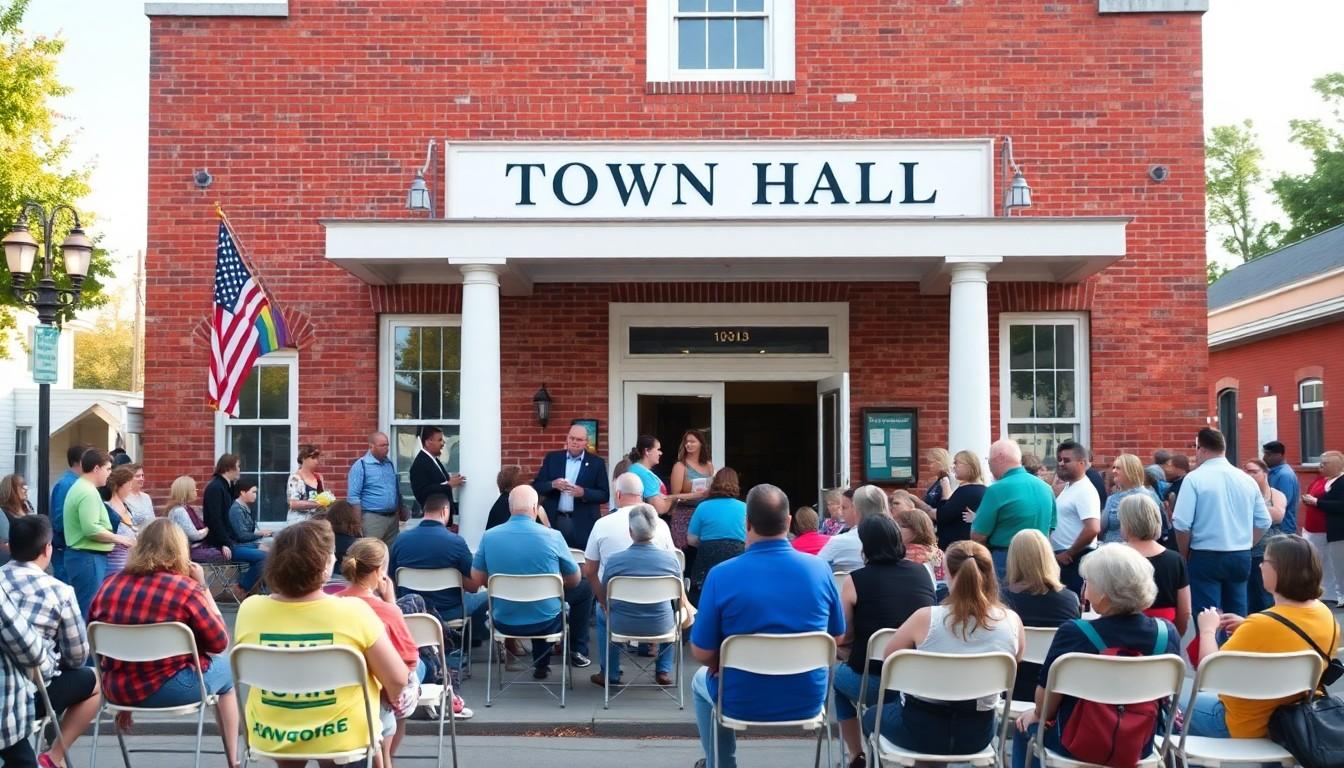
Residents packed a Lady Lake meeting in rainbow colours to support Commissioner Treva Roberts after a pastor’s repeated anti-gay remarks prompted her to leave an earlier session, turning a tense local dispute into a wider debate about dignity, inclusion and public conduct.
Essential Takeaways
- A packed chamber: The meeting reached capacity, with extra chairs placed outside for the overflow crowd.
- Visible support: Many attendees wore rainbow colours and spoke in Roberts’ defence.
- A long-running dispute: The commissioner had faced criticism from Pastor Paul Harsh for more than a year.
- A sharp response: Harsh defended his position at the latest meeting, saying he was surprised a Christian church’s opposition to homosexuality caused controversy.
- A civic question: The episode has renewed discussion about how public meetings should handle personal and religious attacks.
Rainbow colours fill the room
The strongest image from Lady Lake’s latest commission meeting was the crowd itself. Residents arrived in rainbow colours, filled the chamber and spilled outside when every seat had gone, creating a show of support that was impossible to miss.
Roberts returned to the dais after walking out of an earlier meeting, when a speaker described homosexuality as a mental illness. The episode had already drawn attention locally, and the latest turnout suggested that many residents saw the issue as more than an isolated disagreement. According to 352Today, the original walkout followed remarks made during public comment.
Why Treva Roberts walked out
Roberts had reportedly endured criticism from Pastor Paul Harsh over an extended period. At the earlier meeting, however, the language became too personal and hurtful for her to remain in the room, prompting her departure. The local dispute sits within the formal work of the Lady Lake Town Commission, whose meetings provide a public forum for residents to address elected officials.
That distinction matters. People are entitled to express religious or political views, but a public meeting can quickly feel very different when comments target an individual sitting at the dais. Harsh’s remarks were presented as a defence of his church’s beliefs, while supporters argued that the tone crossed a line into personal hostility.
Supporters say the comments went too far
Several speakers backed Roberts during the latest meeting. Timothy McCusker of the Tri-County Unitarian Universalists church praised her courage and said the remarks had been sufficiently hurtful to force her out of the meeting.
Other residents used even stronger language, calling Harsh a bully and describing his congregation as judgmental. Debra Hobbs, who said she had lived in the Lady Lake section of The Villages for 16 years, described the comments as offensive and said she wanted the town to remain welcoming.
The reaction shows how quickly a local meeting can become a barometer for community identity. For supporters, the issue is about whether an elected official should be able to do her job without being subjected to hostile personal attacks. For others, it's about protecting the right to speak openly, even when the message is deeply unpopular.
Pastor defends his position
Harsh also addressed the commission, defending his opposition to homosexuality. He referred to a mayoral proclamation in favour of homosexuality and said he was surprised that a Christian church speaking against it had caused surprise.
That argument reflects the wider tension at the heart of the dispute. Religious freedom protects the expression of sincerely held beliefs, while public bodies also have a responsibility to conduct meetings fairly and respectfully. Lady Lake’s official town commission and ward information provide the institutional backdrop for that debate, showing how the meeting fits into the town’s local government structure.
The practical challenge is keeping those principles in the same room. Public comment is meant to give residents a voice, but it isn't a licence to turn civic business into a personal tribunal. Clear meeting rules, consistent enforcement and a chair willing to intervene can make a real difference.
What happens next for Lady Lake?
For now, the immediate story is the strength of the response. A crowd that filled the room and continued outside sent Roberts a visible message that she wasn't standing alone.
The longer-term question is whether the town treats the incident as a one-off clash or as a prompt to consider how future meetings are managed. Election information and commission procedures are publicly available through the town, giving residents formal routes to stay involved beyond a single emotionally charged evening.
Local government can feel dry on paper, but moments like this remind us that civic meetings are also community stages. When identity, faith and public office collide, the room can become tense very quickly, and the way officials respond often matters almost as much as the original words.
It's a small town meeting with a much bigger question: what should respectful public debate look like?
Source Reference Map
Story idea inspired by: [1]
Sources by paragraph: