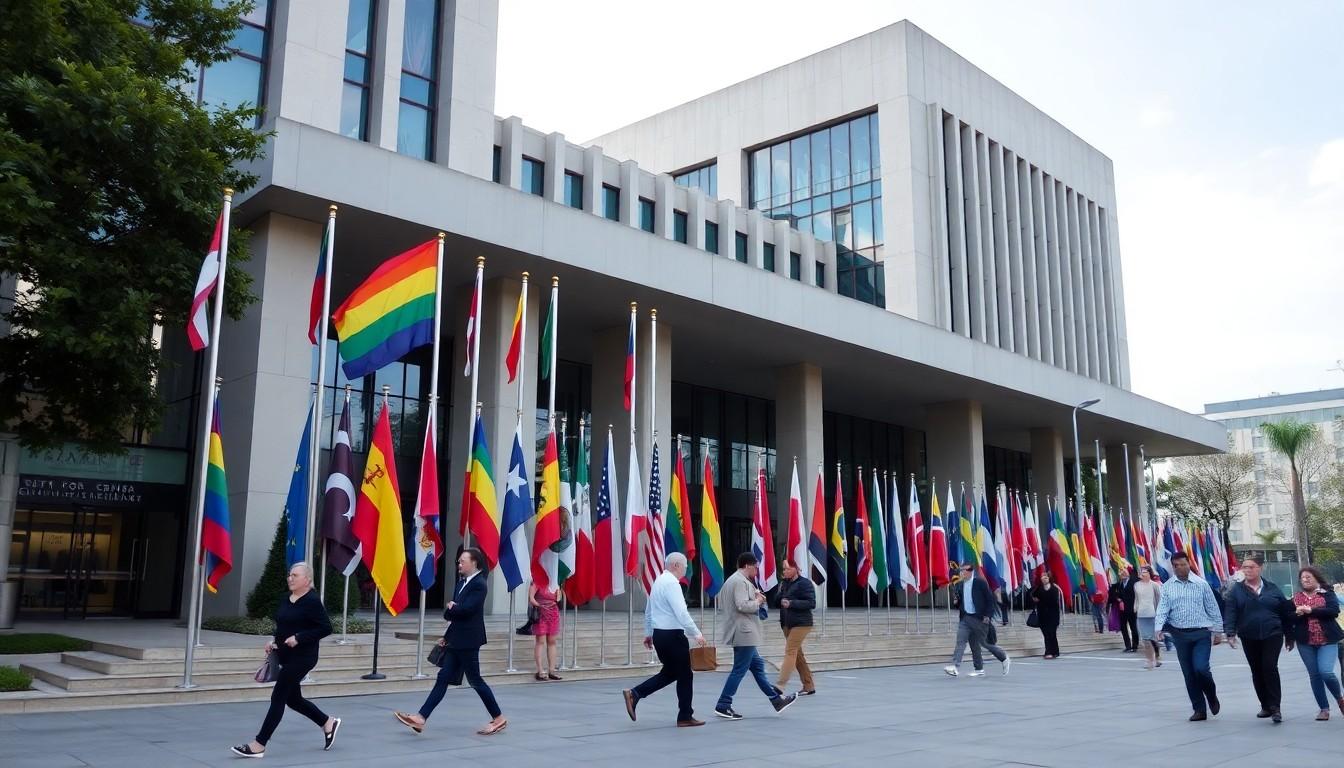
Leaders are preparing for the 2026 Commonwealth Heads of Government Meeting in Antigua and Barbuda, where democracy, human rights and practical reform will take centre stage. The gathering matters because the association is facing difficult questions over political trust, equality, LGBT+ rights and its response to governments that breach shared principles.
Essential Takeaways
- A “summit of delivery”: Secretary General Shirley Botchwey says the 2026 meeting should turn shared democratic commitments into practical action.
- Rights remain uneven: Progress for women and girls varies across Commonwealth countries, while same-sex relations remain criminalised in 30 of 56 member states.
- Suspension is possible: The Commonwealth can issue criticism, offer support and, in serious cases, suspend members or encourage wider diplomatic pressure.
- Reform is contested: Proposals for a stronger human rights and democracy commissioner have stalled amid opposition from some member states.
- Reparations remain sensitive: Caribbean and African leaders continue to debate the legacy of enslavement, while the UK rejects financial reparations.
Why the 2026 Commonwealth summit matters
The next Commonwealth Heads of Government Meeting is being framed as more than a traditional leaders' gathering. According to the Commonwealth's official CHOGM 2026 information, the event will bring member states together in Antigua and Barbuda in November 2026, with an emphasis on cooperation and delivery.
That language is significant. The Commonwealth has long had declarations on democracy, human rights and the rule of law, but statements alone don't rebuild public trust. As the organisation faces concerns about participation, accountability and democratic confidence, the pressure is on to show what those principles mean in practice.
Shirley Botchwey, the Commonwealth Secretary General, has described the event as a “summit of delivery” and said members will work together to renew democracy. It sounds ambitious, but the real test will be whether leaders leave with clearer commitments rather than another polished communiqué.
The Commonwealth's human rights promises are broad
The association's values are rooted in several declarations agreed by heads of government, including the Harare Declaration and the 2013 Commonwealth Charter. Together, they set expectations around representative government, equality, freedom and the rule of law.
The challenge is that these principles are not experienced consistently across the membership. The UK Parliament's briefing on Commonwealth human rights notes mixed progress on the rights of women and girls, while rights organisations continue to highlight the criminalisation of same-sex relationships in 30 member states.
That gap between principle and lived experience is where criticism tends to land. The Commonwealth can speak warmly about shared values, but its credibility depends on whether those values are applied when they become politically awkward.
What happens when a member breaks the rules?
The Commonwealth isn't a court, and it doesn't operate with a single, automatic punishment for rights violations. Instead, the Millbrook Commonwealth Action Programme sets out a graduated response when a member is judged to be clearly violating the Harare principles or when an elected government is overthrown.
The process can begin with public criticism from the Secretary General and an offer of assistance. In more serious cases, member states may cut diplomatic, trade or other links, while suspension from the Commonwealth remains the strongest visible sanction.
Gabon, which was partially suspended after its 2023 military coup, is the most recent example. However, most suspensions took place during the 1990s and early 2000s, prompting a reasonable question: is the Commonwealth still willing and able to use its influence when democratic standards deteriorate?
CMAG has influence, but not unlimited muscle
The Commonwealth Ministerial Action Group, known as CMAG, is made up of eight foreign ministers. It monitors situations of concern and can make recommendations on issues including media freedom and democratic rights.
The group meets several times a year and publishes short summaries of its conclusions. But parliamentary committees and some academics have argued that CMAG needs stronger powers and a more consistent role, particularly if the Commonwealth wants to be taken seriously as a guardian of democracy.
The organisation also relies on the Secretary General's “good offices” to mediate disputes and encourage dialogue. That quiet diplomacy can be useful, especially when public confrontation would close doors, but limited information about these efforts makes it difficult for outsiders to judge their impact.
Reparations and LGBT+ rights will test unity
The 2026 meeting will take place against the backdrop of continuing debate over reparatory justice for enslavement and chattel slavery. The Caribbean Community and the African Union have called for action to address the long-term effects of that history, and the 2024 Commonwealth meeting agreed that discussions should continue.
The UK's position remains that it won't agree to financial reparations. That divide is unlikely to disappear, and it could shape the tone of future Commonwealth relations, particularly as Caribbean and African governments seek recognition as well as practical measures.
LGBT+ rights present another long-running fault line. Critics have pointed to the 2013 Charter's failure to explicitly name LGBT+ protections, although the UK Government previously rejected the argument that this amounted to a lack of protection. For the Commonwealth, the issue is not merely wording. It goes to the heart of whether universal rights can coexist with national laws that discriminate.
Can the association turn principles into progress?
The Commonwealth has several tools at its disposal, including election observation, a human rights unit, CMAG and partnerships with organisations such as the Commonwealth Parliamentary Association. Yet its effectiveness depends on money, political will and timely publication of findings.
An external review has raised concerns that reports from election observer missions can take too long to appear, while funding for monitoring has fluctuated sharply. Those details may sound bureaucratic, but they matter: delayed information is less useful to voters, civil society groups and governments trying to respond to problems.
There have also been proposals for a commissioner covering human rights and democracy. The idea could give the Secretariat and CMAG additional support, but it hasn't advanced because some states oppose it. The 2026 summit therefore offers a chance to revisit the machinery behind the promises, not just repeat the promises themselves.
The Commonwealth's next chapter will be judged less by the warmth of its speeches than by whether its members accept scrutiny when it counts.
Explore the summit's commitments with a close eye on delivery, not just declarations.
Source Reference Map
Story idea inspired by: [1]
Sources by paragraph:
- Paragraph 1: [2], [3]
- Paragraph 2: [4], [7]
- Paragraph 3: [2], [3]
- Paragraph 4: [4]
- Paragraph 5: [4], [7]
- Paragraph 6: [4]
- Paragraph 7: [4], [5]
- Paragraph 8: [4], [7]
- Paragraph 9: [4]
- Paragraph 10: [4], [7]
- Paragraph 11: [4]
- Paragraph 12: [4]
- Paragraph 13: [4], [7]
- Paragraph 14: [4]
- Paragraph 15: [4], [7]
- Paragraph 16: [3], [6]
- Paragraph 17: [4]
- Paragraph 18: [4], [7]
- Paragraph 19: [4]
- Paragraph 20: [4], [7]
- Paragraph 21: [2], [3]