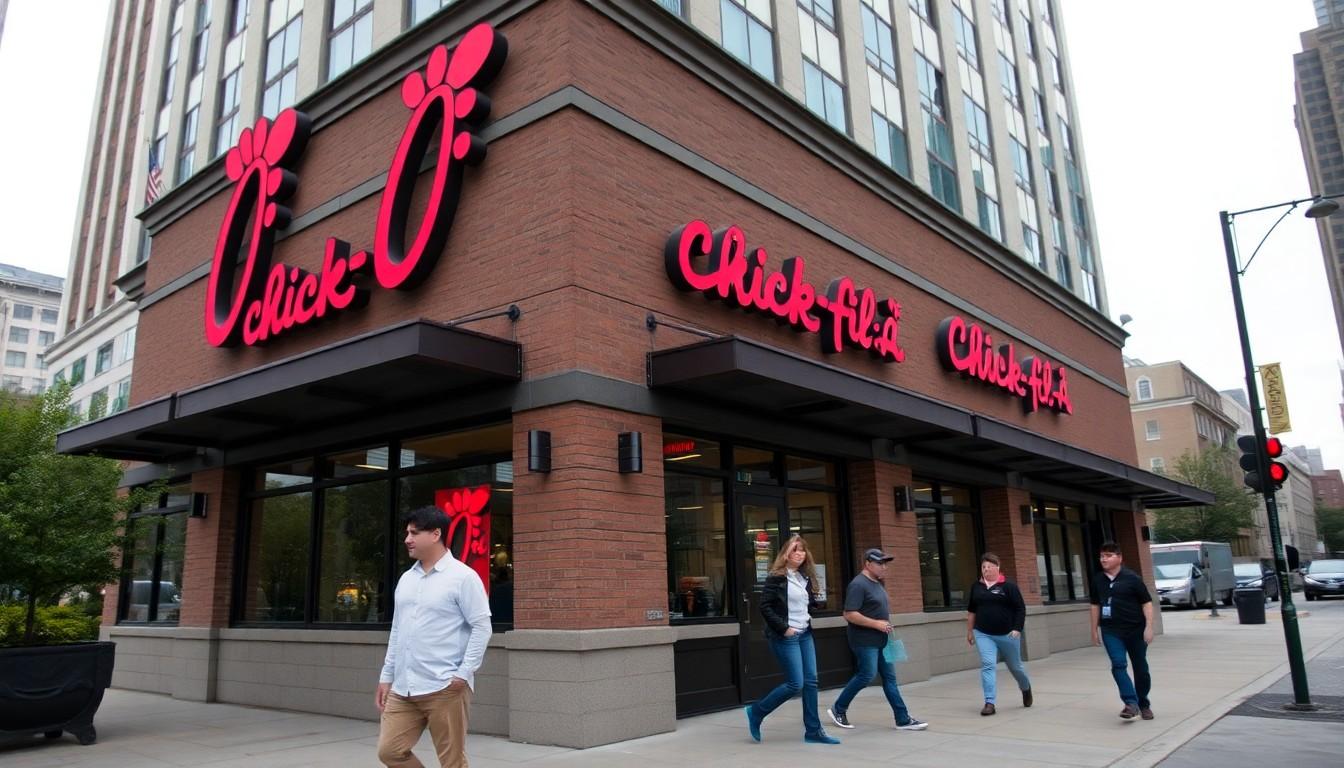
Chick-fil-A's LGBTQ rights position is back under scrutiny after chief executive Andrew Cathy was asked directly about equality during an NBC Today interview. His repeated focus on hospitality and customer service offered reassurance about dining in the chain's restaurants, but little clarity on whether its leadership now supports LGBTQ+ equality.
Essential Takeaways
- Cathy stayed non-committal: He spoke about food, hospitality and service rather than answering the equality question directly.
- The controversy has history: Earlier statements and company-linked donations helped create Chick-fil-A's anti-LGBTQ+ reputation.
- Charitable giving changed: Since 2020, the company has highlighted hunger relief, education and community programmes.
- The debate has travelled: Protests followed Chick-fil-A's 2026 London opening, showing the issue still resonates beyond the US.
- Customer welcome is not the whole answer: Being served in a restaurant doesn't necessarily address questions about equal rights more broadly.
The question was simple. The answer wasn't
The most striking part of the interview wasn't a dramatic declaration. It was the absence of one.
Asked what he would say to people who had boycotted Chick-fil-A, Cathy encouraged them to return for the chain's food and famously hospitable service. When presenter Craig Melvin followed up by asking about the company's position on LGBTQ+ equal rights, the chief executive returned to the same themes.
That distinction matters. A customer can be welcomed at the counter, enjoy a chicken sandwich and still want to know whether the company supports their rights outside the restaurant. As LGBTQ Nation reported, the interview revived questions that have followed Chick-fil-A for years. [2]
Cathy's response may sound reassuring to some diners, but it leaves the central issue unresolved. Hospitality is about the experience inside the restaurant. Equality is a much bigger question. [3]
Why Chick-fil-A became a boycott target
The chain's reputation dates back to 2012, when then-chief executive Dan Cathy publicly expressed support for a traditional Christian definition of marriage and opposed same-sex marriage.
Attention soon turned to donations made through organisations connected with Chick-fil-A. Critics highlighted support for groups whose teachings or policies were viewed as hostile to LGBTQ+ people, while supporters organised counter-campaigns defending the company's religious identity.
The controversy became more than a disagreement over one executive's comments. It became a question about where company-linked money went and what those donations appeared to support. The Advocate has noted that this history remains central to the public debate around the brand. [5]
That background explains why a brief invitation to come back for the food doesn't quite settle the matter. For many former customers, the issue isn't whether the chips are crisp. It's whether the company has changed its values. [6]
Chick-fil-A changed its giving strategy, but not its message
In 2019, Chick-fil-A announced that it would reshape its charitable giving from 2020 onwards, concentrating on education, homelessness and hunger relief. The move removed organisations such as the Fellowship of Christian Athletes and the Salvation Army from its announced funding programme.
The shift was significant, particularly because previous donations had attracted intense criticism. Chick-fil-A's current community work includes food-recovery efforts and grants for local organisations, with the company presenting these schemes as evidence of a broader community focus.
Still, the change wasn't an explicit endorsement of marriage equality or LGBTQ+ rights. Company president Tim Tassopoulos also said at the time that religious organisations weren't automatically barred from receiving future support. That careful wording has left campaigners asking for something more direct. [7]
In other words, the charity strategy changed, but the public record doesn't show an equally clear statement from senior leadership on LGBTQ+ equality. That's the gap Cathy was asked to address. [2]
The London opening put the old controversy back in view
Chick-fil-A's international expansion has given the debate a fresh setting. When the company opened its first London restaurant in Kingston upon Thames in March 2026, LGBTQ+ rights campaigner Peter Tatchell led a demonstration outside.
Campaigners called for a public commitment that Chick-fil-A would not fund organisations opposing LGBTQ+ equality. The Peter Tatchell Foundation said it had sought assurances from the company but hadn't received the commitment it wanted, and it encouraged consumers to boycott the restaurant.
That campaign reflects an advocacy position, not proof that Chick-fil-A is currently donating to the same groups that drew criticism in the past. The argument is more specific: campaigners want the company to rule out such funding clearly and permanently. [7]
For a global brand, that distinction is important. A business can update its philanthropy while still carrying the weight of its earlier choices, especially when its chief executive avoids a direct answer. [6]
What shoppers should take from the interview
If you're deciding whether to eat at Chick-fil-A, the practical picture is fairly straightforward. The company says customers are welcome, its current giving focuses heavily on community initiatives, and its leadership continues to emphasise service.
But consumers who want an explicit corporate position supporting LGBTQ+ equality haven't received one from this interview. That may be enough information for some people, while others will see the lack of clarity as meaningful in itself.
The episode also shows why corporate reputation can be stubborn. Menu changes and charitable programmes may soften a controversy, but they don't necessarily replace a clear statement of principle. As NBC New York reported, Cathy's comments answered questions about customer service more readily than questions about equal rights. [3]
For LGBTQ+ diners and allies, that can feel like an unsatisfying halfway point: polite at the door, but still unclear about what happens beyond it. [5]
The food may be familiar, but Chick-fil-A's answer on LGBTQ+ equality remains unfinished.
Source Reference Map
Story idea inspired by: [1]
Sources by paragraph: