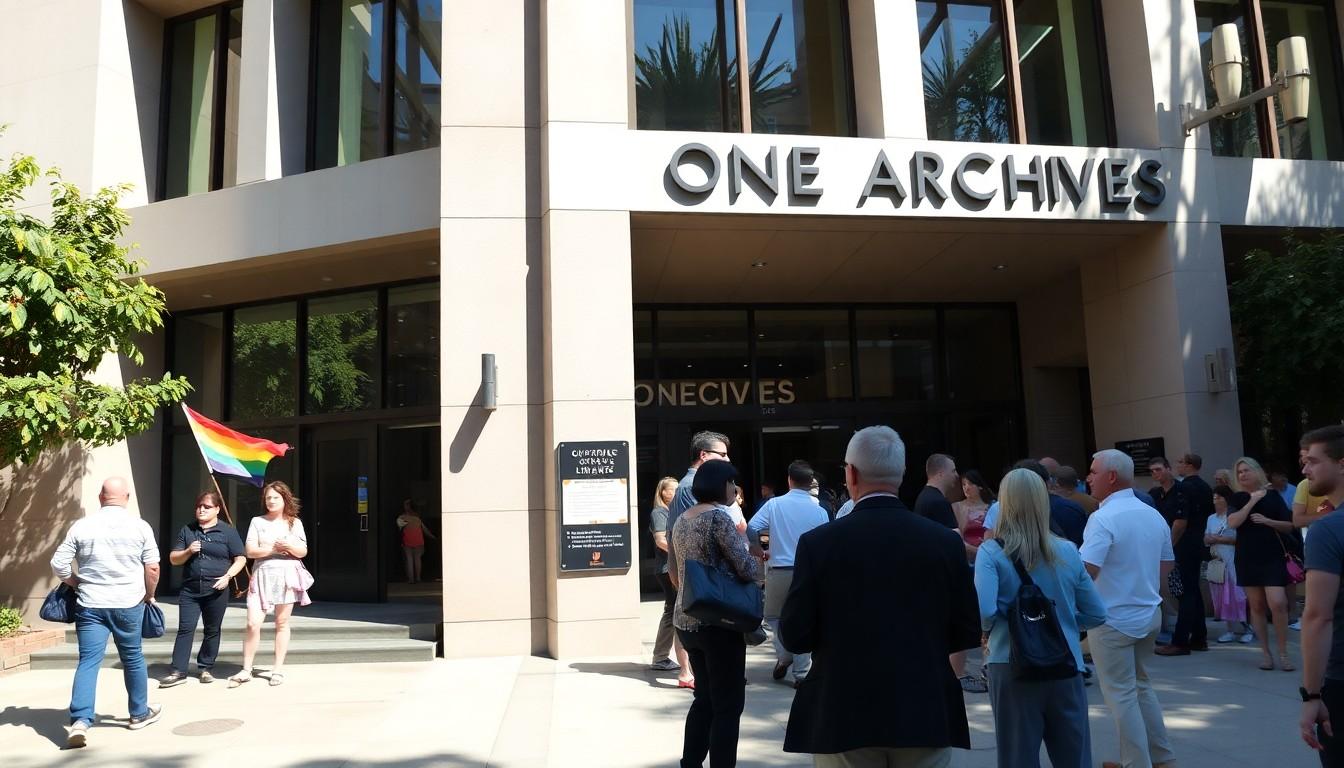
Audiences gathered at ONE Archives in Los Angeles for TRANS•POSITION, a free queer trans symphony celebrating LGBTQIA+ artists, musicians and allies. With orchestral pieces, drag, spoken word and audience participation, the event showed how live music can create connection while making cultural spaces feel welcoming, purposeful and genuinely shared.
Essential Takeaways
- Free by design: The event aimed to make live musical performance accessible without an entry fee.
- A broad repertoire: Music ranged from Chappell Roan and Ethel Cain to boygenius and Tchaikovsky.
- More than an orchestra: Vocalists, drag performers, speakers and volunteers all shaped the afternoon.
- A historic setting: ONE Archives houses one of the world’s largest collections of LGBTQIA+ materials.
- The audience joined in: The finale turned “Pink Pony Club” into a joyful communal performance.
A symphony with a clear purpose
The strongest impression from TRANS•POSITION was that it wasn't simply an afternoon concert. Inside ONE Archives, between tall bookshelves and balconies filled with onlookers, the performance treated music as a meeting place - something warm, immediate and impossible to experience alone.
The free event was hosted by TRANS•FORM, a creative organisation founded as a programming series at USC's LGBTQ+ Student Center. Event listings described the project as a queer and trans symphony, while ONE Archives presented it as part of its wider programme of public cultural events.
That accessibility mattered. Classical performances can carry a sense of occasion, but they can also feel financially out of reach. Here, the organisers wanted people to come in, sit down and enjoy the music without feeling that a donation or formal background was expected of them.
Why ONE Archives made the ideal venue
ONE Archives brought an extra layer of meaning to the afternoon. The venue's shelves and collections placed the performance inside a living record of LGBTQIA+ history, rather than separating art from the communities it represented.
The setting was intimate rather than grand. Plastic chairs filled the available floor space, while a small stage and projected visuals helped guide the audience through the programme. It sounds modest, but that closeness gave the event a softer, more personal atmosphere.
ONE Archives' public programme includes exhibitions, talks and community-focused events, and its calendar continues to position the archive as a place for gathering as well as research. That combination makes sense for a performance built around memory, identity and shared expression.
A playlist that moved beyond genre
The repertoire deliberately crossed musical boundaries. Songs associated with contemporary queer pop appeared alongside work by LGBTQIA+ artists and composers, giving the performance a recognisable pulse while retaining the emotional weight of orchestral music.
Tchaikovsky's “Elegy” offered a particularly poignant moment, with its associations of love, grief and loss. Other selections brought a more current, sparkling energy, proving that a queer symphony doesn't need to choose between reverence and fun.
That mixture is part of the appeal. A carefully chosen song can act like a small doorway, drawing in someone who might not normally attend an orchestral performance. For first-time audiences, a familiar pop melody can make the room feel less formal and more inviting.
From isolation to collective sound
The project grew from a simple but powerful frustration: trans musicians can find themselves isolated in ensembles and rehearsals. TRANS•POSITION created a space where queer identity wasn't an aside, but part of the artistic centre.
The organisers were initially unsure how many performers would apply. The response expanded the idea into something broader, bringing together instrumentalists, singers, drag performers and speakers. According to the event listing on Eventbrite, the performance was developed as a live community event rather than a conventional concert alone.
That collaborative spirit was visible in the details, too. A zine introduced performers and their motivations, while small music-themed items such as harmonicas and kazoos gave visitors a playful way to take part. It was a reminder that belonging often grows through small gestures, not just big statements.
When the audience became the ensemble
The emotional centre of the afternoon came through a speech reflecting on grief, transgender deaths and the effort required to keep moving through difficult times. Set against Samuel Barber's “Adagio for Strings”, it gave the programme a sombre pause without allowing sorrow to become the whole story.
The closing performance then shifted the mood completely. Lucca Salazar led the audience through vocal sounds before the room opened into an orchestral version of Chappell Roan's “Pink Pony Club”. Voices bounced off the archive's walls, turning spectators into participants.
That ending captured the event's central idea beautifully. Music needs someone to make it and someone else to hear it, but the most memorable performances are often the ones where the boundary disappears. For everyone in the room, the final chorus offered a bright, collective release.
TRANS•POSITION shows how a queer trans symphony can be both politically meaningful and wonderfully joyful.
Source Reference Map
Story idea inspired by: [1]
Sources by paragraph:
- Paragraph 1: [2], [4]
- Paragraph 2: [3], [6]
- Paragraph 3: [5], [7]
- Paragraph 4: [2], [3]
- Paragraph 5: [4], [6]
- Paragraph 6: [2], [7]
- Paragraph 7: [5], [6]
- Paragraph 8: [2], [4]
- Paragraph 9: [5], [7]
- Paragraph 10: [2], [3]
- Paragraph 11: [5], [6]
- Paragraph 12: [2], [4]
- Paragraph 13: [5], [7]
- Paragraph 14: [2], [6]
- Paragraph 15: [3], [4]