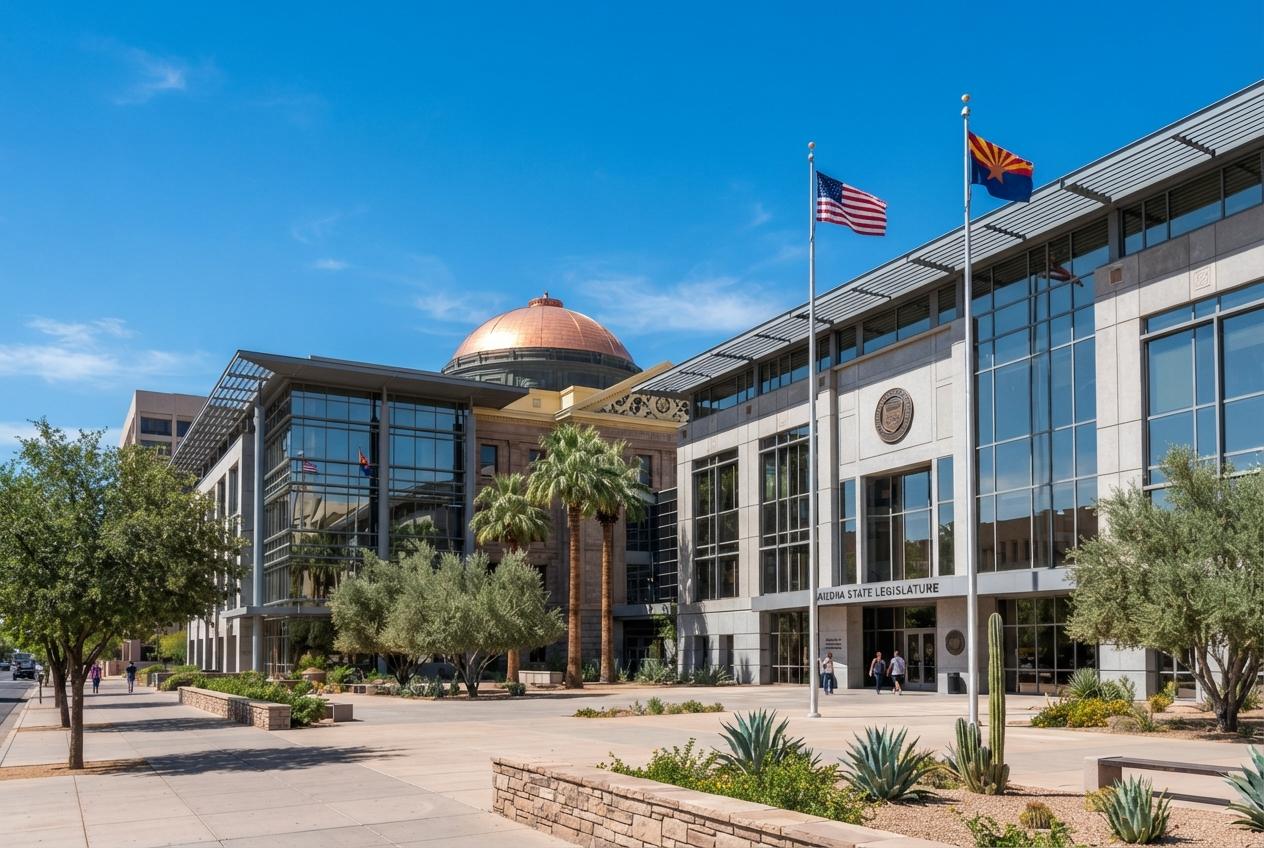
Voters in Arizona are weighing Proposition 318, a ballot measure that would expand restrictions on transgender students’ participation in school sports and access to facilities. With concerns about safety, enforcement and the wellbeing of LGBTQ young people rising, here’s what the proposal could mean for schools, families and voters.
Essential Takeaways
- Proposition 318 targets transgender pupils: The measure would add to existing restrictions affecting school sports and facilities.
- Safety claims remain disputed: Supporters frame the proposal around protection, while LGBTQ advocates say there’s no evidence that trans-inclusive policies endanger cisgender students.
- Enforcement could be unclear: Critics warn that vague rules may invite complaints, suspicion and harassment.
- Arizona already has restrictions: A 2022 state law placed limits on transgender students’ participation in school sport.
- Public opinion is mixed but shifting: GLAAD polling cited in its briefing found majority support for LGBTQ people and growing support for transgender Arizonans.
What Proposition 318 would change
At its core, Proposition 318 is designed to broaden Arizona’s existing restrictions on transgender students in schools. The proposal focuses on participation in school sport and the use of facilities such as toilets and changing areas, making it part of a wider national push to regulate the lives of trans young people.
Ballot guides from BallotReady, the Arizona Ballot Guide and My Politics describe the measure as a question about how schools should apply sex-based rules. For families, though, the wording has consequences far beyond a ballot paper: it could affect where a child changes, which team they can join and how school staff respond to complaints.
The debate is already highly charged. Supporters present restrictions as a matter of fairness and safeguarding, while opponents argue that blanket rules single out a small and vulnerable group without solving a demonstrated problem.
Arizona's existing rules set the backdrop
Arizona lawmakers passed a transgender sports restriction in 2022, creating the legal background against which Proposition 318 is being considered. The new proposal would therefore not arrive in an empty policy space. It would add another layer to rules that schools and districts are already expected to interpret.
The State Press reported that the measure has become part of a broader argument over transgender participation in athletics, including whether eligibility should be decided through universal bans or through individual assessment. That distinction matters because school sport isn't only about competition. It's also where young people find friends, confidence and a sense of belonging.
The National Center for Lesbian Rights has argued that sports policies should take account of a student's individual circumstances rather than impose categorical exclusions. In practical terms, that approach leaves more room for schools and families to make decisions locally, rather than applying one rule to every pupil.
Why bathroom enforcement is such a flashpoint
Bathroom provisions tend to generate some of the sharpest political language, but the everyday reality can be much messier. GLAAD says transgender young people may face greater risk of sexual assault when they're forced to use facilities that don't match their gender identity, while there is no evidence that allowing trans people to use facilities aligned with their identity creates a safety risk for cisgender users.
The organisation also argues that violence and harassment in public toilets are already unlawful. Critics of Proposition 318 say unclear enforcement could create a different danger: students and adults being challenged, reported or confronted because someone thinks they don't look as expected.
That uncertainty is especially troubling for teenagers. A rule that appears simple on paper can become a humiliating encounter in a school corridor, changing room or toilet. As Arizona's ballot guides set out the measure for voters, the practical question is not just what the law says, but who would be expected to police it and on what evidence.
What Arizona voters say about LGBTQ inclusion
Polling cited by GLAAD suggests the political picture is more nuanced than the ballot fight might imply. Its Arizona findings reported that 58% of adults support the LGBTQ community, while 67% said they'd support a friend, relative or colleague who came out as LGBTQ.
The same research found that 59% supported transgender people, an increase from the previous year. Sixty per cent said safe and welcoming schools and communities for LGBTQ young people were important, and 54% believed anti-LGBTQ legislation was going too far.
Those figures don't settle the Proposition 318 argument, but they do show why the measure is being watched closely. Many voters may support safety and fair competition while also worrying that broad restrictions could expose children to stigma. That tension is likely to shape how undecided Arizonans approach the question.
A decision with consequences beyond the ballot box
The measure is arriving amid wider concerns about anti-LGBTQ hostility in Arizona and across the United States. GLAAD's extremism tracker has recorded threats, assaults and other incidents targeting LGBTQ people in the state, adding a serious backdrop to arguments about public safety and political rhetoric.
For voters, the most useful approach is to read the proposal's exact language, check independent ballot explanations and consider how the rules would work in a real school. Ask who makes decisions, what happens when a student's identity is questioned and whether the policy offers a fair process rather than a blanket answer.
This isn't an abstract culture-war exercise for the pupils affected. It's about teams, friendships, privacy and whether school feels like a place where every child can take part without being singled out. That human scale is easy to lose in campaign slogans, but it may be the most important part of the debate.
Proposition 318 is ultimately a choice about how Arizona balances school rules, student safety and equal participation.
Source Reference Map
Story idea inspired by: [1]
Sources by paragraph:
- Paragraph 1: [2], [3]
- Paragraph 2: [4], [6]
- Paragraph 3: [5], [7]
- Paragraph 4: [2], [5]
- Paragraph 5: [3], [6]
- Paragraph 6: [4], [7]
- Paragraph 7: [2], [3]
- Paragraph 8: [5], [6]
- Paragraph 9: [3], [4]
- Paragraph 10: [2], [7]
- Paragraph 11: [5], [6]
- Paragraph 12: [3], [4]
- Paragraph 13: [2], [5]
- Paragraph 14: [6], [7]
- Paragraph 15: [3], [5]