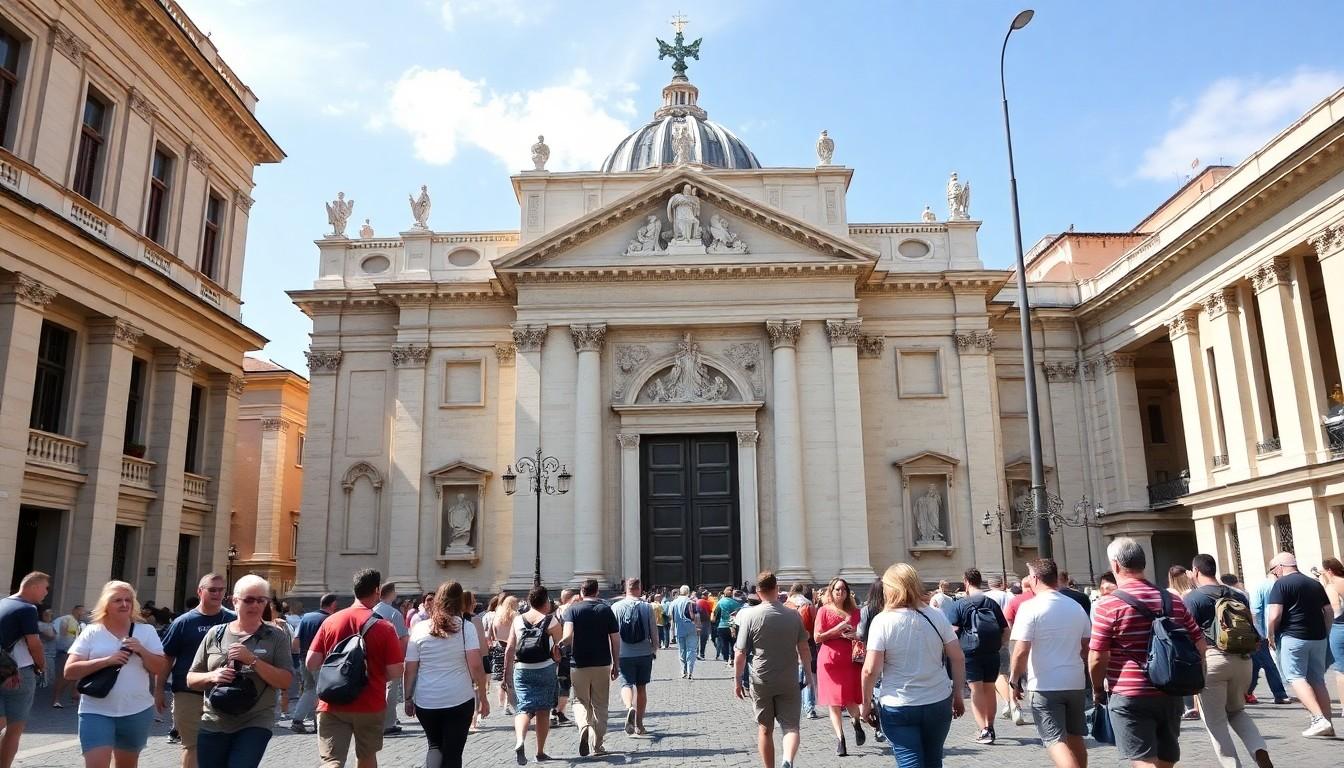
More than 1,000 LGBTQ+ pilgrims and family members travelled to Rome for a landmark Jubilee gathering, finding welcome at St Peter’s Basilica while still questioning what the Catholic Church’s changing signals really mean.
Essential Takeaways
- A landmark pilgrimage: The Vatican calendar included its first recognised LGBTQ+ pilgrimage during the 2025 Jubilee.
- A powerful threshold: Pilgrims crossed St Peter’s Holy Door, a moment many described as deeply emotional.
- Welcome has limits: Inclusion on the calendar created access, but it didn't amount to a formal endorsement of LGBTQ+ relationships.
- Mixed signals remain: Pope Leo XIV has spoken of welcome while reaffirming Catholic teaching on marriage.
- The bigger question: For many pilgrims, true inclusion means being able to stay, serve, marry and lead within the Church.
A doorway carried extraordinary emotional weight
The strongest image from the pilgrimage is also the simplest: LGBTQ+ people walking through a centuries-old doorway in St Peter’s Basilica, some in tears and others holding tightly to loved ones. The scene had the hush of a family milestone, but with the added weight of generations of exclusion.
The Jubilee of Hope began on Christmas Eve 2024, when Pope Francis opened the basilica’s Holy Door. Vatican News reported that hundreds of thousands of pilgrims had crossed it within the first weeks, underlining how significant the threshold has become for Catholics worldwide.
For one newly married couple, the crossing was especially personal. A 79-year-old lifelong Catholic from Cincinnati walked beside his husband, turning the pilgrimage into a honeymoon marked by faith, history and a long-awaited sense of recognition.
The Vatican made space, but stopped short of endorsement
The pilgrimage was organised by the Italian group Jonathan’s Tent, with support from DignityUSA and Outreach. Its place on the official Holy Year programme was widely viewed as a historic step, particularly because LGBTQ+ Catholics had been treated as a political or cultural threat during an earlier Jubilee.
National Catholic Reporter reported on the Vatican’s decision to register the gathering, while LGBTQ Nation described it as the first LGBTQ+ pilgrimage formally included in the Holy Year programme. That distinction matters, but so does the fine print: a place on the calendar helps with access and organisation, not doctrine.
In other words, the Church opened the building without necessarily resolving the argument outside it. For pilgrims, that may sound modest, but after decades of being kept at arm’s length, even an open door could feel startlingly bright.
A Mass, a choir and a moment of belonging
The weekend also included a prayer vigil and Mass at the Church of the Gesù, the Jesuit church in central Rome. Bishop Francesco Savino, vice-president of the Italian bishops’ conference, celebrated the service, saying he had received Pope Leo’s blessing to do so.
The atmosphere was both familiar and surreal. Hymns, ritual and the sound of a congregation singing Cyndi Lauper’s True Colors created an unexpected meeting point between Catholic worship and LGBTQ+ cultural memory.
GMA News footage showed pilgrims making their way through the Holy Door, capturing the quiet concentration of the moment. It wasn't a parade or a publicity stunt; it was a religious act for people who had often been told, explicitly or otherwise, that their faith belonged somewhere else.
Pope Leo’s message remains carefully mixed
The new papacy has brought both hope and uncertainty. Jesuit priest James Martin, who founded Outreach, said after meeting Pope Leo that the pontiff wanted to continue Pope Francis’ emphasis on openness and welcome.
At the same time, Leo has reaffirmed the Church’s teaching that marriage is between a man and a woman, while indicating that priests may continue blessing same-sex couples. Earlier comments attributed to him about a “homosexual lifestyle” have also remained part of the conversation around his record.
That mixture leaves LGBTQ+ Catholics reading between the lines. The invitation may be warmer, but the boundaries haven't disappeared. As one pilgrim put it, gratitude for the door can sit alongside watchfulness about whether there will be room at the table.
Why this pilgrimage matters beyond Rome
The significance of the event isn't only symbolic. It reflects a wider shift in how religious institutions are being asked to distinguish hospitality from equality, and visibility from genuine participation.
The United States Conference of Catholic Bishops has noted that diocesan Holy Doors would not form part of the 2025 Jubilee arrangement, keeping the focus on designated basilicas and the central pilgrimage tradition. That practical framework helps explain why the Vatican’s inclusion of an LGBTQ+ group was meaningful, even if carefully limited.
The harder test comes next. Can LGBTQ+ Catholics remain fully involved in parish life, take on leadership, receive consistent pastoral care and see their families treated with dignity? A doorway can mark a beginning, but it can't by itself turn a threshold into a home.
The pilgrimage offered something many attendees had been denied: the chance to enter openly, together and without apology. Whether that welcome lasts beyond the Jubilee will tell us far more than the ceremony itself.
It's a meaningful opening, but the real measure of belonging is what happens after everyone walks through.
Source Reference Map
Story idea inspired by: [1]
Sources by paragraph: