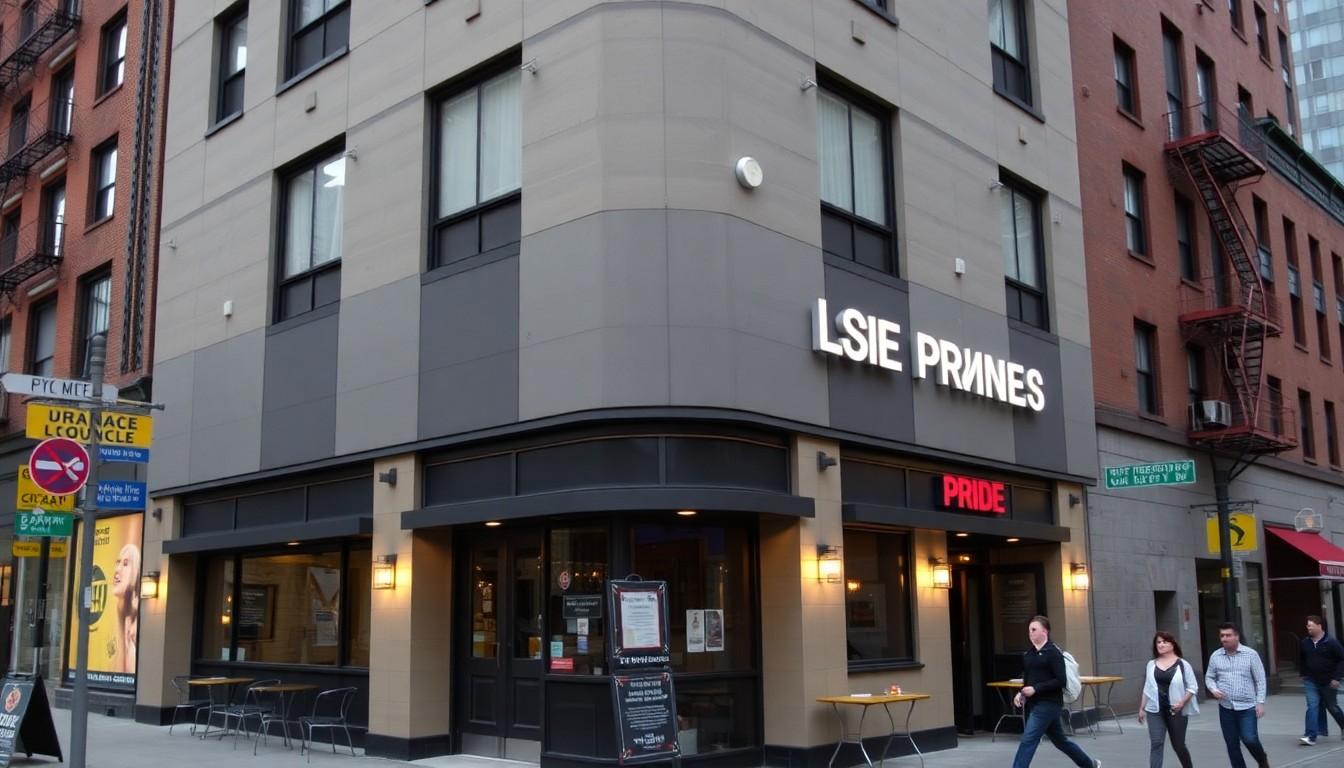
A bold new gay bar in Hell’s Kitchen is drawing attention before it has even opened, with New Yorkers debating whether PRIDE Bar & Lounge’s rainbow-heavy look feels welcoming, overly polished or simply impossible to miss. The argument reflects a bigger question facing LGBTQ+ nightlife: is any new queer venue worth celebrating?
Essential Takeaways
- Big visual presence: PRIDE Bar & Lounge’s bright frontage and enormous rainbow flag have made it an instant talking point.
- Opening still pending: The Hell’s Kitchen venue was expected to launch during Pride 2026, but no firm date has been announced.
- A crowded neighbourhood: Hell’s Kitchen already has a dense cluster of LGBTQ+ bars, restaurants and nightlife spots.
- A wider squeeze: Rising costs and changing nights-out habits are putting established queer venues under pressure.
- More than a bar: If it opens, PRIDE could create work for bartenders, performers and other nightlife staff.
The bar that became a meme before opening
PRIDE Bar & Lounge has managed the rare feat of becoming famous while still unfinished. Its highly visible frontage in Hell’s Kitchen, complete with vivid lighting and a giant rainbow flag, has prompted plenty of online commentary, much of it focused on the venue’s unmistakably branded appearance.
One viral post on X compared the design to a cartoonish “trap for gay people”. The joke travelled widely, but it also captured a familiar New York instinct: affection for queer nightlife paired with intense suspicion of anything that looks too corporate, too shiny or too carefully engineered. Queerty reported that the post had attracted hundreds of thousands of views.
The venue occupies a long-empty corner associated with the former Boxer’s Hell’s Kitchen. That location gives PRIDE a useful head start, although the attention also means the bar is being judged long before anyone has ordered a drink. According to GayPinkSpots, established venues such as The Ritz Bar & Lounge remain part of the neighbourhood’s broader nightlife mix.
Why the design has divided opinion
Hell’s Kitchen is hardly short of LGBTQ+ nightlife. Its bars are busy, its streets are familiar territory for queer New Yorkers and its reputation attracts visitors from far beyond Manhattan. In that setting, a venue called PRIDE, rendered in capital letters and wrapped in rainbow symbolism, can seem less like a subtle addition and more like a billboard for the idea of gay nightlife itself.
That has fuelled jokes about bachelorette parties, chain restaurants and visitors who want a queer-themed night out without necessarily engaging with the community around them. There’s a real tension here. A welcoming, accessible venue can help newcomers feel comfortable, but an aggressively themed space may strike regulars as hollow.
Still, aesthetics don’t tell the whole story. Hardware Bar and Vers, both listed among New York’s LGBTQ+ nightlife options by TravelGay and Moodap, show how different approaches can coexist in the same city. Some venues lean into atmosphere and spectacle, while others rely on intimacy, music or a sense of local belonging. PRIDE will ultimately be judged on what happens inside, not just what flashes outside.
New queer venues matter more than the jokes suggest
The scepticism might sound harsh, but it sits alongside a serious concern: LGBTQ+ venues are under strain. Staffing, rent, licensing and energy bills have all become harder to manage, while many younger customers are going out less often or spending less when they do.
That pressure is visible in the fate of older venues. GayCities reported that Leon’s, Baltimore’s oldest gay bar, was temporarily closing, while The Denver Gazette covered the closure and tax seizure of The Pearl, described as Denver’s only lesbian bar. These stories underline how precarious queer nightlife can be, even when a venue has history and a loyal following.
Against that backdrop, a new bar can represent jobs, performance opportunities and a place for people to meet in person. The important question isn’t whether PRIDE looks cool enough for online critics. It’s whether the owners create a space where queer workers feel valued and customers feel more than commercially targeted.
The opening date is now part of the story
PRIDE Bar & Lounge was initially associated with a Pride 2026 launch, but the timetable has slipped. The owners have pointed to Manhattan’s approval process and local scepticism as contributing factors, although the venue still doesn’t have a confirmed opening day.
That uncertainty has encouraged more speculation, because every delay gives the internet another chance to turn an unfinished building into a cultural referendum. It also raises a practical issue for anyone hoping to visit: the venue shouldn’t be treated as open until its owners publish official hours and a launch announcement.
For a new bar, this final stretch matters. Licensing, staffing, sound management and relationships with neighbours can make the difference between a lively opening and a difficult first year. Hell’s Kitchen already knows how to party, so PRIDE will need to offer a compelling reason to stay after the novelty fades.
What should visitors look for if it opens?
The best test will be simple. Does the venue offer comfortable seating, a properly usable dance floor, fair pricing and a welcoming atmosphere for more than one type of customer? A rainbow frontage may attract attention, but thoughtful service and good programming are what turn first visits into regular nights out.
It’s also worth watching whether PRIDE supports drag performers, queer DJs and local nightlife workers, rather than relying solely on branding. A bar can look polished without feeling impersonal, but that usually comes from the people running the room, not the logo above the door.
For now, the debate says as much about New York’s queer community as it does about one unfinished venue. People clearly want more LGBTQ+ spaces, but they also want them to feel authentic, affordable and connected to the neighbourhood. That’s a demanding brief, though perhaps exactly the right one.
A new queer venue doesn’t have to please everyone, but it does have to give people a reason to come back.
Source Reference Map
Story idea inspired by: [1]
Sources by paragraph:
- Paragraph 1: [2], [5]
- Paragraph 2: [2], [7]
- Paragraph 3: [5], [6]
- Paragraph 4: [2], [3]
- Paragraph 5: [4], [6]
- Paragraph 6: [2], [7]
- Paragraph 7: [3], [4]
- Paragraph 8: [2], [5]
- Paragraph 9: [6], [7]
- Paragraph 10: [2], [3]
- Paragraph 11: [4], [5]
- Paragraph 12: [2], [6]
- Paragraph 13: [3], [4]
- Paragraph 14: [5], [7]
- Paragraph 15: [2], [3]
- Paragraph 16: [4], [6]