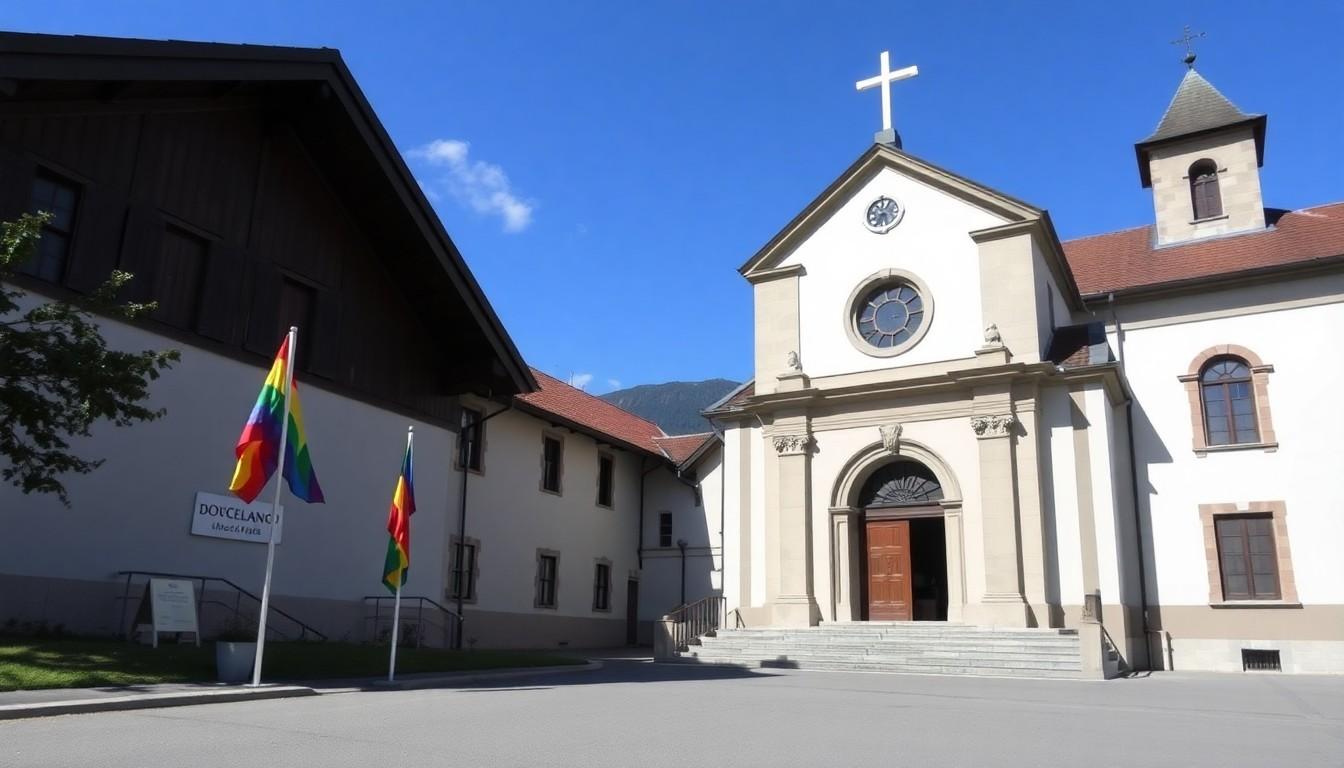
A diocesan working group in Bolzano-Bressanone is opening a gentler conversation about coming out, faith and belonging, offering LGBTQ+ Catholics support, history and a safer space to be heard.
Essential Takeaways
- A pastoral response: The Faith and Queer group was established in 2020 within the Diocese of Bolzano-Bressanone.
- A difficult reality: Coming out can feel especially risky when faith, family, work and community life are closely connected.
- History matters: The Always Here project is collecting queer stories from South Tyrol to challenge years of invisibility.
- Choice, not pressure: The group says nobody should be pushed to come out before they feel safe or ready.
- A wider aim: Organisers want parishes to listen better and recognise LGBTQ+ Catholics as part of their communities.
Why coming out can feel impossibly high-stakes
For many LGBTQ+ Catholics, coming out isn't simply a private conversation. It can touch friendships, family relationships, parish life and, in some cases, employment or social standing. That makes the decision feel less like opening a door and more like risking the whole house.
The Faith and Queer working group in northern Italy has placed that tension at the centre of its work ahead of Coming Out Day. According to ANSA, the diocesan initiative is designed to support believers who may be wrestling with both their identity and their relationship with the Church.
That matters because shame can become especially heavy when sexual orientation has been associated with guilt or sin. The result isn't just uncertainty. It can be a deep, exhausting conflict between being honest about oneself and protecting a cherished sense of belonging.
A diocesan project with roots in 2020
Faith and Queer began in 2020 following the diocesan synod, with a remit that reaches beyond individual advice. Its organisers have also worked to bring LGBTQ+ experiences into ordinary Church life rather than treating them as an occasional issue.
In 2022, the group presented an exhibition featuring queer Christians and video testimonies. Father Paolo Zambaldi, who is involved in the project, has described the aim as changing attitudes and making the subject part of everyday conversation, according to Gay.it.
That approach is quietly significant. Public displays and personal stories can't solve every pastoral problem, but they can make LGBTQ+ Catholics visible in a setting where many have felt overlooked. Sometimes the first sign of progress is simply hearing that people like you have been there all along.
Always Here brings South Tyrol's queer history into view
The group's most ambitious project is Always Here, a collection of stories about the queer history of South Tyrol. Through interviews and testimony, it is exploring how identity has been shaped by social surroundings and the Church environment.
ANSA reported that the project aims to show that queer Catholics were never outsiders who suddenly appeared in the community. They were already present, even when silence or fear made them hard to see.
That historical work gives the coming-out conversation a broader frame. Personal experiences aren't isolated incidents; they form part of a shared record. For younger LGBTQ+ Catholics, that record could offer something simple but powerful: proof that they aren't starting from nothing.
The painful experiences behind the work
The group's message is informed by members who have experienced real exclusion. In 2023, Toni Pramstaller, a member of Faith and Queer, was refused communion during a meeting of the Diocesan Pastoral Council, an incident he has described as deeply hurtful.
Such experiences explain why reassurance alone isn't enough. A parish can say it welcomes everyone, but people also notice what happens in practice, particularly when questions of worship, leadership and dignity are involved.
Renate Rottensteiner, the group's coordinator, has said the Church community has a responsibility to restore dignity to LGBTQ+ people by recognising their experiences and educating relatives, friends and fellow parishioners. Coverage by Sbircia la Notizia and Urania Institute highlighted that emphasis on education as a route towards more open communities.
Coming out should never be a test
The most practical message from the project is also the most important: coming out must remain a personal choice. No one should be expected to disclose their identity simply to prove courage, honesty or commitment to a community.
For anyone considering it, safety comes first. Think about who is likely to respond with care, whether you have somewhere supportive to turn afterwards and what boundaries you want to set. A trusted friend, affirming faith leader or LGBTQ+ support organisation can help you plan the conversation, but there is no deadline.
The deeper question, as Rottensteiner has put it, is whether parishes are ready to listen without making people pay for honesty. That shifts responsibility away from LGBTQ+ Catholics and towards the institutions asking them to feel at home.
The Faith and Queer group's work suggests that change won't arrive through one statement or one annual awareness day. It will come through patient listening, honest history and the everyday details of welcome, from language used in parish life to the way disagreement is handled.
For many people, that may be the difference between merely being tolerated and genuinely belonging.
It's a small but meaningful step towards a Church where honesty doesn't cost someone their home.
Source Reference Map
Story idea inspired by: [1]
Sources by paragraph:
- Paragraph 1: [3], [4]
- Paragraph 2: [6], [7]
- Paragraph 3: [5], [7]
- Paragraph 4: [3], [4]
- Paragraph 5: [4], [6]
- Paragraph 6: [5], [7]
- Paragraph 7: [3], [4]
- Paragraph 8: [5], [6]
- Paragraph 9: [6], [7]
- Paragraph 10: [3], [5]
- Paragraph 11: [4], [6]
- Paragraph 12: [5], [7]
- Paragraph 13: [3], [4]
- Paragraph 14: [5], [6]
- Paragraph 15: [3], [7]
- Paragraph 16: [4], [5]
- Paragraph 17: [6], [7]