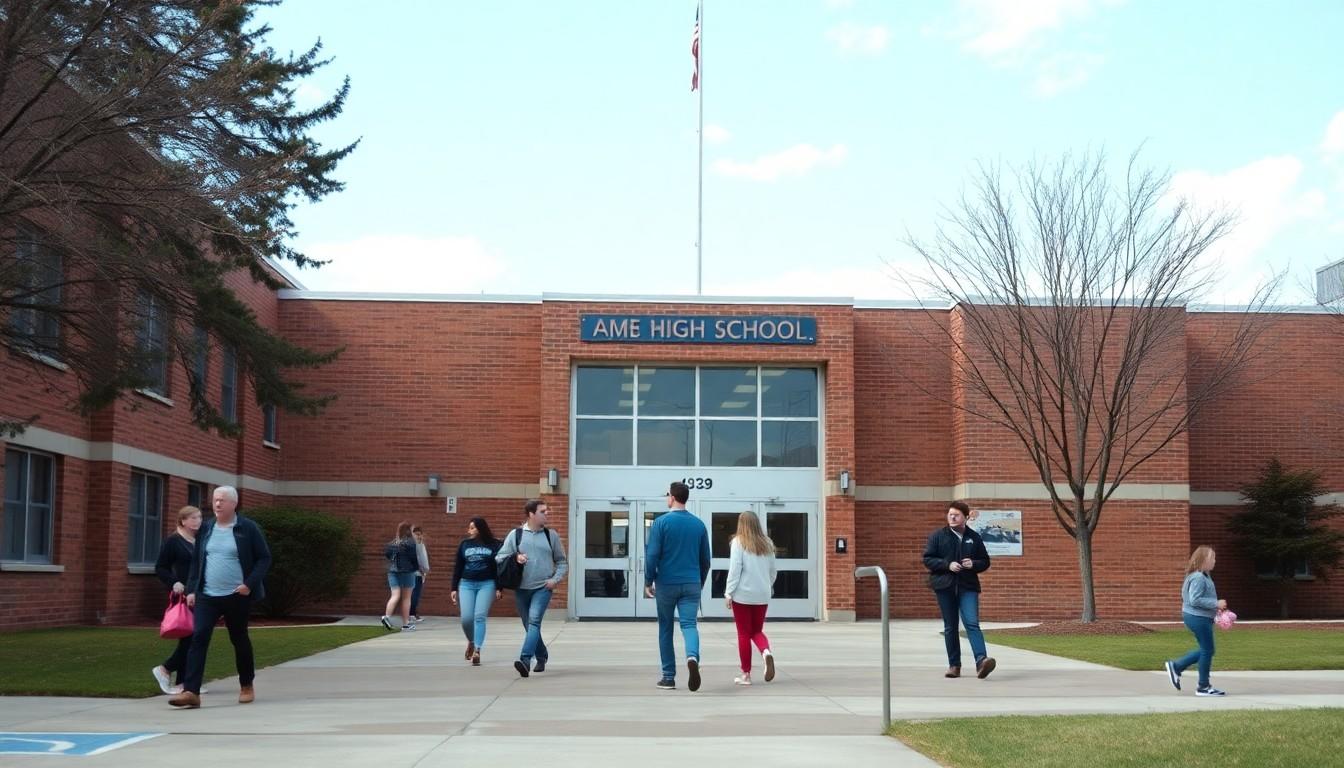
Voters across seven US states are being asked to decide measures affecting LGBTQ+ rights, with transgender young people at the centre of many contests. From school sports and healthcare to marriage equality and constitutional protections, the results could influence everyday life well beyond election night.
Essential Takeaways
- Trans youth face the biggest impact: Several measures would restrict sports participation or gender-affirming healthcare for minors.
- Seven states are involved: Arizona, Colorado, Missouri, Nebraska, Vermont, Virginia and Washington feature major LGBTQ+-related questions.
- Marriage rights are back in focus: Virginia voters could remove unenforceable anti-same-sex marriage wording from the state constitution.
- Medical groups are divided from campaigners: In Colorado, doctors' organisations oppose a proposal targeting transition-related surgery for minors.
- The wording matters: Some initiatives are facing legal challenges over whether voters have been clearly told what they would do.
Transgender students are at the centre of the ballot fight
The strongest thread running through this year's measures is school sport. Proposals in Arizona, Colorado, Nebraska and Washington would limit whether transgender pupils can join teams matching their gender identity, although the precise rules differ from state to state.
In Washington, for example, one proposal would require sex verification for girls taking part in K-12 sport. That could involve genetic or hormone testing, or an examination of reproductive anatomy. Critics say the approach risks exposing all girls to intrusive scrutiny, while supporters describe it as a way to regulate eligibility. According to Colorado Public Radio, similar debates have made student athletics one of the most politically charged LGBTQ+ issues of the election cycle.
The practical effect may fall on a very small number of pupils. The Williams Institute estimates that just over 300,000 American teenagers aged 13 to 17 are transgender, and not all participate in organised sport. Washington's high-school sports authority has told The 19th it knows of roughly 10 transgender middle and high-school athletes among more than 200,000 competitors statewide.
That contrast is important. For affected families, the question is intensely personal, but the number of students involved is limited. The wider political argument, meanwhile, is enormous.
Healthcare proposals bring another layer of tension
Colorado voters will also consider a measure targeting transition-related surgery for minors. It would prohibit certain public funding, insurance cover and Medicaid reimbursement, although such procedures are already uncommon and the proposal doesn't directly refer to non-surgical care.
Medical organisations, including the Colorado Medical Society and the Colorado Academy of Family Physicians, oppose the initiative. The society's president, Brigitta Robinson, said in September that members hold varied political views but share the belief that medical decisions should be made in clinical settings, rather than through ballot-box rules, according to The 19th.
Missouri's proposal would go further by placing a ban on gender-affirming medical care for transgender minors in the state constitution. The measure is also tied to abortion restrictions, which opponents say makes the ballot question especially broad and difficult to assess.
That combination has prompted legal challenges. As HeadCount's voter information shows, ballot campaigns often turn as much on constitutional language and presentation as on the underlying policy. For voters, a useful first step is to read the full text of each proposal rather than relying only on campaign slogans.
Several states are weighing broader equality protections
Not every question is restrictive. Vermont voters will decide whether to add an equal rights amendment to the state constitution covering race, ethnicity, sex, religion, disability, sexual orientation, gender identity, gender expression and national origin.
Virginia voters, meanwhile, could remove language banning same-sex marriage and replace it with an explicit constitutional right for two consenting adults to marry, regardless of sex, gender or race. The existing ban has been unenforceable since the US Supreme Court recognised same-sex marriage nationwide in 2015, but advocates say leaving it in place is an unnecessary risk.
That concern has gained fresh attention as conservative members of the Supreme Court have signalled opposition to other established rights. LGBT Nation reported that marriage equality campaigners see constitutional clean-up as a way of removing dormant restrictions before they can be used again.
There's something quietly significant about that approach. A law can be obsolete in practice while still carrying political and emotional weight on the page.
Washington's proposals reach beyond sports
Washington has two closely watched measures. One concerns transgender girls' participation in school sport; the other would reverse changes to rules covering students' and parents' rights in public schools.
Opponents say the second proposal could make it easier for LGBTQ+ pupils to be outed to parents who may not support them. Supporters argue it restores parental authority. Axios' Portland voter guide noted that education, privacy and parental rights have become tightly linked in regional election campaigns, making the measure harder to separate into a single issue.
The sport initiative was backed by Let’s Go Washington, a political action committee that gathered more than 440,000 signatures. Its scale shows how effectively ballot campaigns can turn a niche policy dispute into a statewide political test. But signatures alone don't settle the practical questions, especially when privacy, safeguarding and participation are involved.
How voters can make sense of the measures
The simplest way to compare these initiatives is to ask three questions: who would be affected, what would change immediately and whether the wording creates a constitutional rule or an ordinary statute. Constitutional amendments are harder to undo, so their consequences can last for years.
It's also worth checking whether a proposal is already partly reflected in state law. Nebraska, for instance, already restricts transgender pupils from competing in sports consistent with their gender identity from kindergarten through college. In that case, the ballot question is less about introducing a new policy than entrenching it.
Voters should also look for independent explanations from state election offices, medical organisations and established civic groups. Guides from HeadCount and Colorado Public Radio can help clarify the legal mechanics, while local reporting may explain how each measure would work in schools, clinics and families' daily lives.
The ballot box may offer a simple yes-or-no choice, but the consequences won't be simple. For many voters, these measures are likely to be judged not only on ideology, but on privacy, safety and whether elected lawmakers should be making decisions usually handled by families and professionals.
Read the wording carefully, check trusted local guides and consider how each measure would work in real life.
Source Reference Map
Story idea inspired by: [1]
Sources by paragraph:
- Paragraph 1: [2], [3]
- Paragraph 2: [4], [5]
- Paragraph 3: [2], [3]
- Paragraph 4: [4], [5]
- Paragraph 5: [2], [3]
- Paragraph 6: [4], [5]
- Paragraph 7: [2], [3]
- Paragraph 8: [3], [6]
- Paragraph 9: [2], [7]
- Paragraph 10: [4], [5]
- Paragraph 11: [2], [3]
- Paragraph 12: [4], [5]
- Paragraph 13: [6], [7]
- Paragraph 14: [2], [4]
- Paragraph 15: [5], [6]
- Paragraph 16: [2], [7]
- Paragraph 17: [3], [5]