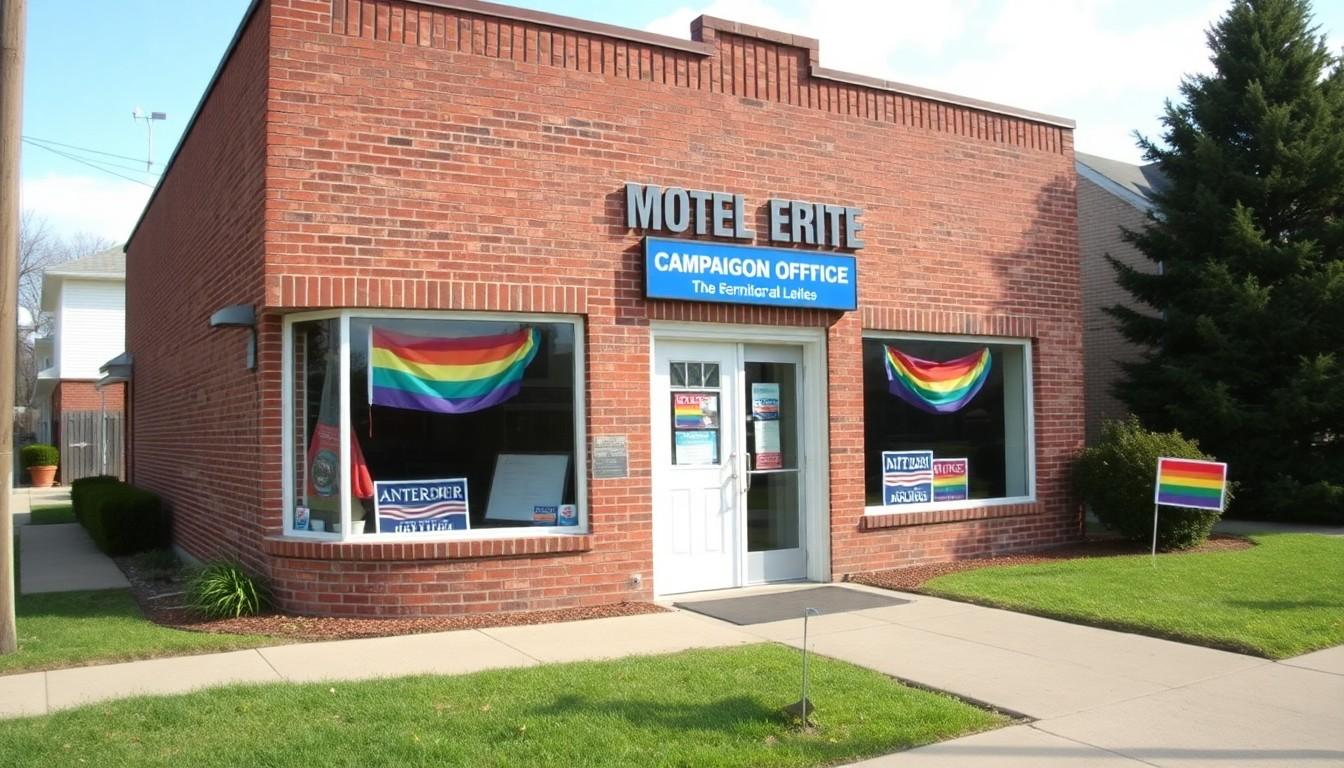
Candidates are finding that anti-trans attacks can no longer be treated as a risk-free campaign tactic. With LGBTQ+ adults making up a growing share of the US population, Democratic contenders are pushing the conversation back towards living costs, personal freedom and government accountability before voters head to the polls.
Essential Takeaways
- A growing electorate: Gallup data puts LGBTQ+ identification at roughly 12% of US adults.
- A sharper response: Several candidates are challenging anti-trans messaging rather than allowing it to dominate.
- The bigger election issue: Food, housing, fuel and household finances remain central voter concerns.
- A strategic problem: Republicans are being pressed to explain why culture-war attacks matter more than economic pressures.
- A lasting effect: LGBTQ+ voters and their allies are likely to remember which candidates defended equality.
Anti-trans attacks meet a more confident electorate
The campaign message is becoming harder to ignore: attacks aimed at transgender people are colliding with a larger and more politically engaged LGBTQ+ electorate. Gallup's latest figures show that around one in eight US adults identifies as LGBTQ+, a striking change from earlier decades and a reminder that these debates reach far beyond a narrow activist audience.
That shift matters at the ballot box. The Human Rights Campaign says LGBTQ+ Americans are watching closely and intend to remember who focused on divisive claims instead of household pressures. For candidates, the community isn't simply a talking point. It's a sizeable group of voters, families and allies with a clear interest in how politicians use power. (Gallup)
Candidates are refusing to let the culture war set the agenda
Several Democratic campaigns have responded by turning familiar attacks into arguments about government overreach. Sam Forstag, for instance, framed the issue around a straightforward principle: officials shouldn't dictate what people do in their personal lives. It's a compact response, but politically useful, because it turns a defensive debate into a question about freedom.
Christina Bohannan has taken a similar route in Iowa, combining a personal connection to school sport with criticism of her opponent's priorities. Her argument is that fairness can be discussed without using transgender people as a political prop, while families also deserve answers about rising costs and corporate influence. That pivot is becoming a recurring feature of the campaign. (CNN)
The economic message keeps pushing through
Culture-war advertising may generate attention, but it doesn't automatically solve the problem facing candidates with weak economic records. CNN's campaign analysis pointed to persistent public concern about food, housing and fuel costs, with polling suggesting many Americans blame presidential decisions for making those pressures worse.
That helps explain why some Democratic candidates are counterattacking rather than simply issuing condemnations. Sherrod Brown's response, as described by CNN, used an anti-trans advertisement as an opening to challenge his opponent's wider record and political alliances. The calculation is clear enough: voters may hear the attack, but campaigns want them to leave thinking about accountability, affordability and trust. (CNN)
Why the strategy may be losing its force
Republican campaigns have often used transgender-related issues to energise conservative voters, particularly around schools and sport. But the approach becomes less convincing when it appears alongside warnings about high prices and dissatisfaction with the government. A message designed to project strength can start to look like a diversion if it avoids the issues dominating kitchen-table conversations.
The CNN analysis described a difficult environment for Republicans, including poor approval ratings for Donald Trump and a late scramble in states once viewed as safer territory. That doesn't mean culture-war messaging will disappear. It does suggest campaigns are having to work harder to explain why it deserves centre stage. (CNN)
LGBTQ+ voters are watching what happens next
The political significance of LGBTQ+ voters isn't only about numbers. It's also about memory. Communities that have spent years fighting over healthcare, family rights, education and personal autonomy tend to notice which politicians show up consistently and which ones reach for them only when an election tightens.
For candidates, the practical lesson is simple: respond clearly, connect equality to freedom and economic security, then offer something more substantial than outrage. The campaigns that manage that balance may find that voters are less interested in another manufactured clash and more interested in who can make daily life feel safer and more affordable. (Gallup)
The culture war may be loud, but voters still want answers they can use.
Source Reference Map
Story idea inspired by: [1]
Sources by paragraph: