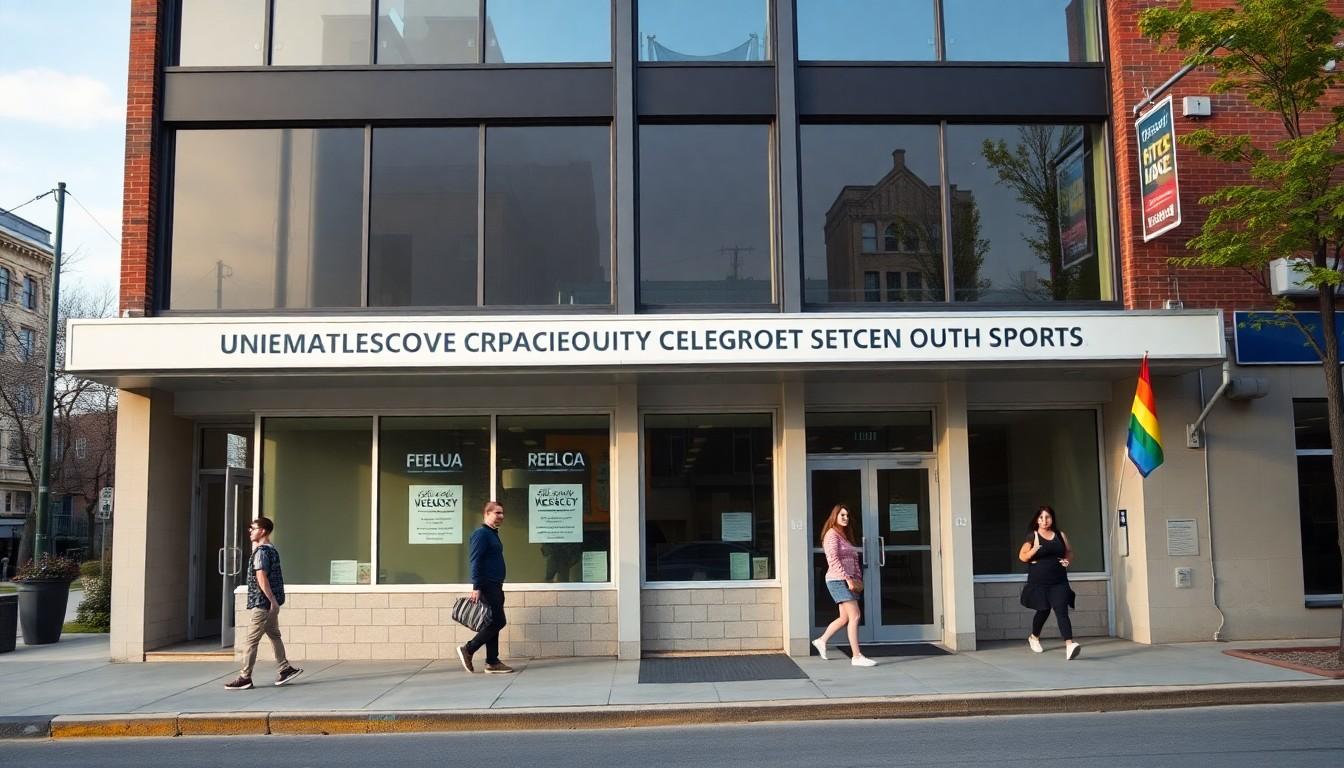
Families across Colorado are facing a heated question about transgender athletes in school sports: can policies protect fair competition without excluding young people? With Proposition 134 targeting participation from kindergarten through college, the debate reaches far beyond scoreboards, touching privacy, safety, wellbeing and what school sport is meant to provide.
Essential Takeaways
- Proposition 134: The Colorado measure would restrict transgender students from competing in school and some private-school sports.
- Privacy concerns: Critics warn that enforcement could invite intrusive questions, record checks or physical scrutiny.
- The evidence is mixed: Research suggests transgender athletes may have advantages in some measures and disadvantages in others.
- Participation is already limited: College sports leaders have reported very small numbers of openly transgender competitors.
- A sport-by-sport approach: Supporters of inclusion argue that eligibility rules should reflect the demands of each activity rather than impose one blanket ban.
Colorado's sports debate is about far more than medals
For many children, sport is the place where friendships form, confidence grows and a difficult school day can finally feel lighter. The smell of a changing-room floor, the nervous buzz before a race and the simple relief of being part of a team can matter just as much as the final result.
That is why Proposition 134 has become so emotionally charged. As reported by Colorado Public Radio, Colorado Politics and Chalkbeat Colorado, the proposed measure focuses on transgender participation in competitive sport, placing a major question about identity and eligibility directly into the school environment.
The measure's reach is broad, covering school-aged competitors through college, alongside intramural and certain private-school activities. BallotReady's summary presents it as a question of defining athletic eligibility by biological sex, while opponents say that approach risks treating children as political symbols rather than pupils.
What would enforcement actually look like?
The awkward practical question is the one voters may find hardest to answer: how would officials determine who is eligible to compete? Critics of Proposition 134 argue that the proposal doesn't clearly establish who would investigate athletes, what evidence would be required or how disputes would be handled.
That uncertainty matters because eligibility checks can affect more than transgender pupils. A child whose appearance, voice or sporting ability doesn't match someone else's assumptions could also be challenged. Colorado's Protect Trans Kids campaign argues that this kind of scrutiny could expose young people to humiliation, harassment and the loss of private medical information.
A previous case in Utah showed how quickly suspicion can spread. After parents questioned a girl's eligibility, officials reportedly examined school records to establish that she was not transgender. The episode is a reminder that rules introduced in the name of protecting girls can still subject girls to invasive attention.
The science doesn't offer a simple answer
Concerns about fairness aren't imaginary. Some studies have found that transgender women retain advantages in particular measures after hormone treatment, including strength or speed in certain circumstances. Other findings point to lower performance in areas such as aerobic capacity, lung function or jumping ability, according to the evidence discussed in the Baptist News analysis.
That mixed picture is precisely why the argument resists an easy slogan. Athletic performance depends on the sport, the event, training, age, puberty history and the length and type of medical treatment involved. A rule that might be relevant to a collision-heavy sport won't necessarily make sense for a precision event or a long-distance competition.
Research remains contested and relatively limited, especially because the number of transgender athletes is small. NCAA President Charlie Baker said in 2024 that he knew of fewer than 10 transgender competitors among roughly 510,000 college athletes, a figure cited in the analysis.
Why blanket bans raise wider concerns
Participation itself can be difficult for transgender young people. They may worry about changing rooms, uniforms, discrimination or being singled out by teammates and officials. That helps explain why the number of visible transgender athletes can remain low even before new restrictions are introduced.
Opponents of Proposition 134 also point to the wider role sport plays in mental health and belonging. The Trevor Project has reported better mental-health outcomes among queer young people who can take part in sports, while research cited by Baptist News links anti-trans policies with increased suicide attempts among transgender youth.
Those findings don't settle every question about competitive eligibility, and concerns about safety deserve serious attention. But they do show why exclusion isn't a cost-free administrative choice. For a child already feeling isolated, being told they can't join the team may land as a public rejection rather than a technical rule.
Could sport-specific policies offer a better route?
The strongest alternative to a blanket ban is a more tailored framework. Sporting bodies could consider the demands of each event, relevant hormone data, safety risks and the age and level of competition, while ensuring that any process is transparent and respectful.
That approach is less tidy than drawing a single line, but sport itself is rarely tidy. A wrestler, swimmer, sprinter and golfer don't rely on the same physical attributes, so applying identical eligibility rules to every activity may create as many unfair outcomes as it prevents.
Colorado voters are therefore being asked to weigh two competing instincts: protect competitive fairness, but avoid creating a system that polices bodies and identity. The better long-term answer may require more evidence, clearer rules and fewer assumptions. As one observation in the original analysis puts it, every sport has its own physics, and that may mean every sport needs its own rules.
The question now is whether Colorado can build that kind of system without turning school sport into an arena of suspicion. Families want fairness, but most also want their children to come home with muddy trainers, tired legs and a sense that they belong.
It's a small distinction in wording, but a huge one in practice: fair sport should still leave room for human dignity.
Source Reference Map
Story idea inspired by: [1]
Sources by paragraph:
- Paragraph 1: [2], [4]
- Paragraph 2: [3], [5]
- Paragraph 3: [6], [7]
- Paragraph 4: [2], [4]
- Paragraph 5: [3], [7]
- Paragraph 6: [5], [6]
- Paragraph 7: [2], [4]
- Paragraph 8: [3], [7]
- Paragraph 9: [5], [6]
- Paragraph 10: [2], [4]
- Paragraph 11: [3], [7]
- Paragraph 12: [5], [6]
- Paragraph 13: [2], [4]
- Paragraph 14: [3], [7]
- Paragraph 15: [5], [6]
- Paragraph 16: [2], [4]
- Paragraph 17: [3], [7]
- Paragraph 18: [5], [6]
- Paragraph 19: [2], [4]
- Paragraph 20: [3], [7]