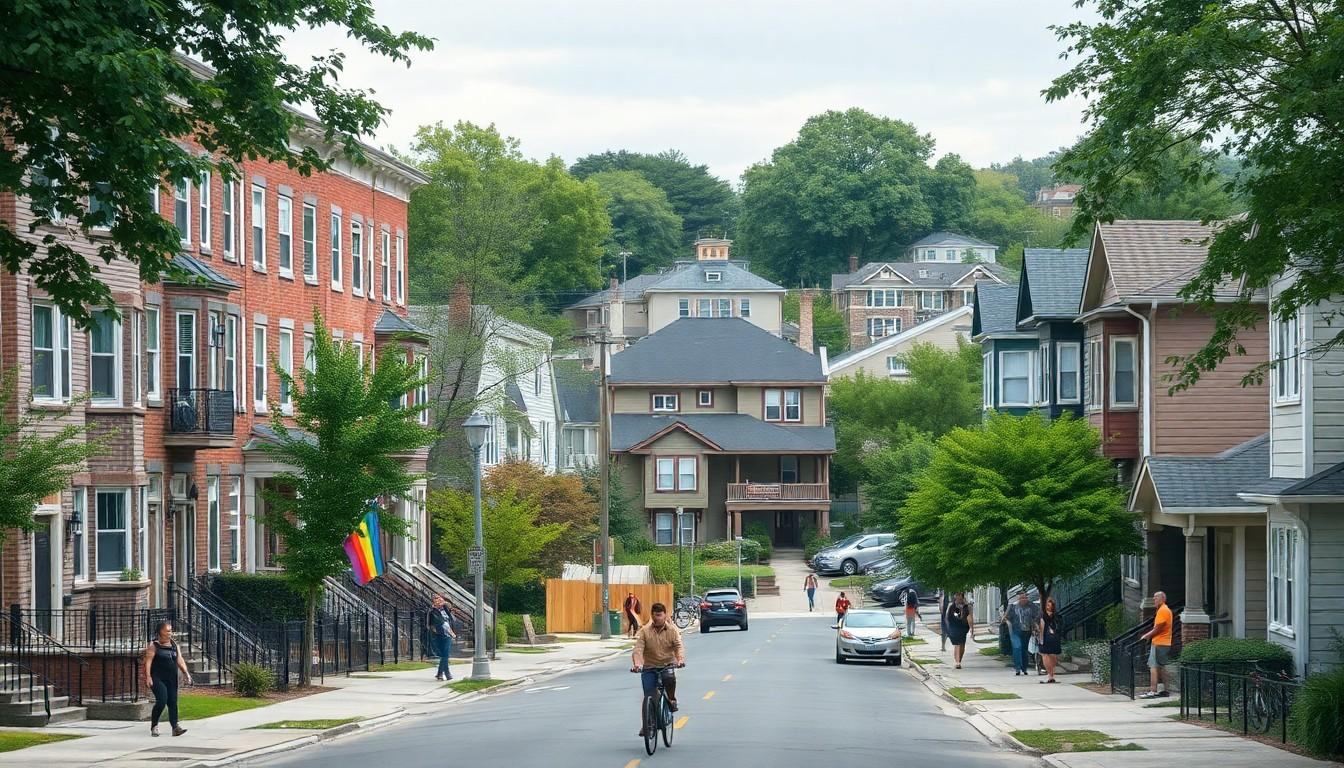
LGBTQ+ homebuyers are looking beyond America’s famous gay neighbourhoods as high prices and mortgage rates reshape the search for community. From growing Midwestern hubs to established coastal enclaves, the best LGBTQ-friendly places to live increasingly combine acceptance, healthcare, lifestyle and a monthly payment that feels manageable.
Essential Takeaways
- Affordability is shifting priorities: Buyers are weighing mortgage costs, home prices and everyday expenses alongside community.
- The map is expanding: Cities such as Minneapolis, Columbus, Pittsburgh, Richmond and Atlanta are attracting LGBTQ+ residents.
- Remote work adds flexibility: Hybrid jobs can make smaller or less expensive markets more realistic.
- Retirees want more than sunshine: Healthcare, social connection, taxes and LGBTQ+ visibility matter just as much.
- Buyers have regained leverage: More stock and price reductions may create room to negotiate, although conditions vary locally.
The LGBTQ+ housing map is getting wider
For years, the familiar roll call of LGBTQ+ destinations included New York, San Francisco, Los Angeles, Palm Springs, Provincetown, Fort Lauderdale and Wilton Manors. These places still offer deep roots, visible community life and the comforting ease of knowing where the Pride flag is likely to fly.
But the housing equation has become harder to ignore. Axios has reported on the growing housing pressures facing LGBTQ+ Americans, while industry research points to a broader conversation about where community and long-term security can coexist.
That means a buyer may now ask not only whether a city feels welcoming, but whether its homes, taxes, transport and healthcare fit real life. A famous postcode is lovely, of course, but it loses some sparkle when the monthly payment leaves no room for dinner out or a weekend away.
Mortgage costs are changing the conversation
The biggest question for many shoppers is painfully practical: what will the monthly payment be? Mortgage-rate forecasts for 2026 continue to shape buyer expectations, with borrowing costs influencing how much space people can afford and how far they’re prepared to look.
As a result, some LGBTQ+ buyers are choosing smaller properties, condominiums or neighbourhoods outside the best-known urban centres. Others are comparing entirely different regions, especially where a similar budget buys more room and a less frantic pace.
Zillow’s housing outlook also highlights how buyers and sellers are adapting to a market that no longer resembles the ultra-competitive conditions of the pandemic years. The emotional side matters, too. Finding an affordable home where you can live openly can feel like a win on both the spreadsheet and the soul.
Which cities are attracting LGBTQ+ buyers?
The most interesting shift is the rise of places that offer an active LGBTQ+ scene without the price tag associated with the traditional capitals of gay life. Minneapolis, Columbus, Pittsburgh, Richmond, Atlanta and parts of the Tampa Bay area are among the markets buyers may consider when balancing culture, employment and housing costs.
The right choice won't be identical for everyone. A young professional might prioritise nightlife, transit and a nearby airport, while a family could care more about schools, parks and supportive healthcare. Retirees may place community groups, accessible housing and social opportunities at the top of the list.
Reports from the LGBTQ+ Real Estate Alliance underline the importance of looking at housing through a community-specific lens. Its work, including events such as the Future Forward gathering in Chicago, reflects a market where representation and professional expertise are becoming more visible.
Remote work and retirement are redrawing the map
Remote and hybrid employment have widened the search area for people who aren't tied to an office five days a week. A city that once seemed too far from a major workplace may suddenly become viable, particularly if it offers better value, attractive neighbourhoods and a welcoming local network.
Retirement is pushing the map outward, too. Palm Springs and Fort Lauderdale remain popular names, but smaller cities can appeal to people seeking lower costs, cultural life and easier access to healthcare. The key question isn't simply whether a place is warm. It's whether you'll be able to build friendships there on a quiet Tuesday in January.
Potential retirees should investigate LGBTQ+-affirming medical providers, local organisations, taxes, insurance, airport access and housing maintenance. A destination can look perfect in holiday photographs, yet feel surprisingly isolating if community connections are difficult to make.
Buyers have more room to negotiate
Inventory and price reductions are giving buyers in some markets more breathing space. That can mean time for a proper inspection, a second viewing or a calm conversation about repairs and closing costs, rather than the familiar panic of bidding against half the neighbourhood.
Still, housing remains intensely local. One district may have a healthy supply of listings while a nearby area remains fiercely competitive. The smartest approach is to compare current competition, recent sales and the likely monthly cost, rather than relying on a national headline.
Sellers need to adjust, too. Accurate pricing, tidy presentation, good photography and sensible repairs matter more when shoppers have alternatives. LGBTQ+ buyers and sellers may also benefit from working with an LGBTQ+-experienced or allied agent who understands that safety, visibility and community are part of the property brief, not optional extras.
The LGBTQ+ Real Estate Alliance and specialist networks such as GayRealEstate.com reflect that demand for informed guidance. For many people, the agent's role extends beyond matching square footage to budget. It's about helping clients find somewhere they can put down roots without editing who they are.
The future may belong to smaller cities with growing communities, rather than only the celebrated destinations of the past. That feels less like a retreat from LGBTQ+ life and more like a welcome expansion of it.
The best new home may be where affordability and belonging finally meet.
Source Reference Map
Story idea inspired by: [1]
Sources by paragraph: