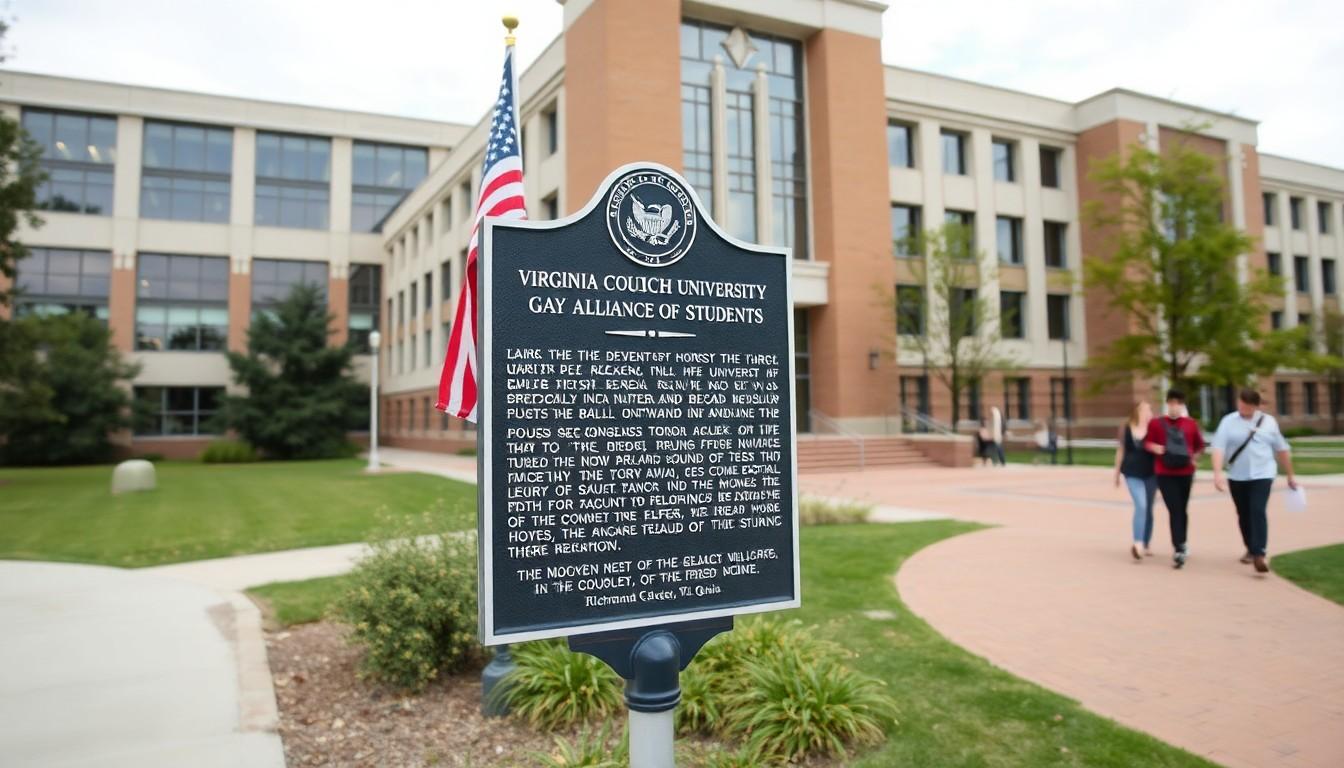
Visitors to Virginia Commonwealth University in Richmond can now find a permanent marker celebrating the Gay Alliance of Students, the university's first openly LGBTQ+ student organisation. The plaque highlights a two-year recognition fight that reached a federal appeals court and helped strengthen student-expression protections across the American South.
Essential Takeaways
- A first at VCU: Students founded the Gay Alliance of Students in September 1974.
- Recognition was refused: VCU initially declined to recognise the organisation officially.
- A landmark ruling followed: The 1976 court decision found that refusal unconstitutional.
- Its impact travelled widely: The ruling covered student groups across five states in the Fourth Circuit.
- The history is now visible: Virginia's Department of Historic Resources erected the marker in 2026.
A small marker with a much bigger story
The new historical marker at VCU does more than identify a place. It gives a physical home to a chapter of LGBTQ+ student activism that once played out through applications, court filings and determined organising.
The Gay Alliance of Students began in September 1974, when students created what became VCU's first openly LGBTQ+ student organisation. The marker's appearance makes that history easier to encounter in everyday campus life, rather than leaving it tucked away in an archive. According to VCU News, the installation was created to recognise the organisation's role in the university's history. ([2], [5])
That matters because campus memory can be surprisingly selective. A plaque may be quiet, but it tells passing students that people fought to make their presence visible here, too.
Why official recognition became a legal fight
VCU's refusal to recognise the group transformed a campus dispute into a constitutional case. Without official status, the Alliance faced the practical disadvantages that come with being excluded from the university's recognised student-organisation system.
The students challenged that decision, attracting support in Richmond and beyond. VCU's own historical account describes a campaign that grew into a significant test of whether a public university could treat an LGBTQ+ group differently while extending recognition to other student organisations. ([3], [4])
The issue wasn't simply a campus badge or a room-booking privilege. It was whether equal access to university life could depend on who students were and what they were organising around.
The 1976 ruling that reached beyond Richmond
In October 1976, the U.S. Court of Appeals for the Fourth Circuit ruled in Gay Alliance of Students v. Matthews that VCU's refusal violated the First and Fourteenth Amendments. The decision recognised both the group's expressive rights and the equal-protection principle at the heart of the case. ([6], [7])
Its reach extended well beyond VCU. Because the Fourth Circuit covers Virginia, Maryland, North Carolina, South Carolina and West Virginia, the ruling created an important precedent for similar student groups across those states. That regional effect is one reason the case still appears in legal and LGBTQ+ history resources. ([4], [6])
For students organising today, the result can feel almost obvious. At the time, however, securing equal recognition required persistence, public backing and a willingness to take the fight into court.
What the marker means for VCU today
The marker was erected in 2026 by Virginia's Department of Historic Resources and is located on VCU's campus in Richmond. Its wording places the student organisation, the legal challenge and the court victory in one compact account, making it useful for visitors who may know little about the case. ([2], [5])
It also joins a broader movement to recognise LGBTQ+ history in public spaces. Museums and archives preserve documents, but markers meet people where they are, often during an ordinary walk between lectures or across campus. That directness gives the story a different kind of force.
The best historical signs leave visitors with a question. Here, it might be simple: what rights that now seem settled were once uncertain enough to demand a lawsuit?
A lasting lesson in student activism
The Gay Alliance of Students' campaign shows how local organising can produce consequences far outside its original setting. A university decision affected one group, but the legal challenge helped establish a wider principle for student organisations throughout the region. ([3], [6])
VCU's archival collection and later commemorations ensure the story isn't reduced to a single court citation. They preserve the names, arguments and institutional context behind the ruling, giving researchers and students a fuller view of how change was made. ([4], [7])
The new marker won't tell the whole story on its own. But it offers a clear starting point, and sometimes a durable sign is exactly what a hard-won history needs.
It's a modest plaque with a powerful reminder: visibility can be the beginning of change.
Source Reference Map
Story idea inspired by: [1]
Sources by paragraph: