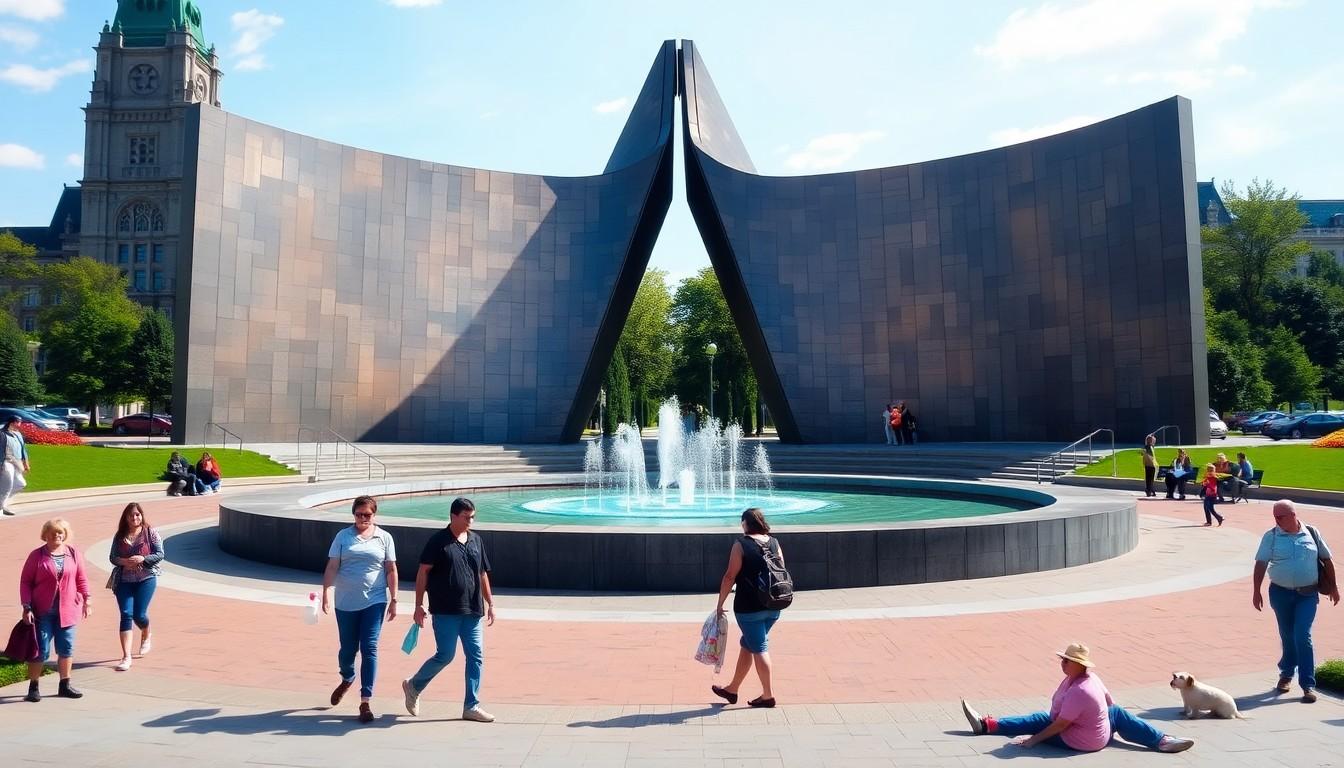
Visitors in Ottawa can now step inside Thunderhead, Canada’s new 2SLGBTQI+ National Monument beside the Ottawa River. Created to remember the LGBT Purge while celebrating queer resilience, the striking landmark combines Indigenous teachings, mirrored mosaics and a public landscape designed for reflection, ceremony, protest and joy.
A monument that asks visitors to step inside
Thunderhead makes its strongest impression from within. The structure’s dark, cloud-like exterior gives way to a shimmering chamber lined with countless mirrored fragments, creating a slightly dizzying, deeply personal experience as visitors see themselves scattered across the walls.
That choice matters. Rather than presenting history as something sealed behind glass, the design places the visitor inside it. The Canadian Heritage description presents the monument as a national place of commemoration and gathering, linking remembrance with an active public life.
The result feels less like a conventional statue and more like a carefully staged emotional journey. It’s solemn at first, but the mirrors bring movement, light and a sense that the story continues.
From the LGBT Purge to public recognition
Thunderhead honours survivors and communities affected by the LGBT Purge, a period of state discrimination and surveillance that targeted LGBTQ2 people in Canada. Its creation was funded through proceeds from the class action settlement reached with survivors, giving the monument a direct connection to the history it commemorates.
Interpretive material from the LGBT Purge Fund sets that history within a wider story of resistance, community and survival. That context prevents the landmark from becoming a vague symbol of inclusion. Visitors are instead invited to understand the harm, the people affected and the long campaign for recognition.
Its location is significant, too. Set within Ottawa’s Monument District, the project occupies a landscape associated with government power. The same city that once enabled surveillance now contains a permanent public statement of queer presence.
Why the mirrored interior feels so powerful
The central chamber is built around absence as much as presence. The cloud is represented by an interior void, while thousands of mirror-backed glass tiles break visitors’ reflections into fragments. It’s a beautiful effect, but there’s a sharper idea underneath: no single person can stand for an entire, changing community.
The monument’s technical ambition is substantial. Project information from Pomerleau describes the use of robust construction methods and materials suited to Ottawa’s demanding freeze-thaw conditions, helping the structure withstand the seasons without losing its visual force.
That combination of symbolism and engineering is easy to overlook when a space feels magical. Yet the quiet, reflective interior only works because the practical details are doing their job in the background.
A landscape built as a journey
Thunderhead isn’t an isolated object dropped into a park. The surrounding landscape leads visitors through distinct stages, moving from recognition and mourning towards healing and celebration.
A red circular basin and young maple tree reinterpret the red markers once used to identify queer gathering places. Narrative walls share the history of the Purge, while a healing circle includes thirteen stones selected by members of the Two-Spirit community from across Canada. A medicinal garden and fruit orchard bring scent, colour and living growth into the experience.
The LGBT Purge Fund’s interpretive content makes clear that these elements are part of the monument’s storytelling, not decorative extras. Even the planting scheme helps shift the atmosphere, offering something softer after the weight of the historical record.
Designed for remembrance, protest and joy
The monument’s public purpose is deliberately broad. It can host ceremonies and quiet visits, but it’s also intended for performances, demonstrations and celebrations. That flexibility keeps Thunderhead from becoming a place people only visit on anniversaries.
The Governor General’s office describes the monument as a national space for remembering 2SLGBTQI+ histories and honouring the communities shaped by them. The language points towards a living memorial, one that can adapt as new generations bring their own experiences and demands.
That may be Thunderhead’s most hopeful quality. It doesn’t ask visitors simply to look back. It gives them room to gather, be seen and imagine what comes next.
An evolving symbol beside the Ottawa River
Thunderhead arrives at a moment when public memorials are being asked to do more than preserve a fixed version of the past. They’re expected to acknowledge harm honestly while remaining useful, welcoming places for the people whose histories they hold.
Here, the storm imagery does much of that work. Drawing on teachings about Thunderers and renewal, the design treats disruption as part of transformation rather than something to hide. The mirrored chamber makes the idea personal, while the park makes it communal.
For visitors, the practical advice is simple: allow time to walk the whole site, not just photograph the main structure. The most affecting moments may be found along the path, in the garden or in the changing reflections inside.
Thunderhead is now open to the public, offering Ottawa a monument that feels both monumental and intimate.
Explore the full landscape, take your time inside, and let the reflections do some of the talking.
Source Reference Map
Story idea inspired by: [1]
Sources by paragraph:
- Paragraph 1: [2], [3]
- Paragraph 2: [4], [5]
- Paragraph 3: [6], [7]
- Paragraph 4: [2], [4]
- Paragraph 5: [3], [5]
- Paragraph 6: [6], [7]
- Paragraph 7: [2], [3]
- Paragraph 8: [4], [7]
- Paragraph 9: [5], [6]
- Paragraph 10: [2], [3]
- Paragraph 11: [4], [5]
- Paragraph 12: [6], [7]
- Paragraph 13: [2], [3]
- Paragraph 14: [4], [5]
- Paragraph 15: [6], [7]
- Paragraph 16: [2], [3]
- Paragraph 17: [4], [5]
- Paragraph 18: [6], [7]
- Paragraph 19: [2], [3]
- Paragraph 20: [4], [5]
- Paragraph 21: [6], [7]
- Paragraph 22: [2], [3]